Where to dive
Best Places to Dive in July
July is sunfish time: oceanic sunfish are met around Nusa Penida from now until about November, in water cooled to 27.0 °C (81 °F). Koh Tao and the Florida Keys share the warmest in-season sea at 29.4 °C (85 °F), Marsa Alam and Sharm el Sheikh pass 28 °C (82 °F), and Malta reaches 25.0 °C (77 °F).
Dive trips for July
Trips run by local operators, booked on Viator or GetYourGuide.
 ViatorBaliDiscover Scuba Diving in Tulamben, BaliView on Viator (opens in a new tab)
 GetYourGuideBaliBali: Tulamben Bay Beginner's Dive ExperienceView on GetYourGuide (opens in a new tab)
 ViatorHurghadaHurghada Diving Adventure one Day with two Dives Boat TripView on Viator (opens in a new tab)
 GetYourGuideGili IslandsGili Trawangan: Discover Scuba Diving for BeginnersView on GetYourGuide (opens in a new tab)
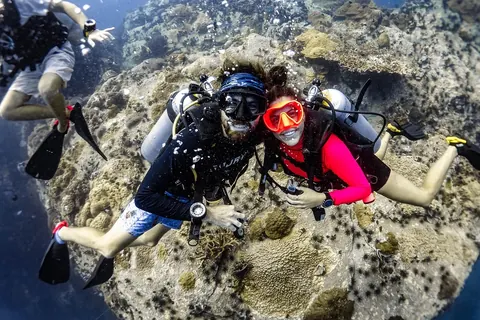 ViatorKoh TaoOpen Water Course - Become certified diver in 3 daysView on Viator (opens in a new tab)
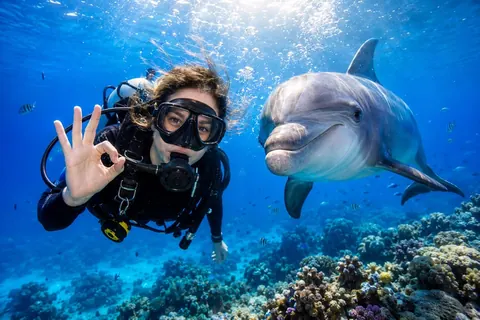 GetYourGuideHurghadaHurghada: Full-Day Boat Trip with 2 Scuba Dives and LunchView on GetYourGuide (opens in a new tab)
Ratings from GetYourGuide travellers.
Where is the diving best in July?
July's strongest choices are the Red Sea resorts in high summer, Indonesia in mid-season, Okinawa's Kerama Islands at their peak and the last best month in the Florida Keys.
- Egypt: Marsa Alam, Sharm el Sheikh, Hurghada and Dahab all sit between 27.2–28.6 °C (81–83 °F).
- Okinawa: July to September is the top season in the Kerama Islands, with many calm days, and exposed offshore sites such as Shimosone are dived only in summer; see Okinawa.
- Florida: July is the last month of the Florida Keys and Key Largo window, already inside hurricane season and the waterspout months.
- Indonesia: Bali, Komodo, the Gili Islands and Tulamben continue their calm-season run.
The Queensland reef is near its coolest: Cairns averages 24.1 °C (75 °F) and the wider Great Barrier Reef 23.6 °C (74 °F).
| Destination | Region | Water in July | Best months | In season |
|---|---|---|---|---|
| Bali | Southeast Asia | 27 °C (81 °F) | Apr to Nov | The main dive season in east Bali (Tulamben, Amed, Padang Bai) runs from April to November; December to March brings more rain, although sites stay open.Ocean sunfish are met by divers around Nusa Penida mostly from July to November. |
| Bonaire | Caribbean | 27.8 °C (82 °F) | All year | Bonaire sits on the southern edge of the Atlantic hurricane belt: the season runs from June to November with most activity from August to October, but direct hits on the Dutch Leeward Islands are rare.Moderate to fresh easterly trade winds blow all year; STINAPA rates the wind-exposed east-coast sites as advanced-only and recommends an experienced guide there. |
| Cairns & Port Douglas | Australia & Pacific | 24.1 °C (75 °F) | May to Oct | May to October is the drier part of the year around Cairns and is generally the best period for reef trips.Dwarf minke whales are seen mainly in June and July off Port Douglas and along the Ribbon Reefs. |
| Curaçao | Caribbean | 27.7 °C (82 °F) | All year | Curaçao lies on the southern edge of the Atlantic hurricane region: the season runs from June to November with most activity between mid-August and mid-October, but on average a tropical cyclone passes within 100 nautical miles only about once every 11 years and none has ever made direct landfall.Diving runs all year: Curaçao gets little rain (about 500-600 mm a year), most of it in the October-January rainy season and often in the early morning or evening, while February to May is the dry season. |
| Dahab | Red Sea | 27.2 °C (81 °F) | Mar to Nov | Bigger fish and large schools can be met all year, but local centers report them most often in the summer months. |
| Fiji | Australia & Pacific | 25.8 °C (78 °F) | May to Oct | – |
| Florida Keys | Caribbean | 29.4 °C (85 °F) | Apr to Jul | Hurricane season in the Keys runs from June to November; the Atlantic peak is around September.Waterspouts are most common from June to September, mostly between late morning and evening, when summer thunderstorms are also frequent. |
| Gili Islands | Southeast Asia | 27.8 °C (82 °F) | Apr to Oct | The calmest, most reliable diving around the Gili Islands is from about April to October, with flat seas and daily boat trips. |
| Great Barrier Reef | Australia & Pacific | 23.6 °C (74 °F) | May to Oct | The northern reef hosts the world's only predictable gathering of dwarf minke whales each austral winter, mostly in June and July.In North Queensland the drier months run from May to October, the usual high season for reef trips. |
| Hawaii | Australia & Pacific | 26.3 °C (79 °F) | May to Oct | On Oahu's North Shore (Pūpūkea: Shark's Cove, Three Tables) the sea is generally calm from about May to October; in winter, surf and currents make the area dangerous, so North Shore diving is a summer activity.Kona's manta night dives and snorkels have no fixed season: operators report frequent but not guaranteed sightings (one cites about 80% of trips) that vary with plankton and surf. |
| Hurghada | Red Sea | 27.8 °C (82 °F) | All year | Bottlenose dolphins can turn up all year on the reefs north of Hurghada, notably Shaab El Erg, Abu Nuhas and the Gubal area.Wreck and reef trips from Hurghada to Abu Nuhas and the Thistlegorm area run in every month of the year. |
| Key Largo | Caribbean | 29.4 °C (85 °F) | Apr to Jul | Key Largo sits inside the Atlantic hurricane season from June to November; activity across the basin peaks around early to mid September.Waterspouts form most often between June and September, usually from late morning into the evening, alongside the summer thunderstorms. |
| Koh Tao | Southeast Asia | 29.4 °C (85 °F) | Feb to Oct | – |
| Komodo | Southeast Asia | 27 °C (81 °F) | Apr to Oct | North and central Komodo have their calmest seas and clearest water from about April to October, in the south-east monsoon; in the wetter north-west monsoon the northern sites can be too rough for day boats.July and August are the busiest months for diving in Komodo National Park, with crowding at popular sites. |
| Malaysia | Southeast Asia | 29.1 °C (84 °F) | Apr to Oct | Whitetip reef sharks are seen on nearly every dive at Sipadan in every month of the year. |
| Malta & Gozo | Mediterranean | 25 °C (77 °F) | May to Oct | Full boat-diving programmes to Comino and offshore sites run from about May to October; in winter centers dive mostly from shore, with few boat trips. |
| Marsa Alam | Red Sea | 28.6 °C (83 °F) | Apr to Nov | – |
| Maui | Australia & Pacific | 26.1 °C (79 °F) | May to Sep | Honolua Bay on the north-west coast is a summer site: operators run trips there in summer, and the state advises staying out in winter when high surf is common. |
| Nusa Penida | Southeast Asia | 27 °C (81 °F) | Apr to Nov | Reef manta rays use the Manta Point and Manta Bay cleaning stations in every month of the year.Divers see giant sunfish (mola) mainly from July to November; the fish are thought to follow seasonal cold upwelling. |
| Okinawa | Australia & Pacific | 28.7 °C (84 °F) | May to Oct | Typhoons approach Okinawa mainly from July to October, most often in August and September (about 7–8 approaches a year on the 1991–2020 average); a port closure can stop boat diving for several days.Ishigaki's Kabira manta points are dived mainly from spring to autumn (best about May to October); winter north winds usually close the Kabira side, and manta trips move to Kuroshima.In the Kerama Islands July to September is the top season with many calm days; exposed offshore sites such as Shimosone are dived only in summer. |
| Red Sea | Red Sea | 27.9 °C (82 °F) | Apr to Nov | Scalloped hammerheads school at Daedalus Reef from late spring through summer, closest to the surface in May and June.Most liveaboard trips to the offshore marine parks (Brothers, Daedalus, Elphinstone) run between spring and late autumn; few boats go out to them in winter.The northern wreck and reef routes (Abu Nuhas, Thistlegorm, Ras Mohammed, Tiran) are sailed all year round. |
| Sharm el Sheikh | Red Sea | 28.3 °C (83 °F) | May to Sep | Manta rays and whale sharks are most often reported passing the Sharm el Sheikh reefs between May and September.Schooling hammerheads are looked for at Jackson Reef in the Straits of Tiran mainly in the summer months.In summer, large schools of snapper, batfish, jacks and unicornfish gather at Ras Mohammed, especially around Shark and Yolanda reefs. |
| Tulamben & Amed | Southeast Asia | 28.1 °C (83 °F) | Apr to Nov | The main diving season in Tulamben and Amed runs from April to November: the national tourism site lists April-July and October-November as the best months for the area's sites, and local centers describe April to November as the warmest, clearest period.Tulamben and Amed can be dived all year; December to March brings more rain but the sites, including the Liberty wreck, stay diveable on most days. |
| Vietnam | Southeast Asia | 28.1 °C (83 °F) | Feb to Aug | The best time to dive Nha Trang is roughly February to August: the national tourism authority gives January-August as the dry, sunny season for diving and island trips, and local centers name February to October as their preferred months. |
Water: the average sea temperature in July.
Which big animals are in season in July?
July opens the oceanic sunfish season around Nusa Penida and Bali, which lasts until about November, and it is the last month for dwarf minke whales on the northern Great Barrier Reef.
- Nusa Penida: the sunfish are thought to follow seasonal cold upwelling, and reef mantas stay at Manta Point and Manta Bay all year. See Nusa Penida.
- Red Sea: schooling hammerheads at Jackson Reef off Sharm el Sheikh and at Daedalus, and big summer schools of snapper and batfish at Ras Mohammed.
- Dahab: local centers report bigger fish and large schools most often from June to September.
- Maldives: Hanifaru Bay's manta feeding season in Baa Atoll, outside our guide's best months but reachable by liveaboard.
- Cancun: whale-shark trips from Isla Mujeres run until mid-September.
What weather risks come with diving in July?
July starts the typhoon season in Okinawa, which runs to October, and brings more rain and choppier seas to Palau, while the Atlantic hurricane season is under way in the Caribbean and Florida.
In Okinawa, typhoons approach most often in August and September, and a port closure can stop boat diving for several days, so leave spare days in your trip. Palau dives all year, but its guide keeps its best months for December to March. In the Keys, waterspouts and summer thunderstorms are most frequent from June to September, mostly from late morning to evening. Zanzibar's Kusi monsoon brings stronger winds and choppier boat rides from June to September.
Where can beginners learn to dive in July?
In July the Florida Keys' shallow reefs, such as Snapper Ledge off Key Largo (5–8 m (16–26 ft)), are at 29.4 °C (85 °F), and the Gili Islands have beginner boat sites such as Hans Reef off Gili Air (4–24 m (13–79 ft)).
In Egypt, Marsa Alam's shore entries, such as the Abu Ghusun wreck at Hamada (0–17 m (0–56 ft)) and Marsa Mubarak (0–25 m (0–82 ft)), let new divers start from the beach in 28.6 °C (83 °F) water. In Malta, Ghar Lapsi (10–18 m (33–59 ft)) is a shore site, now at 25.0 °C (77 °F). Komodo is busy in July and August, with crowding at popular sites; Siaba Besar, called Turtle City (5–18 m (16–59 ft)), is a calm, sheltered bay among its easier dives.
Which liveaboards sail in July?
July liveaboards concentrate on Komodo, the Red Sea and the Maldives, with Galápagos trips as in every month and the last classic Socorro trips of the season; Raja Ampat, Tubbataha and the Similan Islands have no departures on our list.
- Komodo: park round trips, Sumbawa crossings and eastern routes all sail, in one of the two busiest months.
- Red Sea: offshore trips, at 27.9 °C (82 °F).
- Maldives: Baa Atoll for Hanifaru, and the central atolls.
- Socorro: the last classic departures; the sea warms to 27.1 °C (81 °F), and no classic trips on our list sail from August to October.
- Galápagos: 22.6 °C (73 °F) in the cool season.
For Socorro and the Galápagos, both far offshore, carry dive insurance that covers evacuation.
Frequently asked questions
Where is the water warmest for diving in July?
Koh Tao and the Florida Keys share the warmest in-season water at 29.4 °C (85 °F), with Malaysia at 29.1 °C (84 °F) and Okinawa at 28.7 °C (84 °F). The coolest in-season places are the Great Barrier Reef at 23.6 °C (74 °F) and Cairns at 24.1 °C (75 °F). Outside the list, the Galápagos is down to 22.6 °C (73 °F).
Is July a good time to dive the Red Sea?
Yes, it is high summer there. Sharm el Sheikh averages 28.3 °C (83 °F) and Marsa Alam 28.6 °C (83 °F), hammerheads are looked for at Jackson Reef and Daedalus, and big fish schools gather at Ras Mohammed. Liveaboards run the offshore routes to the Brothers, Daedalus and Elphinstone. The oceanic whitetips come later, mainly in autumn.
Can you see sunfish in Bali in July?
Yes, July starts the sunfish season. Divers meet oceanic sunfish around Nusa Penida mainly from July to November, and the fish are thought to follow cold upwelling, which is also why the sea there drops to 27.0 °C (81 °F) in July. All the Nusa Penida sites on our list are rated intermediate or advanced, with drift diving, so come with some experience.
Is July a good month for Okinawa?
Yes, for the Kerama Islands it is the start of the top season, July to September, with many calm days and the offshore sites open. The sea averages 28.7 °C (84 °F). On Ishigaki, the Kabira manta points are dived from about May to October. The catch is typhoons, which approach mainly from July to October.


