Where to dive
Best Places to Dive in January
January's warmest diving is in the western Pacific and the Indian Ocean: Raja Ampat averages 29.0 °C (84 °F), Palau 28.4 °C (83 °F) and the Maldives 28.1 °C (83 °F), where reef mantas move to the western atolls. Closer to North America, Cozumel and Bonaire sit at 26.7–26.8 °C (80 °F), with the hurricane season behind them.
Dive trips for January
Trips run by local operators, booked on Viator or GetYourGuide.
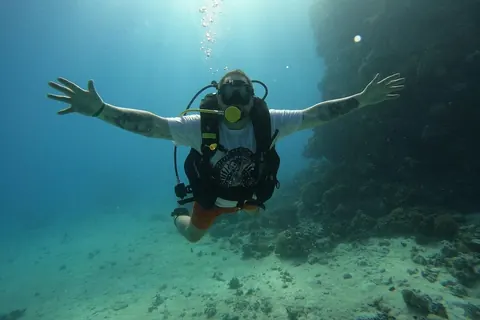 ViatorHurghadaHurghada Diving Adventure one Day with two Dives Boat TripView on Viator (opens in a new tab)
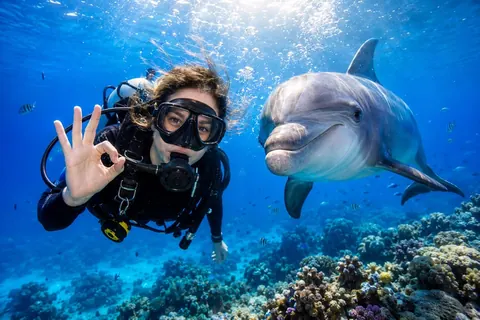 GetYourGuideHurghadaHurghada: Full-Day Boat Trip with 2 Scuba Dives and LunchView on GetYourGuide (opens in a new tab)
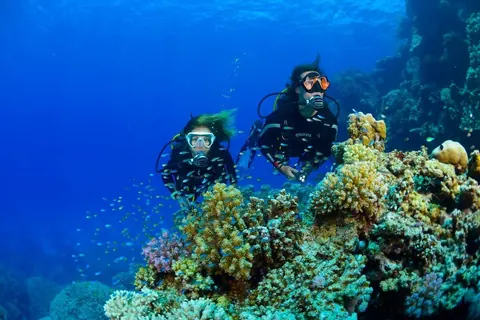 ViatorPhuketFull-Day Beginner Scuba Course with Private Tuition, Racha YaiView on Viator (opens in a new tab)
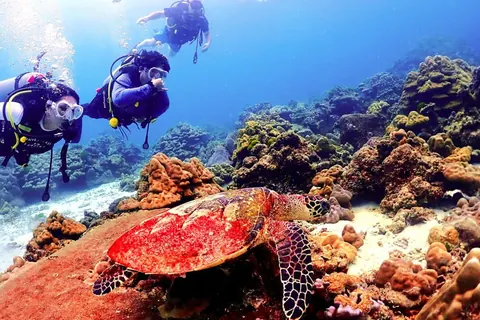 GetYourGuidePhuketPhuket: Scuba Diving Maithon Or Racha Islands For All LevelsView on GetYourGuide (opens in a new tab)
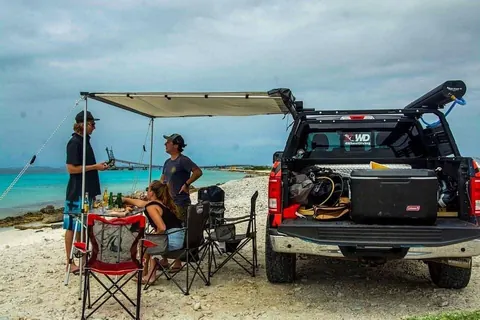 ViatorBonaireSmall Group Diving experience in CaribbeanView on Viator (opens in a new tab)
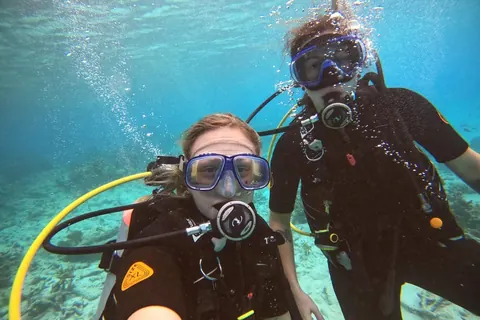 GetYourGuideBonaireBonaire: First-Time Scuba Diving ExperienceView on GetYourGuide (opens in a new tab)
Ratings from GetYourGuide travellers.
Which dive destinations are in season in January?
In January the in-season guides stretch from Raja Ampat and Palau in the western Pacific to Bonaire, Cozumel and Belize in the Caribbean, Cabo San Lucas and the Galápagos in the eastern Pacific and Hurghada in Egypt.
The list leans on four groups of places:
- Western Pacific and Southeast Asia: Raja Ampat and Palau are in their calmer-sea months, the Philippines and Phu Quoc in their dry seasons, and the Similan Islands park off Phuket is open.
- Caribbean and Mexico: Bonaire, Curaçao, Cozumel, Cancun and the Riviera Maya and Belize, whose dry high season runs from December to April.
- Eastern Pacific: Cabo San Lucas and La Paz and the Galápagos, whose warm, calmer season runs from about December to May.
- Egypt: Hurghada runs wreck and reef trips to Abu Nuhas and the Thistlegorm area in every month, though its water is down to 23.2 °C (74 °F).
The Maldives starts its best months in January, when the north-east monsoon brings reef mantas to the western side of the atolls.
| Destination | Region | Water in January | Best months | In season |
|---|---|---|---|---|
| Belize | Caribbean | 26.5 °C (80 °F) | Dec to May | – |
| Bonaire | Caribbean | 26.8 °C (80 °F) | All year | Moderate to fresh easterly trade winds blow all year; STINAPA rates the wind-exposed east-coast sites as advanced-only and recommends an experienced guide there. |
| Cabo San Lucas & La Paz | Eastern Pacific | 23.1 °C (74 °F) | Nov to Apr | The official whale-watching season for the Cabo San Lucas protected area, San Jose del Cabo and Cabo Pulmo runs from 15 December 2026 to 30 April 2027; humpbacks arrive from late November and can be heard on dives in winter.Juvenile whale sharks arrive in the Bahia de La Paz around October; the official season for swimming with them runs from 1 October to 30 April. |
| Cancun & Riviera Maya | Caribbean | 26.5 °C (80 °F) | Dec to May | Bull sharks gather off Playa del Carmen in winter, and centres run bull-shark dives for advanced divers from November to March. |
| Cozumel | Caribbean | 26.7 °C (80 °F) | Dec to May | – |
| Curaçao | Caribbean | 26.7 °C (80 °F) | All year | Diving runs all year: Curaçao gets little rain (about 500-600 mm a year), most of it in the October-January rainy season and often in the early morning or evening, while February to May is the dry season. |
| Galápagos | Eastern Pacific | 24.7 °C (76 °F) | Dec to May | The warm season, roughly December to May, brings calmer seas and easier boat rides for day dives from Santa Cruz and San Cristóbal.Galápagos sharks, sea turtles, rays and sea lions are seen on day dives all year. |
| Hurghada | Red Sea | 23.2 °C (74 °F) | All year | Bottlenose dolphins can turn up all year on the reefs north of Hurghada, notably Shaab El Erg, Abu Nuhas and the Gubal area.Wreck and reef trips from Hurghada to Abu Nuhas and the Thistlegorm area run in every month of the year. |
| Maldives | Indian Ocean | 28.1 °C (83 °F) | Jan to Apr | Whale sharks are encountered in the South Ari Marine Protected Area throughout the year; research finds no seasonal change in how many individuals are present.In the north-east monsoon, roughly January to April, reef manta rays are mostly found at cleaning stations on the western side of the atolls. |
| Palau | Australia & Pacific | 28.4 °C (83 °F) | Dec to Mar | December to March usually brings Palau's calmest seas and least rain, part of the drier November-April period favoured by local dive centres.Manta numbers at German Channel and other cleaning stations peak from about December to March, though mantas are seen year-round. |
| Philippines | Southeast Asia | 27.3 °C (81 °F) | Dec to May | Pelagic thresher sharks visit the cleaning stations of Monad Shoal off Malapascua all year, most reliably in the early morning.The dry season runs from December to May; dive centers describe late February to May as the calmest time around Malapascua and mid-November to mid-April as the dry season in Batangas (Anilao). |
| Phu Quoc | Southeast Asia | 27.9 °C (82 °F) | Nov to Apr | Phu Quoc's diving season is the dry season from November to April, when seas are calm; it runs roughly opposite to Nha Trang's. |
| Phuket | Southeast Asia | 28.4 °C (83 °F) | Nov to Apr | The Similan Islands national park is open to visitors from 15 October to mid-May and closes for about five months over the south-west monsoon. |
| Raja Ampat | Southeast Asia | 29 °C (84 °F) | Oct to Apr | October to April is the main season for diving in Raja Ampat, when seas are generally calmer.Most liveaboards schedule Raja Ampat cruises from November to May and move to other regions for the rest of the year. |
Water: the average sea temperature in January.
Where is the sea warmest and calmest in January?
Raja Ampat is the warmest of January's in-season places at 29.0 °C (84 °F), and Palau, where December to March usually brings the calmest seas and least rain, follows at 28.4 °C (83 °F).
Phuket matches Palau at 28.4 °C (83 °F) and the Maldives averages 28.1 °C (83 °F). Phu Quoc's dry season, November to April, is its calm-sea time, with water at 27.9 °C (82 °F). In the Caribbean, the reefs off Bonaire, Curaçao and Cozumel average 26.7–26.8 °C (80 °F). Curaçao is at the tail of its October to January rainy spell, but it gets only about 500–600 mm of rain a year, much of it early in the morning or in the evening.
At the cool end, Hurghada averages 23.2 °C (74 °F) and Cabo San Lucas 23.1 °C (74 °F), so pack a thicker wetsuit than you would for Asia.
Which big animals can you see in January?
January is whale shark and humpback season off Baja California: juvenile whale sharks feed in the Bahía de La Paz, where the official swimming season runs from 1 October to 30 April, and humpbacks can be heard on winter dives around Cabo.
- Maldives: reef mantas gather at cleaning stations on the western side of the atolls from about January to April, and whale sharks stay in the South Ari Marine Protected Area all year.
- Palau: manta numbers at German Channel peak from about December to March.
- Playa del Carmen: bull sharks gather in winter, and centers run bull-shark dives for advanced divers from November to March.
- Malapascua, Philippines: thresher sharks visit Monad Shoal all year, most reliably in the early morning.
- Galápagos: sharks, sea turtles, rays and sea lions turn up on day dives in every month.
- Hurghada: bottlenose dolphins can appear on the reefs north of town at any time of year.
Outside the in-season list, humpback whales winter around Maui and the rest of Hawaii from about November to April, and the Zamami whale-watching season in Okinawa's Kerama Islands opens in early January.
Where can beginners dive in January?
Bonaire and Curaçao are the easiest January picks for new divers: both are rated good all year, and beginner sites such as Salt Pier on Bonaire (5–15 m (16–49 ft)) and the Tugboat in Caracas Bay on Curaçao (5–12 m (16–39 ft)) are shore entries.
In Asia, Phu Quoc's island reefs, such as Turtle Island off the north coast, run from the surface to 12 m (39 ft), and Phuket's day boats visit beginner sites around Phi Phi such as Hin Bida (5–30 m (16–98 ft)). Hurghada has easy reefs as well, among them Gota Abu Ramada, the Aquarium, at 10–17 m (33–56 ft), but the water is close to its yearly low.
On Bonaire, leave the wind-exposed east-coast sites for later: the marine park rates them advanced-only and recommends an experienced guide there.
Which liveaboards sail in January?
January is prime liveaboard time in Raja Ampat, where most boats schedule cruises from November to May, and in the Similan Islands while the park is open, but the Komodo and Tubbataha boats on our list do not sail.
- Raja Ampat liveaboards: north, south and combined routes, in water at 29.0 °C (84 °F).
- Similan Islands liveaboards: trips of 3 to 10 nights from Khao Lak to the Similans, Koh Bon, Koh Tachai and Richelieu Rock.
- Maldives liveaboards: the central atolls and the deep south (Huvadhoo, Fuvahmulah and Addu), which runs from December to April.
- Galápagos liveaboards: every month of the year; the sea averages 24.7 °C (76 °F) in January.
- Socorro: classic trips from Cabo San Lucas, with water at 25.0 °C (77 °F).
- Red Sea liveaboards: the northern wrecks and the deep south; few boats go out to the Brothers, Daedalus and Elphinstone in winter.
Raja Ampat, Socorro and the Galápagos are a long way from a recompression chamber, so take dive insurance that covers evacuation.
Where is January a poor month for diving?
January is wet season on the Great Barrier Reef, the peak of the cyclone risk in Fiji and monsoon time on Malaysia's east coast, so those guides leave it out of their best months.
- Great Barrier Reef and Cairns: the wet season runs from about December to April, and marine stingers are most likely from November to May, when a full-body stinger suit is advised.
- Fiji: the cyclone season lasts from November to April, with the highest risk from about January to March.
- Malaysia: the north-east monsoon stops most island diving on the east coast of Peninsular Malaysia from about November to January.
- Komodo: in the wetter north-west monsoon the northern sites can be too rough for day boats.
- Sharm el Sheikh: windier winter days can stop trips to exposed sites at Ras Mohammed and Tiran.
- Malta: the sea is down to 16.1 °C (61 °F), and the gregale, a strong, cold north-easterly, can raise dangerous seas for days.
Frequently asked questions
Where is the water warmest for diving in January?
Raja Ampat is the warmest in-season choice at 29.0 °C (84 °F), followed by Phuket and Palau at 28.4 °C (83 °F) and the Maldives at 28.1 °C (83 °F). Tulamben and Cairns are just as warm, 28.9 °C (84 °F), but January falls in their rainy season. The coolest places in season are Hurghada and Cabo San Lucas, both close to 23 °C (74 °F).
Is January a good time to dive the Maldives?
Yes. Our Maldives guide counts January to April as the best months: in the north-east monsoon, reef mantas use cleaning stations on the western side of the atolls, and whale sharks stay in South Ari all year with no seasonal change in numbers. The sea averages 28.1 °C (83 °F), its coolest month, and liveaboards sail both the central atolls and the deep south.
Is the Red Sea warm enough to dive in January?
Yes, with a thicker wetsuit. Hurghada, rated good in every month, averages 23.2 °C (74 °F), Sharm el Sheikh 23.4 °C (74 °F) and Dahab 22.6 °C (73 °F). Wreck and reef trips from Hurghada to Abu Nuhas and the Thistlegorm area run all year, and Red Sea liveaboards keep to the northern and southern routes. Windier winter days can cancel trips to Ras Mohammed and Tiran.


