Dive guide · Indonesia
Scuba Diving in Bali
Bali packs three dive styles into day-trip range of the south coast: the USAT Liberty shore wreck at Tulamben, walls and critters around Amed and Padang Bai, and manta and sunfish drifts off Nusa Penida. The main season runs April to November, and two boat dives cost IDR 1.4–2.5 million (prices checked November 2026).
Key facts
- Best months
- April to November
- Water temperature
- 26.7–28.9 °C (80–84 °F)Monthly average, coolest to warmest month
- Level
- Beginner to advanced
- Two-tank boat dive
- IDR 2,300,000Typical price, checked
- Open Water course
- IDR 7,850,000Typical price, checked
- Discover Scuba (try dive)
- IDR 2,500,000Typical price, checked
- Airport
- I Gusti Ngurah Rai International Airport (DPS)
- Park fee
- Bali levy for international tourists, per person (paid online or on arrival): IDR 150,000
- Nearest chamber
- Hyperbaric & Diving Medicine Centre, Kasih Ibu Hospital Saba, Saba, Gianyar
Book a dive trip in Bali
Trips run by local operators, booked on Viator or GetYourGuide.
 ViatorDiscover Scuba Diving in Tulamben, BaliView on Viator (opens in a new tab)
 GetYourGuideBali: Tulamben Bay Beginner's Dive ExperienceView on GetYourGuide (opens in a new tab)
 ViatorTulamben Diving USS Liberty Shipwreck Scuba DiveView on Viator (opens in a new tab)
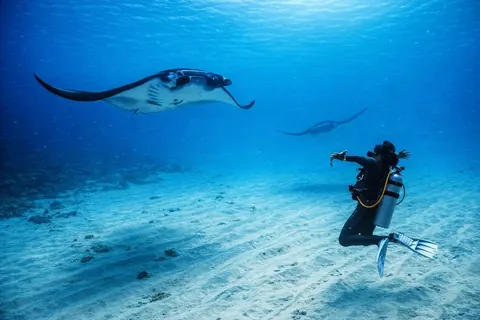 GetYourGuideFrom Bali: Beginner Scuba Diving to Nusa Penida & LembonganView on GetYourGuide (opens in a new tab)
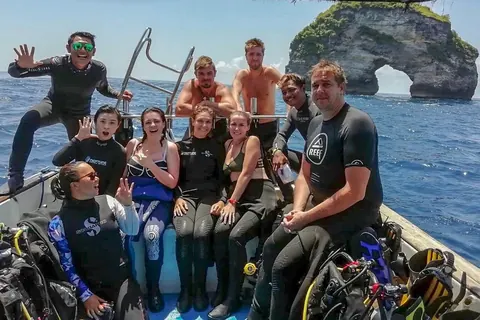 ViatorScuba Diving in Nusa Penida - Manta PointView on Viator (opens in a new tab)
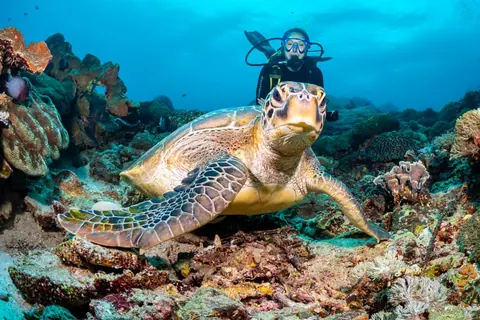 GetYourGuideBali/Padang Bai: Guided Scuba Diving with Lunch & TransfersView on GetYourGuide (opens in a new tab)
All Bali trips on Viator (opens in a new tab)
Ratings from GetYourGuide travellers.
When is the best time to dive in Bali?
The best time to dive in Bali is April to November, the drier months when the east-coast sites from Tulamben to Padang Bai are at their best, while December to March brings more rain but no closures. The sea averages 26.7 °C (80 °F) in August and 28.9 °C (84 °F) in April.
Bali's dive calendar follows the monsoon, not the thermometer. April to July and October to November are the prime windows for Tulamben, Amed and Padang Bai, and April to November for Menjangan, where visibility is usually best in October and November. On the Amed coast, December to March are the rainy months.
Cooler water, bigger fish
The coolest months, July to September at 26.7–27.0 °C (80–81 °F), overlap with the sunfish season around Nusa Penida, which divers report mainly from July to November. The sunfish are thought to follow seasonal cold upwelling, so the water at depth can feel colder than these surface averages; ask your center which wetsuit it recommends. The north-east coast runs slightly warmer: the sea off Tulamben averages 27.8 °C (82 °F) in August and 29.6 °C (85 °F) in April.
Mantas in every month
Reef mantas use the Nusa Penida cleaning stations all year, so they need no season of their own. The Nusa Penida guide explains the April to June peak at Manta Point.
| Month | Average water temperature | Season |
|---|---|---|
| January | 28.7 °C (84 °F) | Outside the best months |
| February | 28.6 °C (83 °F) | Outside the best months |
| March | 28.7 °C (84 °F) | Outside the best months |
| April | 28.9 °C (84 °F) | Best month to dive |
| May | 28.5 °C (83 °F) | Best month to dive |
| June | 27.9 °C (82 °F) | Best month to dive |
| July | 27 °C (81 °F) | Best month to dive |
| August | 26.7 °C (80 °F) | Best month to dive |
| September | 26.9 °C (80 °F) | Best month to dive |
| October | 27.6 °C (82 °F) | Best month to dive |
| November | 28.5 °C (83 °F) | Best month to dive |
| December | 28.7 °C (84 °F) | Outside the best months |
In season in: April · May · June · July · August · September · October · November
Which part of Bali should you dive?
Pick your Bali base by the dive you want: Tulamben and Amed for shore diving on the Liberty wreck and critters, Nusa Penida and Lembongan for mantas and sunfish in current, Padang Bai and Candidasa for easy bays and advanced islets, and Menjangan in the north-west for walls.
Sanur, on the south coast, is the usual starting point for day trips to all of these except Menjangan. The sections below take each area in turn; the table sums them up. Two areas have guides of their own: Tulamben and Amed and Nusa Penida.
| Area | Best for | Entry | Level | Season |
|---|---|---|---|---|
| Tulamben and Amed | USAT Liberty wreck, critters at Seraya Secrets, Jemeluk Bay | Shore | Beginner and up | April–July, October–November |
| Nusa Penida and Lembongan | Reef mantas, oceanic sunfish, drift dives | Boat | Intermediate to advanced | All year; mantas peak April–June, sunfish July–November |
| Padang Bai and Candidasa | Blue Lagoon bay; Gili Mimpang, Tepekong and Biaha islets | Boat | Beginner (bay) to advanced (islets) | April–July, October–November; Biaha best May–November |
| Menjangan | Coral walls, POS I and POS II, Anchor Wreck | Shore or boat | Ask your center | April–November |
| Sanur | Base for day trips with hotel pickup | Car, then shore or boat | All levels | Day trips run all year |
What is diving like in Tulamben and Amed?
Tulamben and Amed on Bali's north-east coast are shore-diving country: the USAT Liberty wreck lies about 40 m (131 ft) off the beach at 3–28 m (10–92 ft), and Seraya Secrets and Jemeluk Bay add easy critter and coral dives.
The Liberty is the reason most divers come. The WWII-era US ship was beached after wartime damage and later shifted offshore by a volcanic eruption; today the hull is wrapped in coral, with schooling fish and bumphead parrotfish. Dive it early in the morning or at night; it is easy to reach from both Tulamben and Amed.
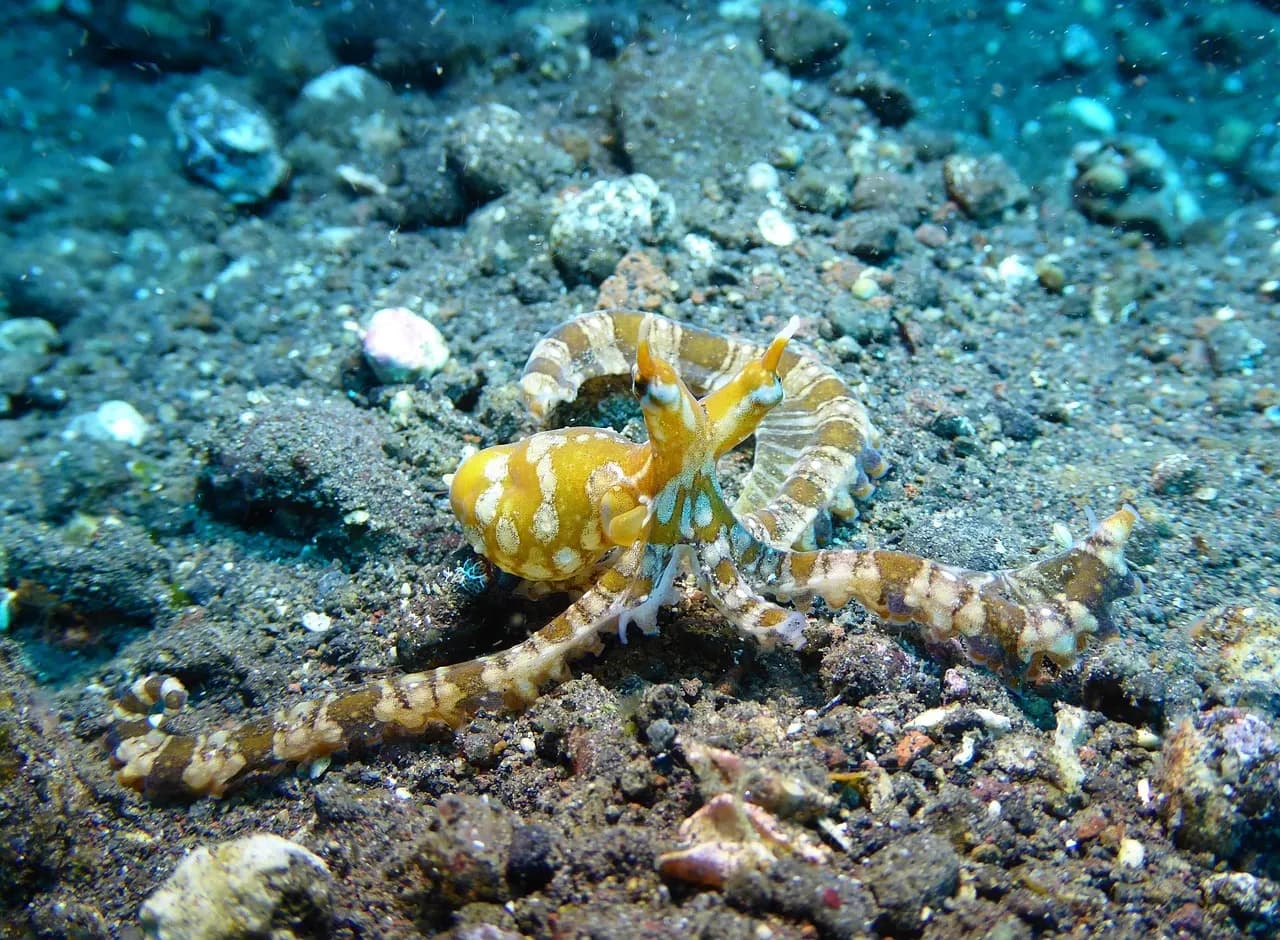
- Seraya Secrets (5–20 m, 16–66 ft): a critter dive for mimic octopus, boxer crabs, seahorses and cuttlefish.
- Tulamben Drop-Off: a wall rated suitable for any level, falling to about 70 m (230 ft); stay within your certification depth.
- Jemeluk Bay, Amed (12–22 m, 39–72 ft): coral slopes and an underwater statue garden, next to a wall that drops to about 50 m (164 ft).
- Japanese Wreck, Amed: a small WWII patrol boat ringed by reef, good for coral lovers.
Because almost everything here is a shore entry, you can dive on your own schedule with a guide and skip the boat ride, which is why the area also suits slow-paced dive holidays and new divers.
Our Tulamben and Amed guide adds Kubu, Amed Wall and the local boat and shore-dive prices, and the Bali snorkeling guide covers Jemeluk Bay and the Liberty from the surface.
Is Nusa Penida worth a trip from mainland Bali?
Nusa Penida is the place in Bali for reef mantas, seen in every month, and oceanic sunfish, met mainly from July to November, but its currents make it better suited to divers with some experience than to first-timers.
Penida, Lembongan and Ceningan lie across the Badung Strait, about 45 minutes from Bali by fast boat. Day trips cross from Sanur harbor and return by mid-afternoon. The Two Fish center in Sanur itself advises staying on the islands if mantas or sunfish are the goal, because island-based divers get more dives and reach sites that day-trippers cannot. The islands are a place for experienced divers, because of strong currents and fast-changing local conditions.
Island prices are lower than mainland day trips: two boat dives cost IDR 1.6–2.0 million at the Lembongan and Penida centers. Our Nusa Penida diving guide covers Manta Point, Crystal Bay, the marine park fee and island prices in detail.

What is the diving like at Padang Bai and Candidasa?
Padang Bai and nearby Candidasa on Bali's east coast offer two different days out: the calm Blue Lagoon bay at 10–30 m (33–98 ft) suits new divers, while the rocky islets of Gili Mimpang, Gili Tepekong and Gili Biaha at 15–30 m (49–98 ft) bring strong currents.
South Bali schools such as Two Fish use Padang Bai for open-water training dives, and the village is the cheapest spot in our price table for two boat dives: IDR 1.4 million at a center based in the village, against IDR 2.3–2.5 million for day trips from the south that include the hotel transfer.
- Blue Lagoon: white sand, coral bommies and dense reef fish.
- Tanjung Jepun wreck: a small wreck for night dives and macro, with reef sharks, stingrays, crocodile fish and coral cat sharks.
- Gili Mimpang: a group of rocks covered in sea fans, where currents can be strong.
- Gili Tepekong: walls and a canyon swept by strong currents.
- Gili Biaha: a crescent islet with a cave where white-tip reef sharks rest. The surface can be rough, so Biaha is for advanced divers only, with May to November as its best months.
Why go to Menjangan Island in north-west Bali?
Menjangan Island, off West Bali National Park near Pemuteran, is Bali's wall-diving area, with a season from April to November and the clearest water in October and November.
Menjangan lies off Taman Nasional Bali Barat (West Bali National Park), at the opposite end of the island from Sanur, and the Pemuteran coast holds many of Bali's best drop-offs and walls. The main sites:
- POS II: a coral wall that can be dived from shore or by boat, with barracuda, turtles, pufferfish, eagle rays and reef sharks.
- POS I: crevices and caves above a drop-off of more than 40 m (131 ft), with a broad channel leading to the beach.
- Garden Eel: the channel between Menjangan and the mainland, with garden eels, Napoleon wrasse, turtles and white-tip reef sharks.
- Anchor Wreck (Kapal Budak): hardly a wreck, but busy with coral walls, gorgonians, moray eels and reef sharks.
Menjangan's depths and prices are not in the tables on this page, so ask a Pemuteran center for both when you plan the trip.
Can you dive Bali from Sanur, Kuta or Seminyak?
Yes: Sanur is Bali's main base for dive day trips, with centers collecting divers from hotels in Sanur, Kuta, Seminyak and Legian at around 7:00–7:30 in the morning and bringing them back by mid-afternoon from Nusa Penida or late afternoon from Tulamben and Candidasa.
Sanur is about 60 minutes' drive from Bali's airport (DPS), and its harbor is where the Nusa Penida boats leave. Day trips cost more per dive than staying at the dive sites, because the car and the crossing are built in: Padang Bai day trips from the south cost IDR 2.3–2.5 million for two dives, against IDR 1.4 million when you are already in Padang Bai. If you have three or more days for diving, the Two Fish center in Sanur suggests a stay in Amed or on Nusa Penida for more water time for the money.
This guide lists no dive sites off Sanur itself, so treat it as a base rather than a destination: it works well for a short trip or a holiday where diving is one activity among several.
What are the best dive sites in Bali for each level?
Bali's easiest dives are the shore entries at Tulamben and Amed, including the USAT Liberty at 3–28 m (10–92 ft), Seraya Secrets and Jemeluk Bay, while Gili Tepekong and Gili Biaha off Candidasa are advanced current dives at 15–30 m (49–98 ft).
The table lists seven mainland Bali sites with their depths and levels. Four are rated beginner, from the Liberty wreck to the Blue Lagoon bay at Padang Bai; Gili Mimpang is intermediate, and Gili Tepekong and Gili Biaha are advanced because of their currents. Manta Point, Crystal Bay, Blue Corner and the other island sites are listed in the Nusa Penida guide.
| Dive site | Depth | Level | Entry | Highlights |
|---|---|---|---|---|
| USAT Liberty Wreck, Tulamben | 3–28 m (10–92 ft) | Beginner | Shore | WWII cargo ship lying 40 m off the beach, coral-covered with schooling fish and bumphead parrotfish |
| Seraya Secrets, Tulamben | 5–20 m (16–66 ft) | Beginner | Shore | Critter dive: mimic octopus, boxer crabs, seahorses and cuttlefish |
| Jemeluk Bay, Amed | 12–22 m (39–72 ft) | Beginner | Shore | Easy bay dive with coral slopes, an underwater statue garden and a wall nearby |
| Blue Lagoon, Padang Bai | 10–30 m (33–98 ft) | Beginner | Boat | Calm bay with white sand, coral bommies and dense reef fish |
| Gili Mimpang, Candidasa | 15–30 m (49–98 ft) | Intermediate | Boat | Group of rocks covered in sea fans; currents can be strong |
| Gili Tepekong, Candidasa | 15–30 m (49–98 ft) | Advanced | Boat | Walls and a canyon swept by strong currents |
| Gili Biaha, Candidasa | 15–30 m (49–98 ft) | Advanced | Boat | Crescent islet with a cave where white-tip reef sharks rest; rough surface at times |
How much does diving in Bali cost?
Two boat dives in Bali cost IDR 1.4–2.5 million, typically IDR 2.3 million, an Open Water course IDR 6.2–8.15 million and a two-dive Discover Scuba IDR 1.75–2.95 million (prices checked 22 November 2026).
The two-dive price depends on the kind of trip. Geko Dive's IDR 1.4 million is the local price in Padang Bai; Bali Fun Diving, Blue Season and Two Fish charge IDR 2.3–2.5 million for day trips from south Bali that include the hotel transfer. Equipment is included at Geko and Bali Fun Diving.
- Open Water: Geko Dive runs a 3-day course with four dives (IDR 6.2 million), Two Fish Sanur a 4-day course (IDR 7.85 million) and Bali Fun Diving a 3-day course with eLearning and certification included (IDR 8.15 million; its SSI version costs IDR 7.7 million). Ask each center whether eLearning and the certification fee are in the price.
- Discover Scuba: two ocean dives with an instructor, from IDR 1.75 million at Padang Bai to IDR 2.95 million from Sanur.
- On top: the Bali tourist levy of IDR 150,000 per person and, at Nusa Penida, a reported daily marine-area charge (see the fees section below).
For current prices, ask local dive centers.
Prices checked
| Item | Typical price | Range |
|---|---|---|
| Two-tank boat dive | IDR 2,300,000 | IDR 1,400,000–IDR 2,500,000 |
| Open Water course | IDR 7,850,000 | IDR 6,200,000–IDR 8,150,000 |
| Discover Scuba (try dive) | IDR 2,500,000 | IDR 1,750,000–IDR 2,950,000 |
Prices change; confirm with the center before you book.
Where is the best place to learn to dive in Bali?
For value, Amed and Tulamben are the cheapest places to learn in Bali, with Open Water courses at IDR 5.0–5.85 million, typically IDR 5.2 million, against a typical IDR 7.85 million at the south and east Bali centers in the price table.
The north-east courses, set out in our Tulamben and Amed guide, run three to four days with four or five open-water dives and equipment included. In the south, Two Fish in Sanur starts in its own pool and takes students to Padang Bai or Nusa Penida for the open-water dives, which costs more but saves changing hotels. Bali centers teach both PADI and SSI courses; compare the instructor, the group size and what is included rather than the agency logo.
See how Bali compares with other countries in our Open Water price index, and what a course usually includes in our guide to the cost of learning to dive.
Do divers pay any fees in Bali?
Every international visitor to Bali pays the provincial tourist levy of IDR 150,000 per person, and divers and snorkelers at Nusa Penida are reported to pay a further IDR 100,000 per day for the marine protected area, a figure to check on arrival.
The levy is a tourism charge of the Bali provincial government, paid online or on arrival; it is not a marine-park fee. The Nusa Penida charge for diving, snorkeling and swimming in the marine protected area was first reported in 2023, and its current amount and how it is collected are not officially confirmed, so ask your center on arrival. On the islands, most centers also add a Manta Point supplement, and one Lembongan center adds 10 % regency tax to its prices.
Where is the nearest recompression chamber to Bali's dive sites?
The nearest listed recompression chamber to Bali's dive sites is the Hyperbaric and Diving Medicine Centre at Kasih Ibu Hospital Saba in Gianyar regency, on the mainland.
The hospital's own website has no chamber page, so call ahead through your insurer's emergency line rather than turning up. In Denpasar, the RSUP Prof Ngoerah hospital (formerly Sanglah) runs a hyperbaric clinic, but its published hours are weekday outpatient hours. There is no chamber on Nusa Penida, so an injured diver there first crosses the Badung Strait, and Menjangan, in the far north-west, is a long way from both hospitals.
Take out dive insurance that covers recompression treatment and evacuation before you travel; our dive insurance guide explains what to check. If anything feels wrong after a dive, tell your guide at once and call DAN or your insurer's emergency line, who can direct you to a dive doctor.
Dive centers in Bali
Loading dive centers…
Frequently asked questions
Is Bali good for beginner divers?
Yes. Bali has several easy shore entries for new divers: the USAT Liberty wreck at Tulamben starts at about 3 m (10 ft), and Seraya Secrets and Jemeluk Bay in Amed are rated for beginners, as is the Blue Lagoon at Padang Bai. Save the Nusa Penida drift sites and the Candidasa islets for later, because both have strong currents. A two-dive try dive costs IDR 1.75–2.95 million.
Can you snorkel the USAT Liberty wreck in Tulamben?
Yes. The Liberty lies about 40 m (131 ft) off the beach at Tulamben, and its shallowest parts sit at around 3 m (10 ft), so snorkelers can see the wreck from the surface. Enter carefully from the beach, keep clear of divers' bubbles and never stand on the coral that now covers the hull. Our Bali snorkeling guide lists other spots.
When can you see mola mola in Bali?
Oceanic sunfish (mola) are seen around Nusa Penida and Nusa Lembongan mainly from July to November, a season thought to follow cold upwelling from depth. Crystal Bay and Blue Corner are the best-known sites, and both call for experience in currents. Sightings are never certain, so plan several dives rather than one. Day trips run from Sanur, but staying on the islands gives you more dives there.
How do you get to Bali's dive areas from the airport?
International flights land at I Gusti Ngurah Rai International Airport (DPS) in the south. Sanur, the usual base for day trips, is about 60 minutes away by car, and fast boats from Sanur reach Nusa Penida in about 45 minutes. Tulamben, Amed and Padang Bai are reached by road along the east and north-east coast, and many centers include pickup from hotels in Sanur, Kuta, Seminyak and Legian.
Do I need dive insurance for Bali?
It is strongly advised. The nearest listed chamber is at Kasih Ibu Hospital Saba in Gianyar, so a diver hurt at Nusa Penida or Menjangan first faces a boat crossing or a long drive. Choose a policy that covers recompression treatment and evacuation, check its depth limit against your planned dives, and carry the emergency number with you. Our dive insurance guide explains what to look for.
Is the rainy season a bad time to dive in Bali?
Not necessarily. December to March brings more rain to east Bali, but the dive sites stay open and the sea is at its warmest, about 28.6–28.9 °C (83–84 °F) from December to April. The main drawback is at Nusa Penida, where the north-west monsoon of December and January can limit boat access to exposed sites.


