Diving region
Scuba Diving in Southeast Asia
Southeast Asia has no single dive season, so choose by month: the Philippines, Raja Ampat and Thailand's Andaman coast are at their best from about December to April, while Bali, the Gili Islands, Komodo and Malaysia peak from about April to October. Only Vietnam's sea dips below 26 °C (79 °F), to 24.5 °C (76 °F) in January.
Dive trips in Southeast Asia
Trips run by local operators, booked on Viator or GetYourGuide.
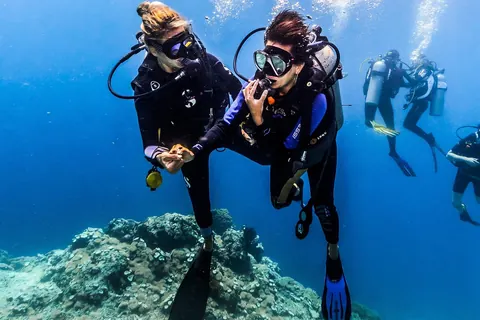 ViatorBaliDiscover Scuba Diving in Tulamben, BaliView on Viator (opens in a new tab)
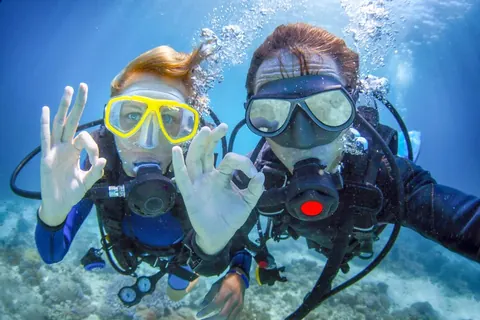 GetYourGuideBaliBali: Tulamben Bay Beginner's Dive ExperienceView on GetYourGuide (opens in a new tab)
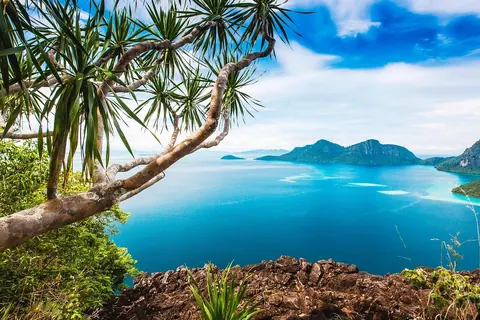 ViatorMalaysiaHike and Dive in Bohey Islands with Local LunchView on Viator (opens in a new tab)
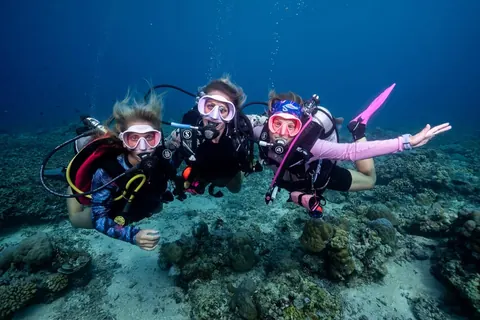 GetYourGuideGili IslandsGili Trawangan: Discover Scuba Diving for BeginnersView on GetYourGuide (opens in a new tab)
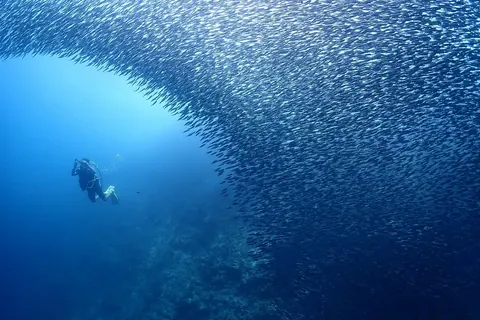 ViatorPhilippinesCebu: Scuba Diving Experience beach entry in MactanView on Viator (opens in a new tab)
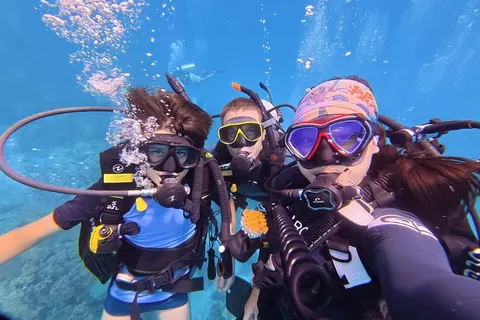 GetYourGuideKomodoLabuan Bajo: Try Scuba 1-Day Experience for First-TimersView on GetYourGuide (opens in a new tab)
Ratings from GetYourGuide travellers.
Where should you dive in Southeast Asia?
In Southeast Asia, go to Komodo, Raja Ampat, Malapascua in the Philippines or Sipadan in Malaysia for big animals and current, to Koh Tao, the Gili Islands or Nha Trang in Vietnam for relaxed first dives and courses, and to Tulamben on Bali for a wreck you can swim to from the beach.
Eight guides cover the region. The table compares their best months, water and typical prices, each in the currency local centers quote.
- Bali: three styles within day-trip range, the USAT Liberty wreck off the beach at Tulamben, critter dives around Amed, and manta and sunfish drifts off Nusa Penida.
- Gili Islands: three small islands off Lombok with short boat rides, turtles on most of the main reefs and mostly beginner-rated sites.
- Komodo: a national park of current-swept rocks and pinnacles dived from Labuan Bajo, with reef mantas at Karang Makassar in every month.
- Malaysia: permit-only Sipadan off Sabah for walls, turtles and reef sharks, and the peninsula's east-coast islands, Tioman, the Perhentians and Redang, for easy reefs.
- Philippines: thresher sharks at Malapascua, the Pescador Island wall at Moalboal and World War II wrecks at Coron.
- Raja Ampat: a remote archipelago off Sorong in Indonesian Papua, where 283 fish species were once counted on a single dive at Cape Kri.
- Thailand: two coasts with opposite seasons, Koh Tao in the Gulf and Phuket with the Similan Islands on the Andaman Sea.
- Vietnam: Nha Trang's Hon Mun marine park for first dives and courses, with Phu Quoc at its best in the opposite half of the year.
| Place | Best months | Water | Two-tank boat dive | Open Water course |
|---|---|---|---|---|
| Bali | April to November | 26.7–28.9 °C (80–84 °F) | IDR 2,300,000 | IDR 7,850,000 |
| Gili Islands | April to October | 27.5–29.4 °C (82–85 °F) | IDR 1,280,000 | IDR 6,900,000 |
| Komodo | April to October | 26.6–29.1 °C (80–84 °F) | – | IDR 8,500,000 |
| Malaysia | April to October | 28.1–29.6 °C (83–85 °F) | MYR 290 | MYR 1,490 |
| Philippines | December to May | 27.1–29.5 °C (81–85 °F) | ₱3,200 | ₱19,997.50 |
| Raja Ampat | October to April | 28.5–29.4 °C (83–85 °F) | €120 | €655 |
| ThailandKoh Tao, Phuket | February to April | 28.4–29.9 °C (83–86 °F) | THB 3,750 | THB 13,900 |
| Vietnam | February to August | 24.5–28.9 °C (76–84 °F) | US$80 | US$400 |
Water: average temperature of the coolest and the warmest month. Prices: typical prices; each guide says when they were checked.
When is the best time to dive in Southeast Asia?
April is the one month when every Southeast Asia destination in this guide is in season; the rest of the year splits in two, with the Philippines, Raja Ampat and Thailand's Andaman coast best from about December to April, and Bali, the Gilis, Komodo, Malaysia and Nha Trang best through the middle of the year.
Each area follows its own monsoon:
- Bali, the Gilis and Komodo: April to November on Bali, April to October on the Gilis and in north and central Komodo. December to March brings rain, but Bali's sites stay open and diving carries on around Gili Trawangan. Komodo's central cleaning stations see more mantas from November to April, when some northern sites get too rough for day boats.
- Raja Ampat: October to April, when seas are generally calmer. Most liveaboards sail there from November to May and move elsewhere for the rest of the year.
- Thailand: the Andaman coast runs from November to April, and the Similan Islands national park opens on 15 October and closes in mid-May. Koh Tao in the Gulf is best from February to October; rain and bigger waves arrive around November and December.
- Philippines: the dry season runs from December to May. June to November is the rainy season, when typhoons can bring rough seas and poorer visibility.
- Malaysia: the north-east monsoon stops most diving on Tioman, the Perhentians and Redang from about November to January. Sipadan is dived all year, though the wetter months from December to about March can be unsettled.
- Vietnam: Nha Trang is best from about February to August, before the September to December rains, while Phu Quoc dives best from November to April.
Water temperature barely limits the choice. Every guide here except Vietnam stays between 26.6 °C (80 °F) and 29.9 °C (86 °F) all year, and Indonesia's coolest month, August, falls in the middle of its dry season. Nha Trang is the outlier, with 24.5 °C (76 °F) in January against 28.9 °C (84 °F) in May.
Where can you see mantas, sharks and whale sharks in Southeast Asia?
In Southeast Asia, reef mantas visit Manta Point off Nusa Penida and Karang Makassar in Komodo in every month, pelagic thresher sharks come to Monad Shoal off Malapascua all year, and whale sharks are recorded around Koh Tao in every season, most often in April–May and October–November.
- Manta rays: sightings off Nusa Penida tend to peak from April to June, and in Komodo from about November to April, when mass feeding can be seen. Oceanic mantas pass the Similan and Surin islands through their October to May season, most often from February to April.
- Ocean sunfish (mola): met mainly from July to November around Nusa Penida, with Crystal Bay the classic site.
- Thresher sharks: Monad Shoal (15–25 m, 49–82 ft) off Malapascua is visited most reliably early in the morning; the shallower Kimud Shoal (12–15 m, 39–49 ft) also sees passing mobula and manta rays.
- Reef sharks and turtles: Sipadan's whitetip reef sharks are seen on nearly every dive in every month, and green and hawksbill turtles feed on its shallow Turtle Patch. Leopard sharks rest on the sand at Phi Phi and in the Similans, and green turtles fill Siaba Besar, Komodo's Turtle City.
- Big schools: barracuda and grey reef sharks at Sipadan's Barracuda Point, and Spanish mackerel hunting dense schools at Blue Magic in Raja Ampat.
How much does diving in Southeast Asia cost?
Two boat dives in Southeast Asia cost THB 2,000–2,200 on a Koh Tao half-day trip, PHP 3,000–4,000 at Moalboal and Malapascua, MYR 240–300 on Malaysia's east-coast islands and USD 70–96 in Vietnam, against EUR 120–124 at a Raja Ampat resort (prices checked November 2026).
Each area's centers quote their own currency, and the figures here stay as quoted. What the headline price leaves out often matters more than the gap between countries:
- Park and visitor fees: Komodo National Park charges foreign visitors IDR 250,000 a day plus a IDR 25,000 diving ticket, and the Gili Islands marine park ticket is IDR 100,000. Raja Ampat adds a marine park card published at IDR 700,000 and a regency fee reported at IDR 1,000,000, and every international visitor to Bali pays a provincial levy of IDR 150,000. Sipadan's permits carry a MYR 100 conservation fee and a MYR 350 diving fee, and Thai national parks such as Phi Phi and Mu Ko Lanta charge foreign adults THB 400. Fees change, so check the current ones before you go.
- Local dives versus day trips: on Bali, a local two-dive morning at Padang Bai costs IDR 1.4 million, while a day trip from south Bali with hotel transfer runs to IDR 2.3–2.5 million. In Thailand, a two-dive Similan day trip from Khao Lak costs THB 5,300–6,100, with the park fee and gear on top.
- Remote areas: Raja Ampat liveaboards cost EUR 356–606 per person a night, and resort dives there are EUR 60–62 each before your room.
For a whole-trip figure, ask local centers through Get quotes.
Which Southeast Asia dive areas suit beginners, and which need experience?
For a first course in Southeast Asia, Koh Tao, the Gili Islands, Nha Trang and Bali's Tulamben and Amed are the easy picks, while Komodo's northern current sites, Sipadan's Barracuda Point and West Ridge, Moalboal's Pescador Island and Thailand's Koh Tachai are rated advanced.
- Koh Tao: an Open Water course costs THB 11,000–12,500 for 2.5–3 days with equipment and materials, and Japanese Gardens (2–15 m, 7–49 ft) is a shallow coral garden used for first dives.
- Gili Islands: six of the eight sites in our Gili table are rated beginner, and a three-day course costs IDR 6.9–7.0 million with equipment and certification.
- Nha Trang: Dam Bay, a calm reef at 6–15 m (20–49 ft), is where centers run try dives and courses; a Vietnam Open Water course costs USD 395–468.
- Tulamben and Amed: shore entries such as the USAT Liberty wreck (3–28 m, 10–92 ft) and Seraya Secrets, with Open Water courses at IDR 5.0–5.85 million.
Experience pays off where the current runs. Castle Rock, Crystal Rock and The Cauldron in Komodo, Gili Tepekong and Gili Biaha off Bali's east coast, Chumphon Pinnacle (14–36 m, 46–118 ft) off Koh Tao and Malapascua's Dona Marilyn wreck are all rated advanced in our tables. Nusa Penida's mantas and sunfish come with currents that suit divers with some experience, and at Cape Kri in Raja Ampat the current ranges from mild to strong.
How do you get to Southeast Asia's dive areas?
Most Southeast Asia dive trips start at a regional airport: Denpasar (DPS) for Bali, Lombok (LOP) or Denpasar for the Gili Islands, Labuan Bajo (LBJ) for Komodo, Sorong (SOQ) for Raja Ampat, Phuket (HKT) for the Andaman coast, Mactan-Cebu (CEB) for Malapascua and Moalboal, and Tawau (TWU) for Sipadan.
- Indonesia: dive centers in south Bali run day trips to Nusa Penida and Tulamben, so one Bali stay covers both, and the Gilis are close by through Lombok. Komodo has its own airport at Labuan Bajo, while Raja Ampat lies far to the east in Indonesian Papua and deserves a trip of its own.
- Thailand: fly to Phuket for Phi Phi and Khao Lak, or to Samui (USM) and take the ferry to Koh Tao. Bangkok (BKK) is the main international gateway.
- Philippines: Mactan-Cebu serves Malapascua and Moalboal, Busuanga (USU) serves Coron, and Manila (MNL) is the main international gateway.
- Malaysia: Kuala Lumpur (KUL) is the gateway; Sipadan and Semporna use Tawau, Redang uses Kuala Terengganu (TGG) and the Perhentians use Kota Bharu (KBR).
- Vietnam: Cam Ranh (CXR) is the airport for Nha Trang and Da Nang (DAD) for Hoi An.
- By liveaboard: the Tubbataha Reefs are visited on liveaboard trips from Puerto Princesa, mainly from March to June, and boats are the usual way to reach Misool and Wayag in Raja Ampat and Komodo's southern sites such as Cannibal Rock. Routes and boats are on our liveaboard pages for Raja Ampat, Komodo, the Similan Islands and Tubbataha.
Where are the recompression chambers in Southeast Asia?
Southeast Asia's best-documented chambers are the 24/7 units of Thailand's SSS network in Phuket and on Koh Tao, and Bali's nearest listed chamber is at Kasih Ibu Hospital Saba in Gianyar, but the chambers listed for the Gilis, Komodo, Raja Ampat and Cebu should be checked before you dive.
- Gilis and Komodo: the nearest listed chambers are at Mataram City Hospital on Lombok and at Siloam Hospitals in Labuan Bajo, with Bali as the fallback for both.
- Raja Ampat: the chamber at the regional hospital in Waisai has an unclear working status, so plan for evacuation to Sorong, Bali or Jakarta.
- Philippines: the TIEZA chamber in Mandaue City, Cebu, was reported working in 2025.
- Malaysia: the confirmed chamber for Sipadan divers is at the Regional Armed Forces Hospital at the Sepanggar naval base in Kota Kinabalu; one is also reported in Semporna, closer to the island.
- Vietnam: no chamber in Nha Trang could be confirmed, and divers have been treated at Military Hospital 175 in Ho Chi Minh City.
Where the chamber is far away or unconfirmed, carry dive insurance that covers evacuation and chamber treatment, and ask your dive center for its emergency plan. For fitness to dive, see a dive doctor or DAN.
Frequently asked questions
What is the best month for diving in Southeast Asia?
April, if you want the widest choice: it is the only month when every destination in this guide is in season. From December to March, head for the Philippines, Raja Ampat or Thailand's Andaman coast. From June to August, Bali, the Gili Islands, Komodo, Malaysia and Nha Trang are the better bets, and Koh Tao in the Gulf of Thailand works from February to October.
Where should you learn to dive in Southeast Asia?
Koh Tao is the classic choice: an Open Water course costs THB 11,000–12,500 for 2.5–3 days with equipment and materials, and many schools quote the same THB 11,000. The Gili Islands (IDR 6.9–7.0 million), Nha Trang in Vietnam (USD 395–468) and Malaysia (MYR 1,400–1,630) are calm alternatives. Inclusions differ, so check whether eLearning is in the price; our Open Water price index compares them.
Where can you dive with manta rays in Southeast Asia?
Reef mantas use cleaning stations at Manta Point off Nusa Penida and at Karang Makassar in Komodo in every month; Nusa Penida's sightings tend to peak from April to June, Komodo's from about November to April. Oceanic mantas visit the Similan and Surin islands off Thailand, most often from February to April, and mobula and manta rays pass Kimud Shoal off Malapascua.
Can you dive in Southeast Asia in the rainy season?
Often, yes. Bali's dive sites stay open from December to March despite more rain, the sites around Gili Trawangan are workable all year, and Sipadan is dived in every month. A few areas do close: the north-east monsoon stops most diving on Tioman, the Perhentians and Redang from about November to January, and the Similan Islands national park is shut from mid-May to 15 October.
How warm is the water for diving in Southeast Asia?
Warm all year. Monthly averages stay between 26.6 °C (80 °F) and 29.9 °C (86 °F) at every destination in this guide except Vietnam, where the sea off Nha Trang drops to 24.5 °C (76 °F) in January. Indonesia is coolest in August, at 26.6–27.5 °C (80–82 °F) in Komodo, Bali and the Gilis, so pack a slightly thicker suit if you feel the cold.


