Dive guide · Honduras
Scuba Diving in Roatan & Utila
Roatan and Utila, two of Honduras' Bay Islands, split the diving: Roatan for reef walls, wrecks such as the Odyssey and a shark dive, smaller Utila for budget courses and whale sharks in any month. March to June is the driest time, with water at 27–28.8 °C (81–84 °F), and a two-tank boat dive costs about US$106.
Key facts
- Best months
- March to June
- Water temperature
- 26.7–29.6 °C (80–85 °F)Monthly average, coolest to warmest month
- Level
- Beginner to advanced
- Two-tank boat dive
- US$106Typical price, checked
- Open Water course
- US$439.50Typical price, checked
- Discover Scuba (try dive)
- US$138Typical price, checked
- Airports
- Juan Manuel Gálvez International Airport (RTB), Utila Airport (UII)
- Park fee
- Roatan Marine Park voluntary user fee (suggested amount; bracelet or token sold at the RMP EcoStore in West End and partner dive shops): US$10
- Nearest chamber
- Cornerstone Medical Services hyperbaric chamber (Anthony's Key Resort), Sandy Bay, Roatan
Book a dive trip in Roatan & Utila
Trips run by local operators, booked on Viator or GetYourGuide.
 ViatorOne Tank DiveView on Viator (opens in a new tab)
 GetYourGuideRoatán: Scuba DivingView on GetYourGuide (opens in a new tab)
 ViatorDiscover Scuba Diving in Roatan at Upachaya with Private TransferView on Viator (opens in a new tab)
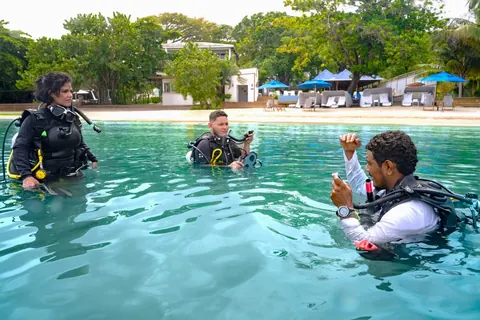 GetYourGuideRoatán: 3-Day Open Water Diving Course with TransfersView on GetYourGuide (opens in a new tab)
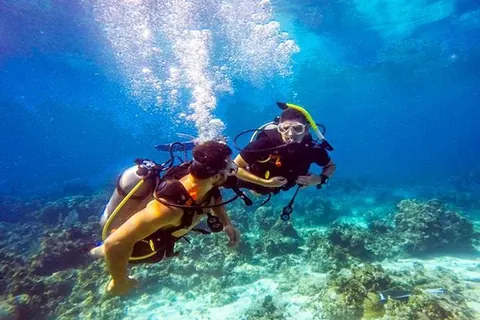 ViatorRoatan Scuba Shore Diving plus TransportationView on Viator (opens in a new tab)
All Roatan & Utila trips on Viator (opens in a new tab)
Ratings from GetYourGuide travellers.
When is the best time to dive Roatan and Utila?
The best time to dive Roatan and Utila is March to June, the driest stretch of the year, when the sea warms from 27 °C (81 °F) to 28.8 °C (84 °F); the islands are dived all year, and February is coolest at 26.7 °C (80 °F).
The heaviest rain usually falls from about October to early January. Estimates of how long the wet spell lasts vary, from July–January to October–February, so pack a rain jacket for any trip outside spring.
The Bay Islands fall inside the Atlantic hurricane season, June to November, and its busiest weeks run from mid-August to mid-October. The islands lie outside the usual hurricane track but often catch the tail end of passing tropical storms. Spring has a second draw: March and April give the best odds of whale sharks off Utila.
| Month | Average water temperature | Season |
|---|---|---|
| January | 26.8 °C (80 °F) | Outside the best months |
| February | 26.7 °C (80 °F) | Outside the best months |
| March | 27 °C (81 °F) | Best month to dive |
| April | 27.7 °C (82 °F) | Best month to dive |
| May | 28.3 °C (83 °F) | Best month to dive |
| June | 28.8 °C (84 °F) | Best month to dive |
| July | 28.7 °C (84 °F) | Outside the best months |
| August | 29.2 °C (85 °F) | Outside the best months |
| September | 29.6 °C (85 °F) | Outside the best months |
| October | 29.1 °C (84 °F) | Outside the best months |
| November | 28.2 °C (83 °F) | Outside the best months |
| December | 27.3 °C (81 °F) | Outside the best months |
What is diving in Roatan like?
Roatan diving is boat diving on reefs, walls and wrecks around the island, from the beginner-friendly Blue Channel near West End (9–27 m, 30–89 ft) to the Odyssey freighter off Sandy Bay and the black-coral fissures of Mary's Place on the south shore.
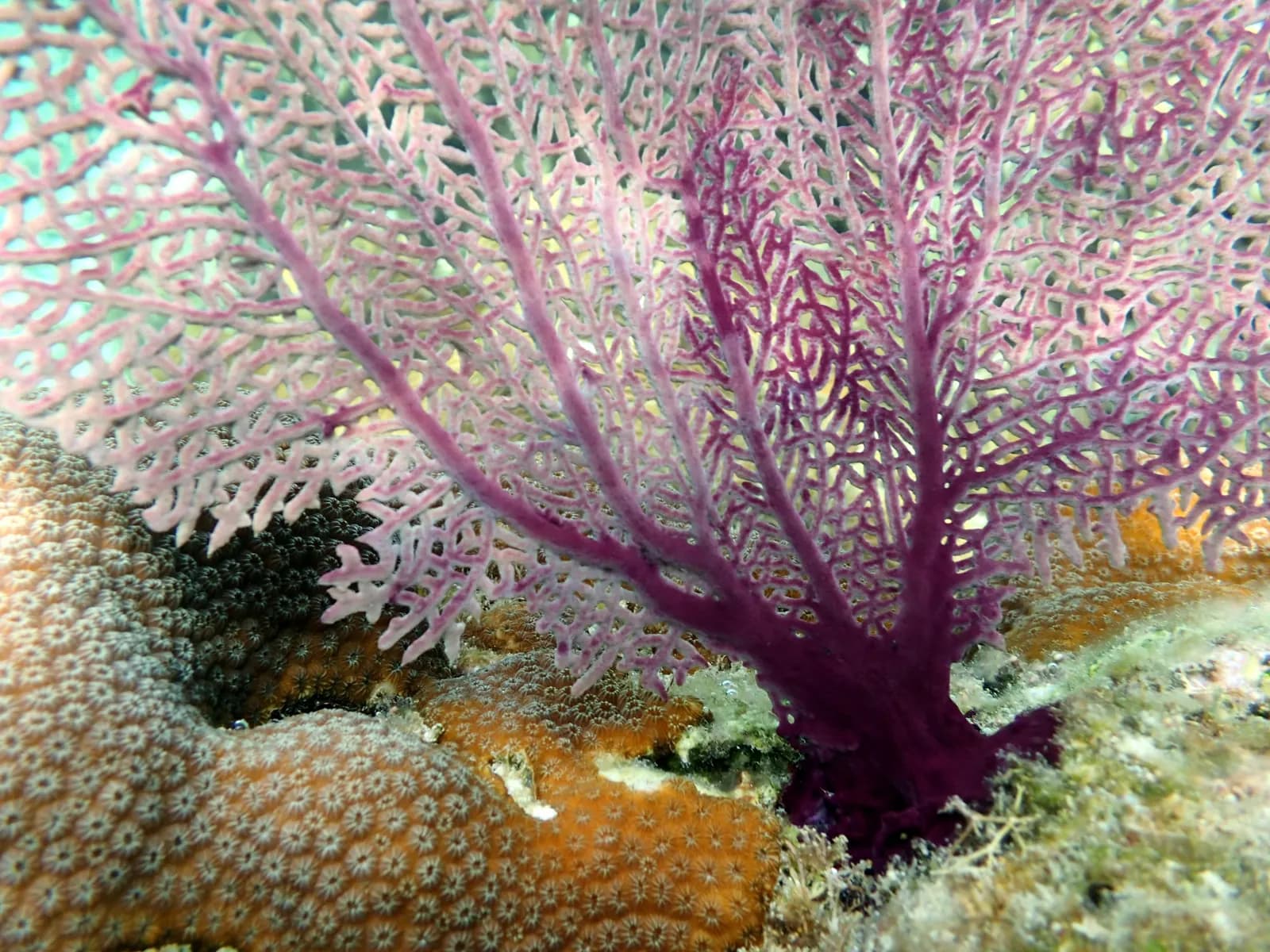
- Mary's Place (12–24 m, 39–79 ft): cracks in the south-shore reef wall lined with black coral and big sea fans, with horse-eye jacks. It is not dived every day, so ask your shop when it runs.
- Odyssey wreck (12–33 m, 39–108 ft): a large freighter sitting upright off Sandy Bay, with swim-throughs; going inside needs wreck training.
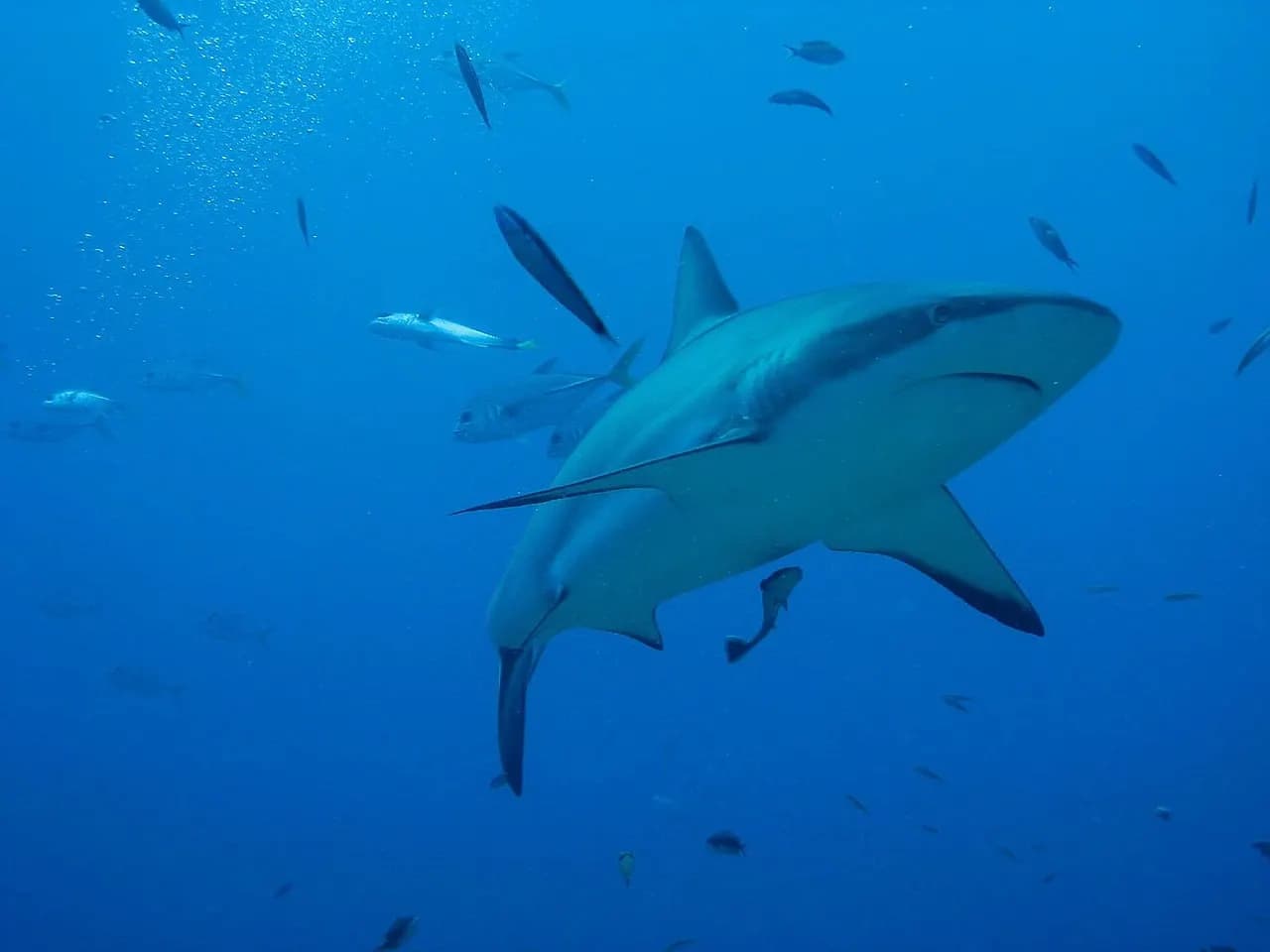
- Cara a Cara (24–30 m, 79–98 ft): a shark dive where operators feed Caribbean reef sharks to bring them in, with groupers and morays around. Roatan Dive Center sells it by appointment for US$130–140.
- El Águila: another wreck and a deep dive, at around 30 m (100 ft).
Other names you will hear on the boats include Spooky Channel, Hole in the Wall and West End Wall.
Is Utila a better choice than Roatan?
Utila suits divers on a budget and anyone hoping for whale sharks: one Utila school's Open Water course costs US$350 including accommodation, against US$399–530 on Roatan, and whale sharks are sighted off its north shore in every month.
- Duppy Waters (6–24 m, 20–79 ft): a sloping coral garden with little current, eagle rays, stingrays and octopus; a good night dive.
- Halliburton wreck (about 25 m, 82 ft): a small barge sunk as an artificial reef, now home to arrow crabs, fireworms and pipefish.
- Black Hills (10–40 m, 33–131 ft): a seamount topping out at about 10 m (33 ft), with barracuda, jacks, turtles and the odd passing whale shark; currents can be strong.
Fun diving is cheap too: Bay Islands College of Diving bundles two tanks with gear, tax and one night's accommodation for US$74. Utila has its own airport (UII), and you can move on to Roatan's walls and wrecks once you qualify.
When can you see whale sharks off Utila?
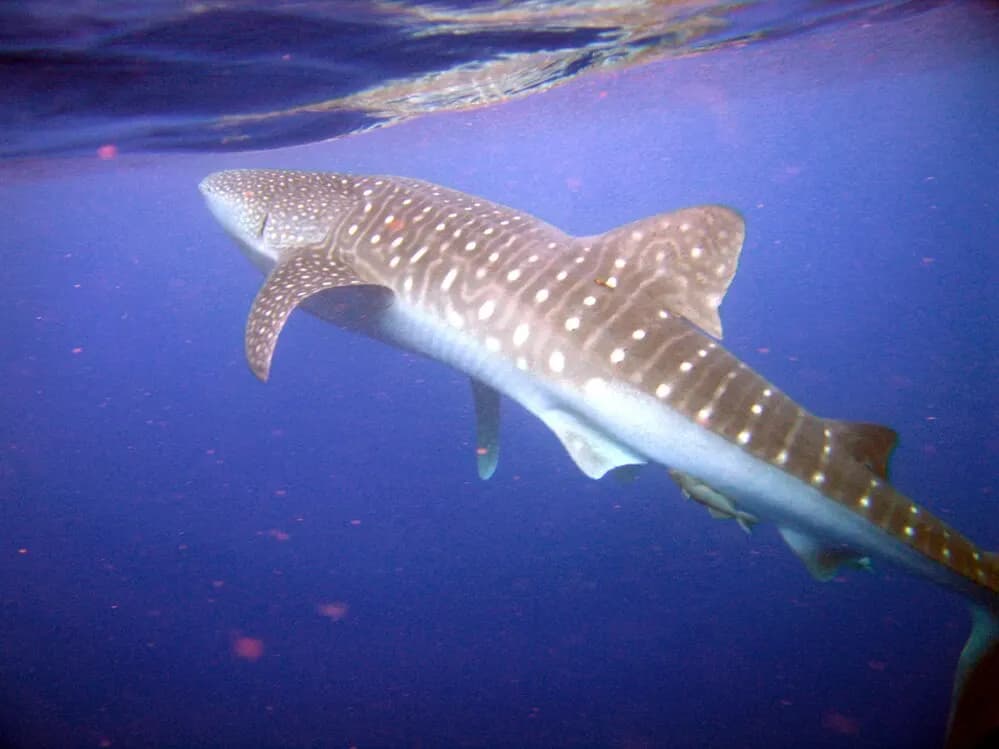
Whale sharks can appear off Utila in any month, mostly along the north shore near the edge of the shelf, but close to half of the encounters in long-term sighting records fell in March and April.
There is no well-defined season, and numbers swing strongly from one year to the next. The sharks are often found where schools of little tunny are feeding, and some local operators also point to October to December as a good window. Count a sighting as luck, not as part of the itinerary.
In Belize the gathering at Gladden Spit follows the snapper spawning around the full moon instead: see our Belize guide.
Which Roatan and Utila dive sites suit your level?
Two of the seven Bay Islands sites in the table are beginner dives, Blue Channel off Roatan's West End and Duppy Waters on Utila, while the Odyssey wreck, Cara a Cara, the Halliburton and Black Hills are advanced.
Blue Channel (9–27 m, 30–89 ft) has swim-throughs and a sandy bowl full of fish, with eagle rays and turtles. Mary's Place sits in between: an intermediate dive through narrow fissures where steady buoyancy pays off.
| Dive site | Depth | Level | Entry | Highlights |
|---|---|---|---|---|
| Mary's Place | 12–24 m (39–79 ft) | Intermediate | Boat | Fissures in the south-shore reef wall lined with black coral and large sea fans; horse-eye jacks; not dived every day |
| Blue Channel | 9–27 m (30–89 ft) | Beginner | Boat | West End reef with swim-throughs and a sandy bowl of fish; eagle rays and turtles |
| Odyssey wreck | 12–33 m (39–108 ft) | Advanced | Boat | Large upright freighter off Sandy Bay with swim-throughs; entering the wreck needs wreck training |
| Cara a Cara | 24–30 m (79–98 ft) | Advanced | Boat | Caribbean reef sharks drawn in by an operator-run shark dive; groupers and morays |
| Duppy Waters (Utila) | 6–24 m (20–79 ft) | Beginner | Boat | Sloping coral garden with little current; eagle rays, stingrays, octopus, good for night dives |
| Halliburton wreck (Utila) | 24–27 m (79–89 ft) | Advanced | Boat | Small barge scuttled as an artificial reef in 1998; arrow crabs, fireworms and pipefish |
| Black Hills (Utila) | 10–40 m (33–131 ft) | Advanced | Boat | Seamount rising to about 10 m; barracuda, jacks, turtles and passing whale sharks; currents can be strong |
How much does diving in Roatan cost?
A two-tank boat dive on Roatan costs US$104–110 (prices checked November 2026), but whether 15–19% tax, rental gear and the US$10 marine park fee are included changes from shop to shop.
- Two-tank boat dive: Roatan Dive Center US$104 (2 × US$52 with your own gear, tax included; US$120 with rental), Sun Divers US$106 (2 × US$53 per tank, before 15% tax) and Roatan Divers US$110 for its two-dive trip with gear and tax. The marine park fee comes on top at the first two.
- Discover Scuba: US$120–140, typically about US$138, for a skills session in a calm bay and one reef boat dive with gear: Sun Divers US$120 plus tax, Roatan Dive Center US$138 as a cruise-passenger excursion with transport, Roatan Divers US$140 all-in.
- Tax: Roatan Dive Center and Sun Divers quote 15% sales tax; Roatan Divers charges 19% (4% tourism tax plus 15% sales tax) and includes it.
For the full price, ask local dive centers for a quote.
Prices checked
| Item | Typical price | Range |
|---|---|---|
| Two-tank boat dive | US$106 | US$104–US$110 |
| Open Water course | US$439.50 | US$350–US$530 |
| Discover Scuba (try dive) | US$138 | US$120–US$140 |
Prices change; confirm with the center before you book.
Do you have to pay the Roatan Marine Park fee?
Officially no: the Roatan Marine Park fee is a voluntary user fee with a suggested US$10, paid for a bracelet or token at the park's EcoStore in West End or at partner dive shops, but most Roatan shops add it to your bill.
Sun Divers lists it as US$10 per diver per year, and Roatan Dive Center simply adds US$10. Roatan Marine Park works within the Bay Islands National Marine Park, declared on 10 June 2010, which covers 647,153 hectares around Utila, Roatan and Guanaja.
Utila has its own arrangement: Bay Islands College of Diving charges a marine park fee of US$4 a day, which it says goes to the mooring buoys. Fees change, so confirm both when you book.
How much is an Open Water course in Roatan and Utila?
An Open Water course in the Bay Islands costs US$350–530, typically about US$439.50: US$350 on Utila with accommodation included, and US$399–530 on Roatan.
- Bay Islands College of Diving (Utila), US$350: PADI course with accommodation.
- Roatan Dive Center, US$399: SSI Open Water Diver, tax included.
- Sun Divers, US$480: US$380 for the course plus US$100 eLearning, with tax and the US$10 marine park fee on top.
- Roatan Divers, US$530: all-in.
Roatan Dive Center teaches SSI and the other three PADI; choose by price, schedule and instructor rather than by agency. See how the Bay Islands compare in our Open Water price index.
Where is the nearest recompression chamber to Roatan and Utila?
Roatan's hyperbaric chamber is run by Cornerstone Medical Services at Anthony's Key Resort in Sandy Bay, with posted hours of 8:00–17:00 Monday to Saturday and 8:00–12:00 on Sunday, so ask your shop how it reaches the chamber outside those hours.
The clinic belongs to DAN's preferred provider network. Utila has its own facility, the Utila Hyperbaric Chamber and Trauma Center, but its hours and current status are not published; check before you dive there.
Several Bay Islands sites go deep: Black Hills reaches 40 m (131 ft), the Odyssey 33 m (108 ft) and El Águila about 30 m (100 ft). Get dive insurance that pays for chamber treatment and evacuation off the islands, and contact DAN or a dive doctor about any symptoms after diving.
Dive centers in Roatan & Utila
Loading dive centers…
Frequently asked questions
Is Roatan good for beginner divers?
Yes, if you choose sites with care. Blue Channel off West End starts at 9 m (30 ft) and is rated beginner, and a Discover Scuba dive on Roatan costs US$120–140 with gear. Utila's Duppy Waters, 6–24 m (20–79 ft) with little current, is another easy option. Leave the Odyssey wreck, Cara a Cara and Black Hills until you hold an advanced certification.
What is the Cara a Cara shark dive in Roatan?
Cara a Cara is Roatan's shark dive: operators feed the sharks, which brings Caribbean reef sharks in close at 24–30 m (79–98 ft), with groupers and morays around them. It is rated advanced because of the depth. Roatan Dive Center sells it by appointment for US$130–140, separately from its regular reef trips, so it is easy to skip if fed-shark dives are not for you.
What is the water temperature in Roatan?
The sea around Roatan and Utila averages 26.7 °C (80 °F) in February, the coolest month, and 29.6 °C (85 °F) in September, the warmest. In the March–June best season it runs from 27 °C (81 °F) to 28.8 °C (84 °F). The water changes only about 3 °C (5 °F) across the year, and both islands share the same sea.
Is Roatan or Utila better for learning to dive?
Utila is the cheaper place to learn: Bay Islands College of Diving charges US$350 for its PADI Open Water course with accommodation included. On Roatan the course costs US$399–530, with SSI at Roatan Dive Center for US$399 including tax. Both islands have easy training sites, and Roatan adds dives like the Odyssey wreck and Mary's Place for after you qualify.
Do hurricanes hit Roatan?
Direct hits are not the usual pattern: the Bay Islands lie outside the main hurricane track, but they often catch the tail end of tropical storms during the June–November Atlantic season. The riskiest weeks run from mid-August to mid-October, close to the start of the wettest months. If you travel then, keep your plans flexible and check that your insurance covers weather delays.
How do you get to Roatan and Utila for diving?
Roatan has an international airport, Juan Manuel Gálvez (RTB), and Utila has an airport of its own (UII). You can combine the two islands, for example learning on Utila and then moving to Roatan for walls and wrecks. Leave a full day without diving before your flight home, in line with DAN's guidance on flying after diving.


