Dive guide · Indonesia
Scuba Diving in Komodo
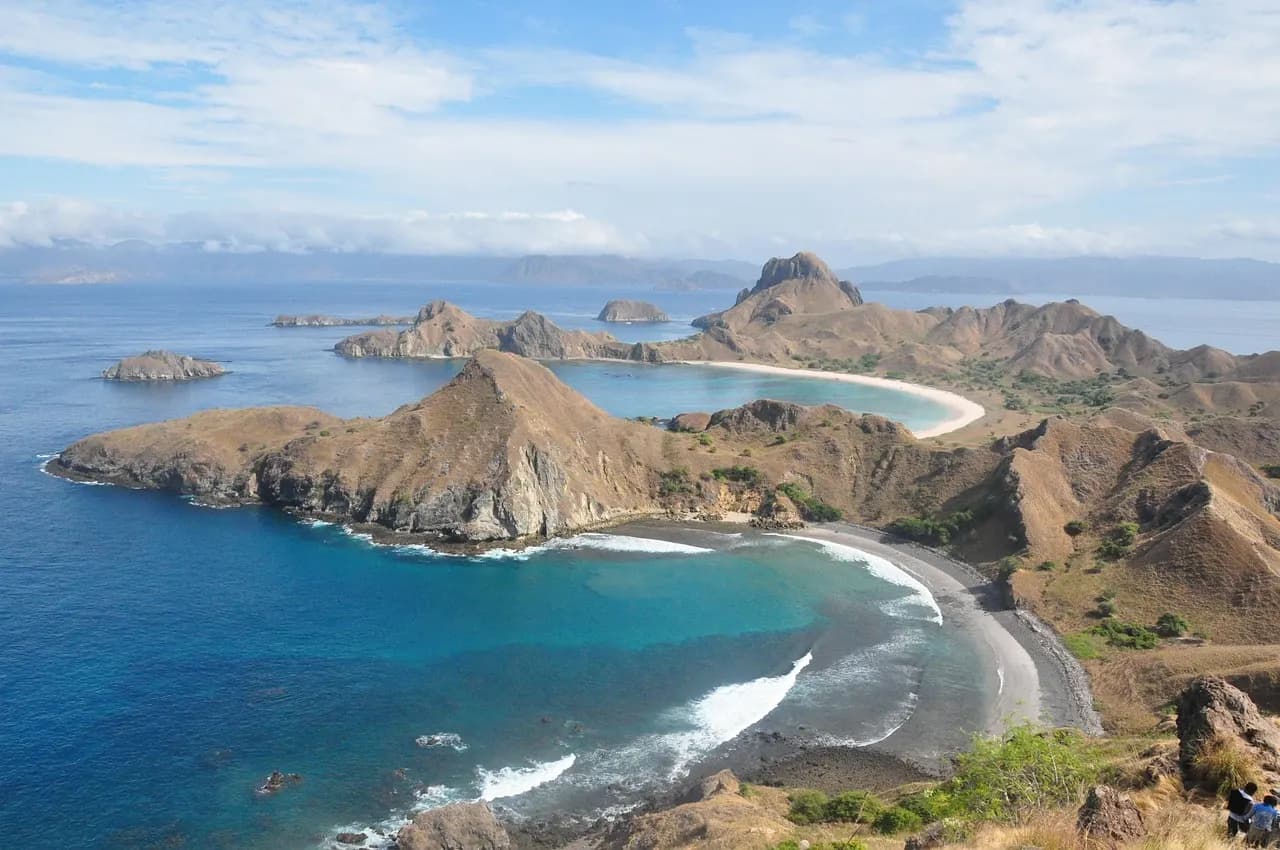
Komodo National Park, dived on day trips from Labuan Bajo on Flores, is a park of current-swept reefs with reef mantas, sharks and soft coral. North and central sites are calmest from April to October. A three-dive day costs IDR 2,750,000, plus park charges of IDR 250,000 a day and IDR 25,000 for diving (prices checked November 2026).
Key facts
- Best months
- April to October
- Water temperature
- 26.6–29.1 °C (80–84 °F)Monthly average, coolest to warmest month
- Level
- Beginner to advanced
- Open Water course
- IDR 8,500,000Typical price, checked
- Discover Scuba (try dive)
- IDR 3,000,000Typical price, checked
- Airport
- Komodo International Airport (LBJ)
- Park fee
- Komodo National Park entry ticket, foreign visitor, per person per day, weekdays and holidays (includes trekking, wildlife viewing and snorkeling): IDR 250,000
- Park fee
- Komodo National Park diving ticket, per person (charged on top of the entry ticket): IDR 25,000
- Nearest chamber
- Siloam Hospitals Labuan Bajo, Labuan Bajo, Flores
Book a dive trip in Komodo
Trips run by local operators, booked on GetYourGuide.
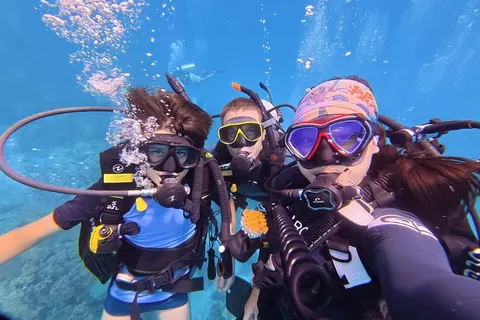 GetYourGuideLabuan Bajo: Try Scuba 1-Day Experience for First-TimersView on GetYourGuide (opens in a new tab)
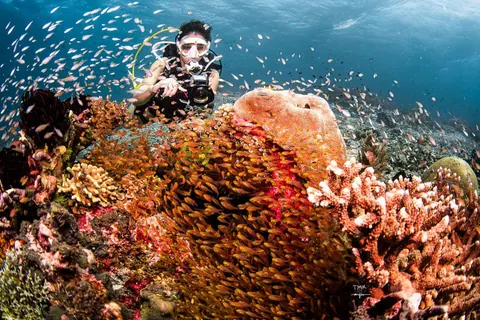 GetYourGuideLabuan Bajo: Full-Day Scuba Diving in Komodo National ParkView on GetYourGuide (opens in a new tab)
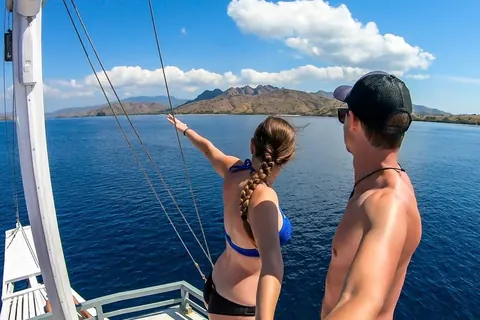 GetYourGuideLabuan Bajo: Swim and Snorkel Komodo Island Trip with LunchView on GetYourGuide (opens in a new tab)
Ratings from GetYourGuide travellers.
When is the best time to dive in Komodo?
For calm seas and clear water in north and central Komodo, go from April to October; for more mantas at the central cleaning stations, the wetter November–April monsoon is better, though some northern sites can be too rough for day boats then. The sea averages 26.6 °C (80 °F) in August and 29.1 °C (84 °F) in December.
Komodo's year turns on two monsoons. The south-east monsoon, roughly April to October, brings the calmest seas and clearest water to the north and central sites that day boats from Labuan Bajo visit. The north-west monsoon is wetter, and exposed northern sites may be off the menu on rough days, but it is also when the mantas are most numerous.
Crowds
July and August are the busiest months in the park, with crowding at the popular sites. May, June, September and October give you the same calm season with less company.
Water temperature
The calm season is also the cool one: 26.6–27.0 °C (80–81 °F) from July to September, against 28.7–29.1 °C (84 °F) from November to January. The south of the park, around Cannibal Rock, is cooler still, so pack a full-length suit if you are heading there.
| Month | Average water temperature | Season |
|---|---|---|
| January | 28.7 °C (84 °F) | Outside the best months |
| February | 28.6 °C (83 °F) | Outside the best months |
| March | 28.7 °C (84 °F) | Outside the best months |
| April | 28.8 °C (84 °F) | Best month to dive |
| May | 28.3 °C (83 °F) | Best month to dive |
| June | 27.7 °C (82 °F) | Best month to dive |
| July | 27 °C (81 °F) | Best month to dive |
| August | 26.6 °C (80 °F) | Best month to dive |
| September | 27 °C (81 °F) | Best month to dive |
| October | 28 °C (82 °F) | Best month to dive |
| November | 28.9 °C (84 °F) | Outside the best months |
| December | 29.1 °C (84 °F) | Outside the best months |
In season in: April · May · June · July · August · September · October
When and where can you see manta rays in Komodo?
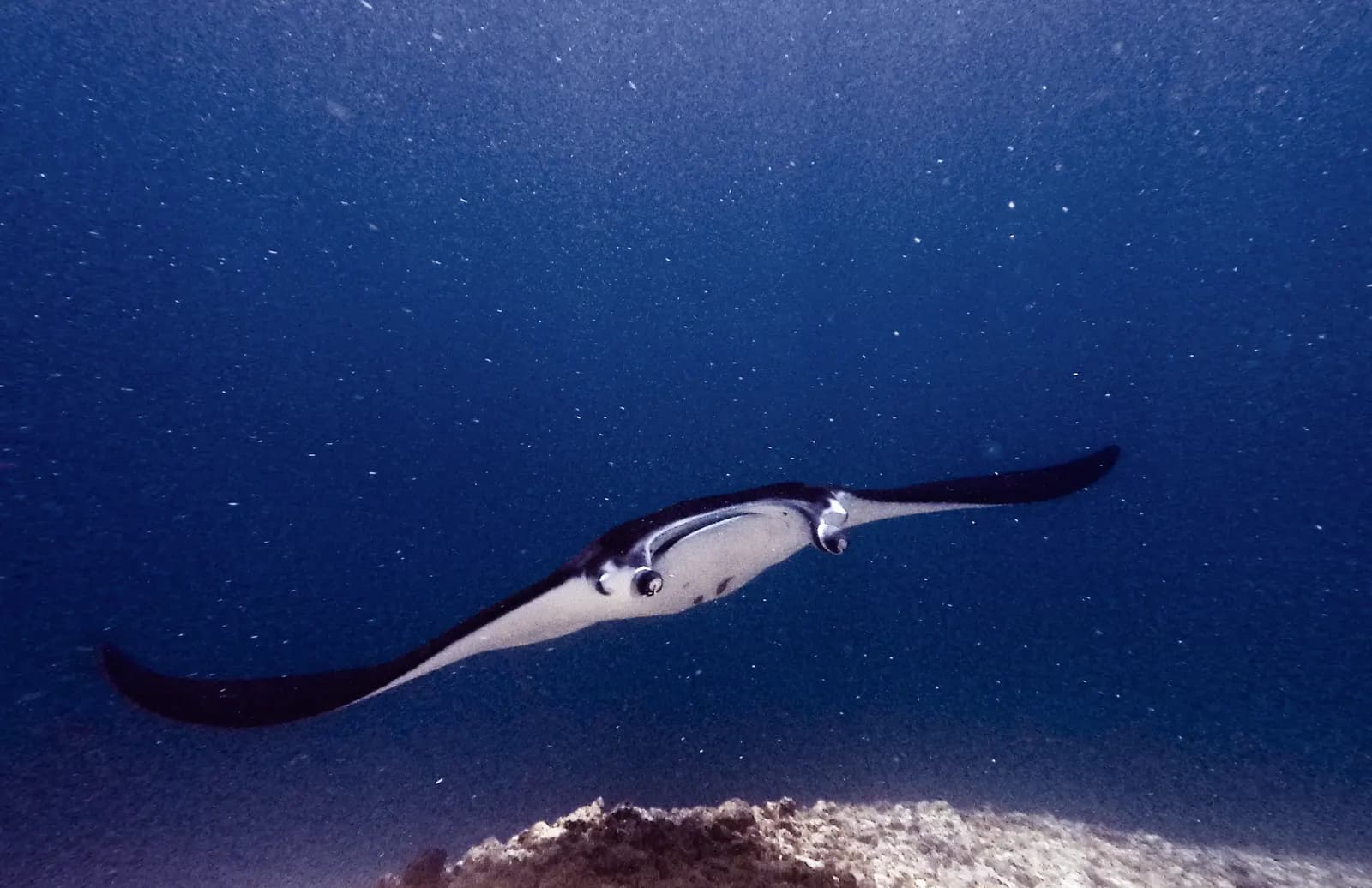
Reef mantas visit the central Komodo cleaning stations, above all Karang Makassar (Manta Point) at 8–20 m (26–66 ft), in every month, and they are most numerous during the north-west monsoon from about November to April, when mass feeding can be seen.
Manta Point is a shallow drift over a long rubble reef, rated for beginners, where the mantas come in to feed and be cleaned; eagle rays and bamboo sharks are seen there too. Let the current carry you, stay low near the bottom and never swim at or chase the mantas. Reef and oceanic mantas are fully protected in Indonesia.
The Cauldron, a channel between Gili Lawa Laut and Gili Lawa Darat, is another place where mantas appear, but it is an advanced, fast drift.
What are the best dive sites in Komodo?
Komodo's classic day-trip sites are Batu Bolong (5–40 m, 16–131 ft), Castle Rock, Crystal Rock and The Cauldron in the north and center, with gentler dives at Tatawa Besar, Siaba Besar and Manta Point, while Cannibal Rock in the south is usually reached by liveaboard.
For experienced divers
- Castle Rock (10–30 m, 33–98 ft): a submerged pinnacle in open water with strong current, gray and whitetip reef sharks, giant trevally and big schools of fish.
- Crystal Rock (10–30 m, 33–98 ft): rocks near Gili Lawa that break the surface at low tide, with clear water, colorful soft corals, sharks, turtles and Napoleon wrasse.
- The Cauldron, also called Shotgun (8–25 m, 26–82 ft): you drop into a sandy bowl and are then carried fast over the reef edge, past snapper schools, sharks and sometimes mantas.
- Batu Bolong: a small rock with a hole through it, its walls crowded with coral and fish, reef sharks, turtles and Napoleon wrasse. It is rated intermediate, and you dive the side sheltered from the current.
Gentler dives
- Siaba Besar (Turtle City): a calm, sheltered bay with staghorn coral and many green turtles, plus frogfish, ghost pipefish and cuttlefish on the sand.
- Tatawa Besar: an easy drift over slopes of orange soft coral with turtles and sweetlips.
- Cannibal Rock: a seamount in the cooler south, packed with sea apples, soft corals, frogfish and nudibranchs, and usually dived from a liveaboard.
Batu Bolong's walls drop to 40 m (131 ft), so agree your maximum depth before you descend.
| Dive site | Depth | Level | Entry | Highlights |
|---|---|---|---|---|
| Batu Bolong | 5–40 m (16–131 ft) | Intermediate | Boat | Small rock with a hole through it in central Komodo; walls covered in coral and fish, dived on the side sheltered from the current; reef sharks, turtles and Napoleon wrasse |
| Castle Rock | 10–30 m (33–98 ft) | Advanced | Boat | Submerged pinnacle in open water in the north; strong current, grey and whitetip reef sharks, giant trevally and big fish schools; north season only |
| Crystal Rock | 10–30 m (33–98 ft) | Advanced | Boat | Rocks that break the surface at low tide near Gili Lawa; clear water, colourful soft corals, sharks, turtles and Napoleon wrasse |
| Manta Point (Karang Makassar) | 8–20 m (26–66 ft) | Beginner | Boat | Shallow drift over a long rubble reef with cleaning stations where reef mantas feed and get cleaned; eagle rays and bamboo sharks too |
| Siaba Besar (Turtle City) | 5–18 m (16–59 ft) | Beginner | Boat | Calm, sheltered bay with staghorn coral and many green turtles; frogfish, ghost pipefish and cuttlefish on the sand; used for first dives and courses |
| The Cauldron (Shotgun) | 8–25 m (26–82 ft) | Advanced | Boat | Channel between Gili Lawa Laut and Gili Lawa Darat: drop into a sandy bowl, then get carried fast over the reef edge; mantas, sharks and snapper schools |
| Tatawa Besar | 5–25 m (16–82 ft) | Beginner | Boat | Easy drift over slopes of orange soft coral with turtles, sweetlips and reef fish; current picks up at spring tides |
| Cannibal Rock (south Komodo) | 5–30 m (16–98 ft) | Beginner | Boat | Seamount in the cooler south, packed with sea apples, soft corals, frogfish and nudibranchs; usually reached on liveaboards, not day trips |
Can beginners dive in Komodo?
Beginners can dive Komodo at its sheltered sites, such as Siaba Besar (Turtle City), a calm bay at 5–18 m (16–59 ft) used for first dives and courses, and the easy drifts of Tatawa Besar and Manta Point, but Castle Rock, Crystal Rock and The Cauldron are advanced current dives.
Currents are what make Komodo exciting and what make it demanding. Even Tatawa Besar, rated for beginners, picks up at spring tides, so tell your center honestly how many dives you have logged and let it choose the sites.
A try dive from Labuan Bajo runs as a full day trip with two supervised dives to 12 m (39 ft), equipment and lunch. An Open Water course takes three to four days, and the park charges are paid on top of both.
How much does diving in Komodo cost?
Labuan Bajo dive centers price Komodo by the day rather than by the two-tank dive: a three-dive day trip costs IDR 2,750,000, a try-dive day IDR 3,000,000 and an Open Water course IDR 8.4–8.5 million, with park charges of IDR 275,000–300,000 per diver per day on top (prices checked November 2026).
Uber Scuba, Dive Komodo and Azul all charge IDR 2,750,000 for a day with three dives; Azul also sells a two-dive day for IDR 2,400,000. That is why the table below has no two-tank figure.
- Try dive: a day trip with two supervised dives, full equipment and lunch, IDR 3,000,000 at Azul, Uber Scuba and Dive Komodo; Azul and Uber Scuba add a third dive for IDR 500,000.
- Open Water: three to four days with rental gear and certification, IDR 8.4–8.5 million, park fees extra.
- Park charges: IDR 300,000 per diver per day at Azul and Uber Scuba, covering park entry, the diving ticket and a harbor fee, or IDR 275,000 at Scuba Junkie.
For prices on your dates, ask Komodo dive centers.
Prices checked
| Item | Typical price | Range |
|---|---|---|
| Open Water course | IDR 8,500,000 | IDR 8,400,000–IDR 8,500,000 |
| Discover Scuba (try dive) | IDR 3,000,000 | IDR 3,000,000 |
| Marine park fee | IDR 300,000 | IDR 275,000–IDR 300,000 |
Prices change; confirm with the center before you book.
What are the Komodo National Park fees for divers?
Foreign visitors to Komodo National Park pay IDR 250,000 per person per day, weekdays and holidays alike, plus a diving ticket of IDR 25,000, the rates in force since October 2024; a rise has been proposed but has no start date, so check the current fee before you go.
The entry ticket also covers trekking, wildlife viewing and snorkeling, so non-diving companions pay the same daily entry. Dive centers usually collect the charges with the trip, and some add a harbor fee, which is why they quote IDR 275,000–300,000 per diver per day. Course and try-dive prices exclude the park charges, so add them for every day you spend in the park.
Liveaboard or land-based: how should you dive Komodo?
Day boats from Labuan Bajo cover Komodo's north and central sites, from Batu Bolong to Manta Point, while a liveaboard is the usual way to reach the cooler south and Cannibal Rock.
Land-based diving suits courses, try dives, groups with non-divers and anyone who wants a hotel bed each night, and the three-dive day is the standard format. A liveaboard makes more sense if you want the southern seamounts, or several days at the remote sites without the daily run from the harbor. Routes, boats and nightly prices are compared on our Komodo liveaboards page.
Is there a recompression chamber in Labuan Bajo?
The nearest listed recompression chamber for Komodo divers is at Siloam Hospitals Labuan Bajo, but its type and hours are not confirmed, so check its status before you dive; the fallback is the chamber at Kasih Ibu Hospital Saba on Bali.
Strong currents and remote sites make insurance with evacuation cover essential here, because a serious case may mean a transfer to Bali. Our dive insurance guide explains what to check.
On current dives, carry a surface marker buoy, stay with your guide's group and accept the guide's call when a site is too rough. If you feel unwell after a dive, tell your guide and call DAN or your insurer's emergency line.
Dive centers in Komodo
Loading dive centers…
Frequently asked questions
When is manta season in Komodo?
Reef mantas are seen at Komodo's central cleaning stations in every month, but they are most numerous from about November to April, during the north-west monsoon, when mass feeding happens at Karang Makassar (Manta Point). That is also the wetter season, when some northern sites can be too rough for day boats, so April to October brings calmer seas but fewer mantas.
How strong are the currents in Komodo?
Strong at the famous sites. Castle Rock is an open-water pinnacle with strong current, and at The Cauldron divers drop into a sandy bowl before being carried fast over the reef edge. Even easy sites such as Tatawa Besar pick up at spring tides. Dive with a guide who knows the tides, carry a surface marker buoy and log some drift dives before you go.
How do you get to Komodo for diving?
Fly into Komodo International Airport (LBJ) at Labuan Bajo on Flores, the town where the day-trip dive centers are based. Day boats from Labuan Bajo cover the north and central park, and the south is mostly liveaboard territory. Budget the park entry of IDR 250,000 a day and the IDR 25,000 diving ticket on top of the trip price.
What is the water temperature in Komodo?
In central Komodo the sea averages 26.6 °C (80 °F) in August, the coolest month, and 29.1 °C (84 °F) in December, the warmest. The calm season from April to October is also the cooler one, and the south of the park, around Cannibal Rock, is cooler again, so pack a full-length wetsuit for a trip between July and September.
Can non-divers join a Komodo dive trip?
Usually, yes. The park entry ticket of IDR 250,000 a day includes snorkeling as well as trekking and wildlife viewing, and divers pay IDR 25,000 more for the diving ticket. Dive centers collect park charges for snorkelers too, so ask which sites suit them: a calm bay such as Siaba Besar is far easier than the current-swept northern rocks.
Do I need dive insurance for Komodo?
Yes. The only listed chamber near the park, at Siloam Hospitals Labuan Bajo, has no confirmed type or hours, and the fallback is Bali. Add strong currents and you want a policy that covers recompression treatment and emergency evacuation, with a depth limit that fits sites like Batu Bolong (to 40 m, 131 ft). Check the chamber's status with your dive center on arrival.