Dive guide · Belize
Scuba Diving in Belize
Belize's diving runs along the barrier reef off the cayes and out to the atolls: Lighthouse Reef, home of the Great Blue Hole, Turneffe and Glover's Reef. The best months are December to May, with water at 26.5–28.4 °C (80–83 °F), and a local two-tank reef trip costs US$85–130, typically about US$94.50.
Key facts
- Best months
- December to May
- Water temperature
- 26.5–29.6 °C (80–85 °F)Monthly average, coolest to warmest month
- Level
- Beginner to advanced
- Two-tank boat dive
- US$94.50Typical price, checked
- Open Water course
- US$525Typical price, checked
- Discover Scuba (try dive)
- US$177.50Typical price, checked
- Snorkel tour
- US$55Typical price, checked
- Airport
- Philip S. W. Goldson International Airport (BZE)
- Park fee
- Great Blue Hole Natural Monument entrance fee, non-nationals, per day (Belize Audubon Society): BZD 60
- Park fee
- Half Moon Caye Natural Monument entrance fee, non-nationals, per day (Belize Audubon Society): BZD 20
- Nearest chamber
- Subaquatic Safety Belize (SSS recompression chamber), San Pedro, Ambergris Caye
Book a dive trip in Belize
Trips run by local operators, booked on Viator or GetYourGuide.
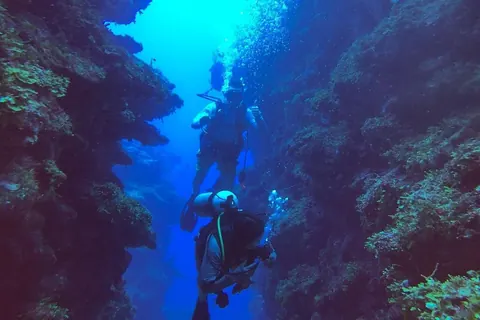 ViatorPrivate Reef Diving near Ambergris Caye BelizeView on Viator (opens in a new tab)
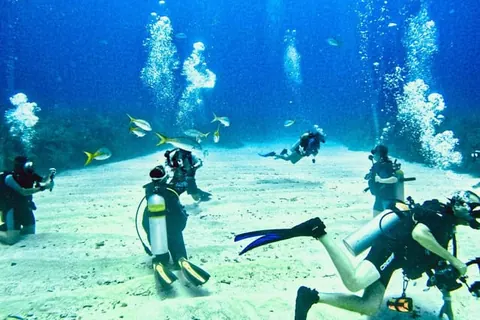 GetYourGuideAmbergris Caye: Discover Scuba Diving ExperienceView on GetYourGuide (opens in a new tab)
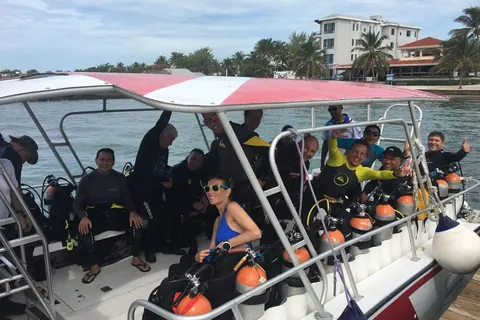 GetYourGuideAmbergris Caye: 2-Tank Barrier Reef Dive TripView on GetYourGuide (opens in a new tab)
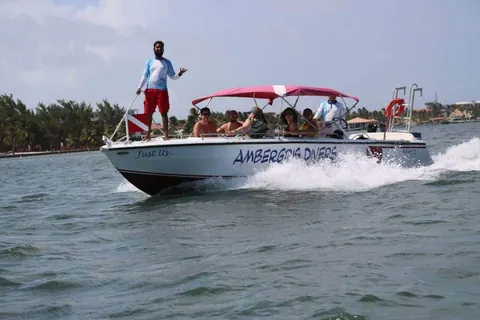 GetYourGuideAmbergris Caye: Hol Chan Marine Reserve Dive & SnorkelView on GetYourGuide (opens in a new tab)
All Belize trips on Viator (opens in a new tab)
Ratings from GetYourGuide travellers.
When is the best time to dive in Belize?
The best time to dive in Belize is December to May, the dry season, when the sea averages 26.5–28.4 °C (80–83 °F); June to November is wetter and stormier but brings the warmest water, 29.6 °C (85 °F) in September.
December to April is Belize's high season, with very little rain. May keeps the tail of the dry weather and falls in the peak of the whale-shark gatherings at Gladden Spit, which carry on into June even though June opens the rainy months.
From June to November Belize has its rainy season and the Atlantic hurricane season at once, with most storms between mid-August and mid-October. The long crossings to Lighthouse Reef and Turneffe depend on the sea state, so build a spare day into your trip if the Blue Hole is the reason you are going.
| Month | Average water temperature | Season |
|---|---|---|
| January | 26.5 °C (80 °F) | Best month to dive |
| February | 26.5 °C (80 °F) | Best month to dive |
| March | 26.8 °C (80 °F) | Best month to dive |
| April | 27.5 °C (82 °F) | Best month to dive |
| May | 28.4 °C (83 °F) | Best month to dive |
| June | 28.8 °C (84 °F) | Outside the best months |
| July | 29 °C (84 °F) | Outside the best months |
| August | 29.4 °C (85 °F) | Outside the best months |
| September | 29.6 °C (85 °F) | Outside the best months |
| October | 29 °C (84 °F) | Outside the best months |
| November | 28 °C (82 °F) | Outside the best months |
| December | 27.1 °C (81 °F) | Best month to dive |
In season in: January · February · March · April · May · December
What is it like to dive the Great Blue Hole?
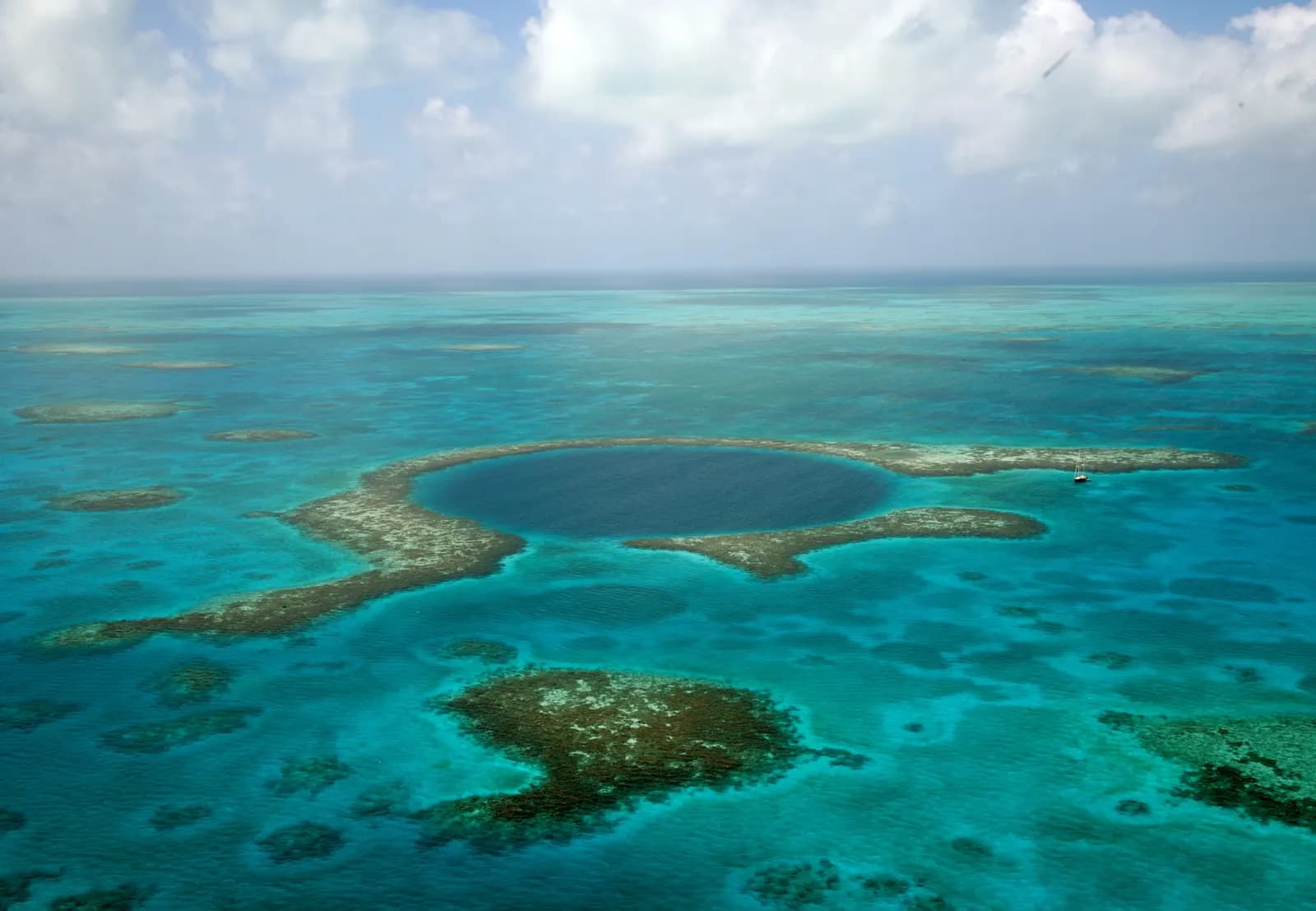
The Great Blue Hole on Lighthouse Reef is a collapsed sinkhole about 300 m (1,000 ft) across and 125 m (412 ft) deep, and the dive drops down its sheer wall to stalactite ledges at about 40 m (131 ft), so operators usually ask for advanced certification.
You may meet reef sharks along the wall. The hole itself is a deep, simple profile rather than a reef dive, so plan it carefully within your training and keep a close eye on your computer.
What a Blue Hole day costs
Lighthouse Reef lies far offshore, so the Blue Hole is sold as a full-day trip from Ambergris Caye or Caye Caulker:
- Frenchie's (Caye Caulker): US$355 for divers and US$190 for snorkelers, including the US$40 park fee and lunch.
- Ramon's Village (San Pedro): US$285 plus 12.5% tax and the US$40 park fee; rental gear is extra.
- Ambergris Divers (San Pedro): only as part of a three-day package of seven dives for US$499.
The park fee covers two natural monuments, the Blue Hole and Half Moon Caye (see park fees).
What else can you dive on Belize's atolls?
Beyond the Blue Hole, Belize's atolls offer the Half Moon Caye Wall and The Aquarium on Lighthouse Reef, The Elbow at the southern tip of Turneffe Atoll and the easy White Sands site on Glover's Reef.
Lighthouse Reef
Half Moon Caye Wall (9–37 m, 30–121 ft) is an atoll wall cut by gullies, swim-throughs and overhangs, with eagle rays, sharks and passing pelagics. Boats tie up to mooring buoys inside the Half Moon Caye Natural Monument. Nearby Tarpon Caves has deep notches in the reef top, black coral and big black groupers, and The Aquarium, off the north-west side of Long Caye, is packed with small reef fish.
Turneffe Atoll
The Elbow (18–30 m, 59–98 ft), at Turneffe's southern tip, is an advanced dive with schooling eagle rays and jacks, huge gorgonian fans and a chance of hammerheads. There is no official Turneffe fee schedule to point to; operators add anywhere from US$10 to US$50 depending on the zone, so ask what your trip price includes.
Glover's Reef
White Sands (15–18 m, 49–59 ft) is the gentlest atoll dive in the table: a white sand bottom with groupers, spotted eagle rays and turtles.
What is diving like from Ambergris Caye and Caye Caulker?
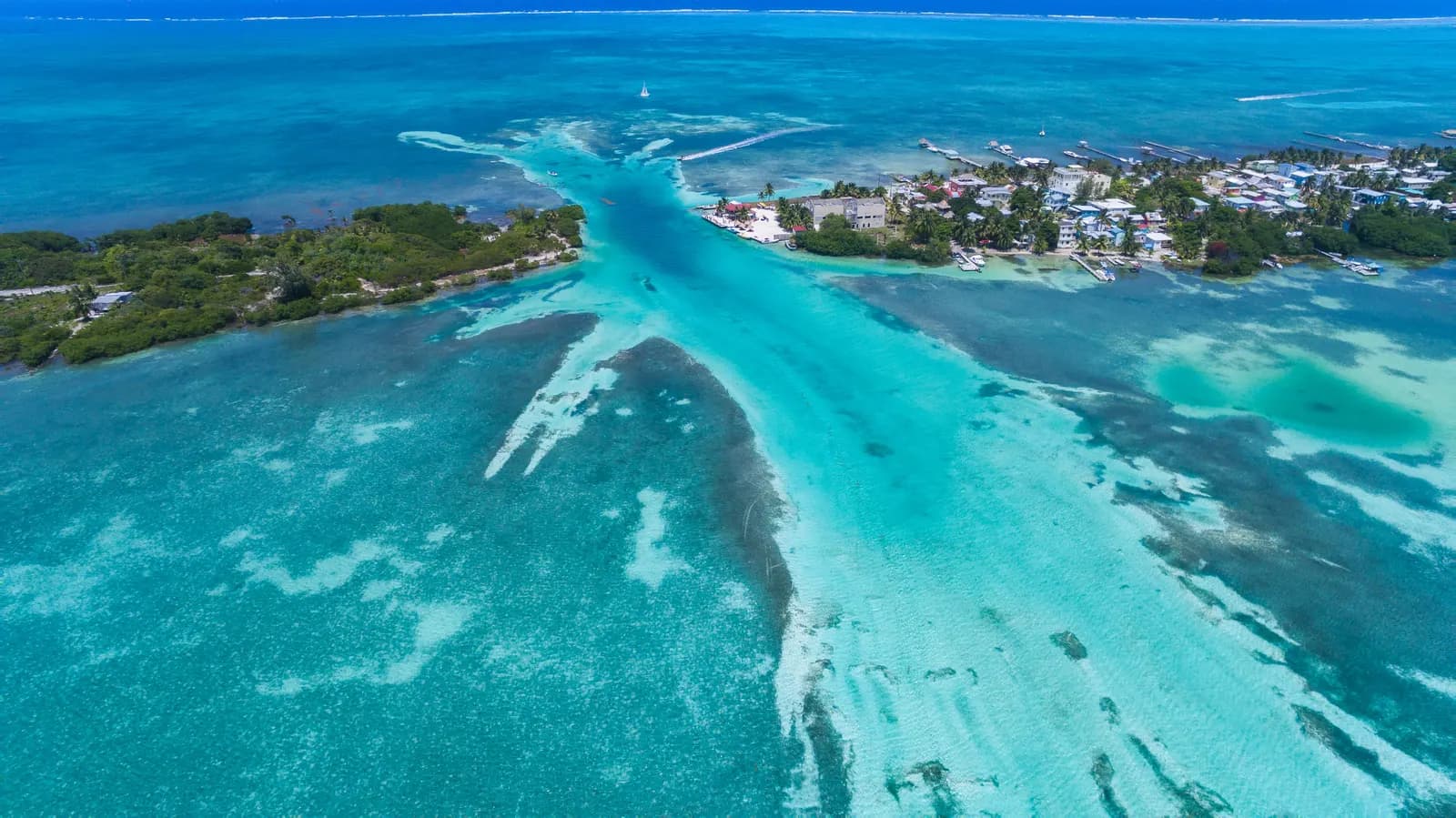
Ambergris Caye and Caye Caulker are the usual bases for diving in Belize: local two-tank trips visit the nearby barrier reef, such as Hol Chan Marine Reserve at about 9 m (30 ft) and Esmeralda at up to 21 m (70 ft), and the atoll day trips leave from here too.
San Pedro, the town on Ambergris Caye, is also where Belize's recompression chamber is.
Hol Chan Marine Reserve and Shark Ray Alley make the classic half-day snorkel trip from San Pedro, at US$50–60 per person. San Pedro operators currently charge a US$15 reserve fee per person on Hol Chan trips; some prices include it and others add it, so check when you book.
To reach the cayes, fly into Philip S. W. Goldson International Airport (BZE) near Belize City and continue from there.
When can you see whale sharks in Belize?
Whale sharks gather at Gladden Spit, off Placencia in southern Belize, mainly from March to June around the full and last-quarter moons, when they feed on the spawn of cubera and dog snappers; the clearest records are from April and May.
The whale-shark dive is a blue-water dive rather than a reef dive, usually no deeper than about 18 m (60 ft), inside the Gladden Spit and Silk Cayes Marine Reserve. Sightings depend on the snapper spawning and are never guaranteed, so plan the trip around the moon dates and treat a whale shark as a bonus.
On the barrier reef off Carrie Bow Caye, Trick Ridge (12–30 m, 39–98 ft) has big barrel sponges and cleaning stations visited by barracuda and grouper. Shops in southern Belize tend to quote on request rather than online, so ask for a quote with your dates.
Whale sharks also turn up off Utila in Honduras, with no fixed moon schedule: see our Roatan and Utila guide.
Which Belize dive sites suit your level?
Of the seven Belize sites in the table, White Sands on Glover's Reef (15–18 m, 49–59 ft) is rated beginner, the Great Blue Hole and The Elbow are advanced, and the Lighthouse Reef walls and Trick Ridge are intermediate dives.
New divers do best on the shallow barrier reef near the cayes, such as Hol Chan, and on White Sands. If the Blue Hole is your goal, earn an advanced certification before the trip, since the dive goes to about 40 m (131 ft).
| Dive site | Depth | Level | Entry | Highlights |
|---|---|---|---|---|
| Great Blue Hole (Lighthouse Reef) | 10–40 m (33–131 ft) | Advanced | Boat | Collapsed sinkhole about 300 m across and 125 m deep; recreational dives drop down the sheer wall to the stalactite ledges; reef sharks |
| Half Moon Caye Wall (Lighthouse Reef) | 9–37 m (30–121 ft) | Intermediate | Boat | Atoll wall with gullies, swim-throughs and overhangs; eagle rays, sharks and pelagics; mooring buoys inside the natural monument |
| Tarpon Caves (Half Moon Caye) | 9–40 m (30–131 ft) | Intermediate | Boat | Deep notches cut into the reef top; tube and barrel sponges, black coral, big black groupers and tarpon on the inner reef |
| The Aquarium (Long Caye, Lighthouse Reef) | 8–40 m (26–131 ft) | Intermediate | Boat | Reef off Long Caye's north-west side packed with small reef fish |
| The Elbow (Turneffe Atoll) | 18–30 m (59–98 ft) | Advanced | Boat | Southern tip of Turneffe; schools of eagle rays and jacks, huge gorgonian fans, a chance of hammerheads |
| Trick Ridge (Carrie Bow Caye) | 12–30 m (39–98 ft) | Intermediate | Boat | Barrier-reef ridge with big barrel sponges and cleaning stations visited by barracuda and grouper |
| White Sands (Glover's Reef) | 15–18 m (49–59 ft) | Beginner | Boat | White sand bottom on Glover's Reef Atoll with groupers, spotted eagle rays and turtles |
How much does diving in Belize cost?
A local two-tank reef trip in Belize costs US$85–130, typically about US$94.50, and San Pedro shops quote it before 12.5% sales tax, often with park fees and rental gear extra too (prices checked November 2026).
- Two-tank boat dive: Ecologic Divers US$85 plus tax (an older price list, so confirm it), Ramon's Village US$90 and Ambergris Divers US$99, both before tax, park fees and gear; Frenchie's on Caye Caulker US$130 including a US$10 park fee.
- Discover Scuba: US$150–200, typically about US$177.50, for a half-day course with one ocean dive: Frenchie's US$150 with the park fee, Ecologic US$170, Ambergris Divers from US$185 and Ramon's US$200.
- Snorkel trip to Hol Chan and Shark Ray Alley: US$50–60, typically about US$55.
- Great Blue Hole day: US$285–355 before extras (see the Blue Hole section).
Add everything up before you compare: a lower headline price often has tax, park fee and gear still to come. For a price on your dates, ask local dive centers.
Prices checked
| Item | Typical price | Range |
|---|---|---|
| Two-tank boat dive | US$94.50 | US$85–US$130 |
| Open Water course | US$525 | US$480–US$550 |
| Discover Scuba (try dive) | US$177.50 | US$150–US$200 |
| Snorkel tour | US$55 | US$50–US$60 |
Prices change; confirm with the center before you book.
What park fees do divers pay in Belize?
A Great Blue Hole day carries two official fees, BZD 60 for the Blue Hole Natural Monument and BZD 20 for Half Moon Caye Natural Monument, which operators collect together as US$40.
Both natural monuments are co-managed by the Belize Audubon Society, and Belizean nationals pay BZD 2.50 at each. Other reserves are less clear-cut:
- Hol Chan Marine Reserve: US$15 per person as currently charged by San Pedro operators.
- Turneffe Atoll and other zones: operator quotes range from US$10 to US$50.
Fees change, so confirm what your trip price includes before you pay.
Can you learn to dive in Belize?
Yes: an Open Water course in Belize costs US$480–550, typically about US$525, at centers on Caye Caulker and Ambergris Caye.
- Frenchie's, US$480: eLearning, tax and park fee included.
- Ramon's Village, US$500: 12.5% sales tax extra.
- Ecologic Divers, US$550: tax extra; an older price list, so confirm it.
- Ambergris Divers, US$550: a 4% discount on US$575, with classroom theory; tax and a possible US$15 park fee extra.
Once tax is added elsewhere, Frenchie's all-in price is the lowest of the four. An entry-level card is not enough for the Blue Hole, so if it is on your list, plan an advanced course too. Ask about SSI, RAID or other agencies if you prefer them, and compare countries in our Open Water price index.
Where is the nearest recompression chamber in Belize?
Belize's recompression chamber is run by Subaquatic Safety Belize in San Pedro on Ambergris Caye and is listed as operating 24/7, but Lighthouse Reef and the Blue Hole are a long boat ride away from it.
That distance is why the atoll dives call for a margin: stay within your training on the Blue Hole's 40 m (131 ft) profile and on the outer walls. Confirm the chamber's contact details with your shop when you arrive.
Carry dive insurance that covers chamber treatment and evacuation from the outer atolls. For any symptoms after a dive, contact DAN or a dive doctor.
Dive centers in Belize
Loading dive centers…
Frequently asked questions
Do you need advanced certification to dive the Great Blue Hole?
Usually, yes. The Blue Hole dive descends the wall to stalactite ledges at about 40 m (131 ft), deeper than an entry-level card covers, so operators generally ask for an advanced certification, and some accept Open Water divers only with extra conditions. Check your operator's rule when you book, and log a few deeper dives before the trip.
How much does it cost to dive the Great Blue Hole?
A Great Blue Hole day trip costs US$285–355 at the shops that publish a price. Frenchie's on Caye Caulker charges US$355 including the US$40 park fee and lunch; Ramon's Village in San Pedro charges US$285 plus 12.5% tax and the park fee, with rental gear extra. Snorkelers can join Frenchie's trip for US$190, prices checked November 2026.
Is Belize good for beginner divers?
Belize works for beginners who stay near the cayes. Hol Chan Marine Reserve is about 9 m (30 ft) deep, White Sands on Glover's Reef sits at 15–18 m (49–59 ft), and a Discover Scuba half day costs US$150–200. The famous Blue Hole is a different matter: it goes to about 40 m (131 ft) and needs advanced certification.
Can you snorkel in Belize without diving?
Yes. The classic trip from San Pedro is a half day at Hol Chan Marine Reserve and Shark Ray Alley for US$50–60, plus a US$15 reserve fee where it is not already included. Frenchie's on Caye Caulker also takes snorkelers on its Great Blue Hole day for US$190, including the park fee and lunch.
What is the water temperature in Belize?
Belize's sea averages 26.5 °C (80 °F) in January and February, its coolest months, and 29.6 °C (85 °F) in September, its warmest. Through the December–May dry season it stays at 26.5–28.4 °C (80–83 °F), warming through spring as the Gladden Spit whale-shark season gets going. The hottest water comes with summer rain and hurricane risk.
When is hurricane season in Belize?
Belize's hurricane season is the Atlantic one, June to November, with most storms from mid-August to mid-October, and it overlaps the rainy season. Diving carries on, but the long boat rides to the atolls depend on the weather, so leave slack in your plans. For dry days, aim for the high season from December to April, when there is very little rain.
