Snorkeling guide · Indonesia
Snorkeling in Nusa Penida
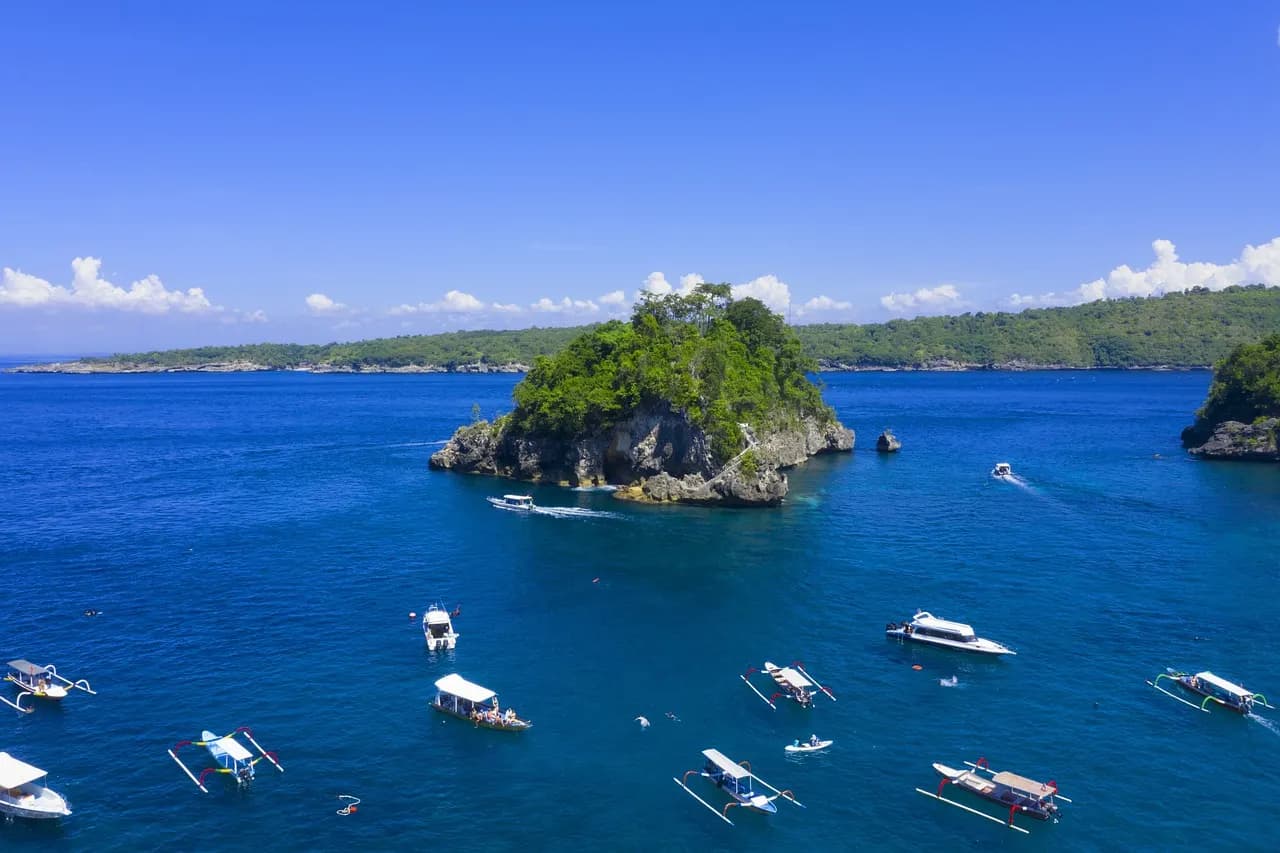
Nusa Penida is the place near Bali to snorkel with reef mantas: boats stop at Manta Bay and Manta Point, where mantas come in every month of the year, and at calmer Crystal Bay and Gamat Bay for turtles and reef fish. Every spot is a boat stop, and the sea around the island can be rough.
Key facts
- Best months
- April to November
- Water temperature
- 26.7–28.9 °C (80–84 °F)Monthly average, coolest to warmest month
- Airport
- I Gusti Ngurah Rai International Airport (DPS)
Book a snorkeling trip in Nusa Penida
Trips run by local operators, booked on Viator or GetYourGuide.
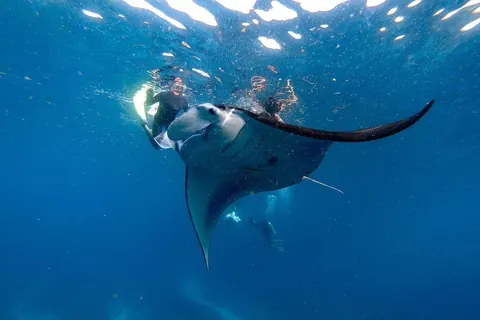 ViatorNusa Penida Snorkeling Adventure (Private & All-Inclusive)View on Viator (opens in a new tab)
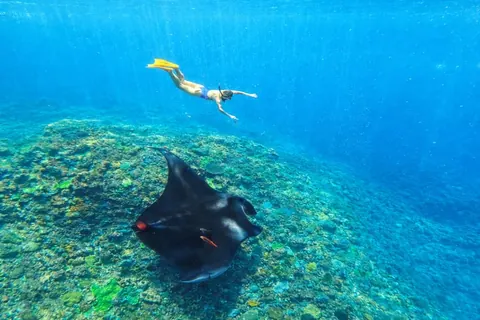 GetYourGuideNusa Penida: Snorkeling at 3 Spots with GoPro and West Island TourView on GetYourGuide (opens in a new tab)
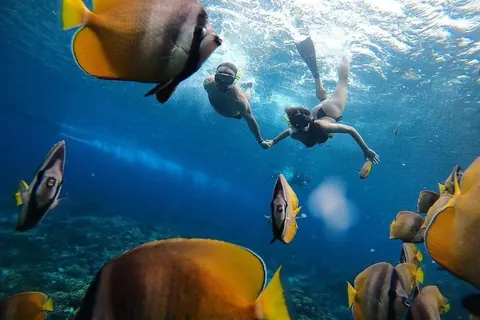 ViatorOne Day Nusa Penida Island West with SnorkelingView on Viator (opens in a new tab)
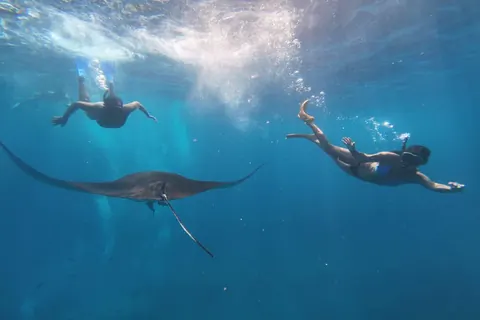 GetYourGuideNusa Penida: Snorkeling with Manta Rays, Coral & TurtleView on GetYourGuide (opens in a new tab)
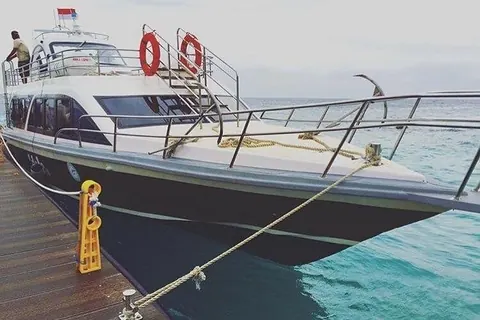 ViatorNusa Penida Snorkeling at Manta Bay and Land Tour (inclusive)View on Viator (opens in a new tab)
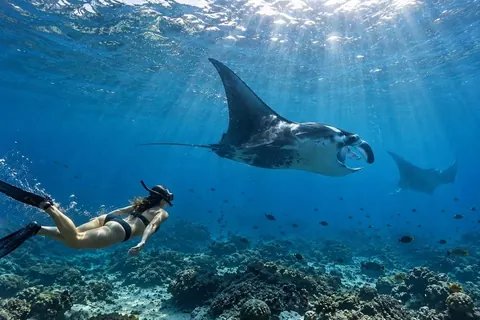 GetYourGuideNusa Penida: Daily Snorkeling with Manta, Turtle & DolphinView on GetYourGuide (opens in a new tab)
All Nusa Penida trips on Viator (opens in a new tab)
Ratings from GetYourGuide travellers.
Where do you snorkel at Nusa Penida?
Nusa Penida snorkel trips visit five spots by boat: Manta Bay and Manta Point for reef mantas, Crystal Bay and Gamat Bay for calm, shallow water, and Toyapakeh, a drift in the channel between Penida and Ceningan.
- Manta Bay: reef mantas come in to feed on plankton all year, in water no deeper than about 12 m (39 ft). The crew watches from the boat and tells you when to jump in, and several mantas can pass close at once.
- Manta Point: a shallow plateau where several mantas gather at the same time. There is rarely any current, but the site is open to swell, so boats go only on calm days.
- Crystal Bay: a turquoise bay with turtles often around and sergeant majors, butterflyfish and rabbitfish in the shallows. Stay in the inner bay; the outer point is a drift dive site.
- Gamat Bay: shallow, calm and clear, with small tropical fish and the occasional turtle.
- Toyapakeh: a drift along a healthy reef at the corner of the channel, with big schools of reef fish, turtles, giant pufferfish and anemonefish. The current is strong, so stay with the boat crew's plan.
| Spot | Entry | Level | Currents | Facilities | Highlights |
|---|---|---|---|---|---|
| Manta Bay | Boat | Intermediate | Mild | – | Bay where reef mantas come in to feed on plankton all year (maximum depth about 12 m); boat crews watch for mantas and signal when to jump in, and several can pass close at once. |
| Manta Point | Boat | Intermediate | Mild | – | Shallow plateau where several mantas gather at once; rarely any current but exposed to swell, so trips go only on calm days. |
| Crystal Bay | Boat | Beginner | Mild | – | Turquoise bay with turtles often around and sergeant majors, butterflyfish and rabbitfish in the shallows. |
| Gamat Bay | Boat | Beginner | Mild | – | Shallow, calm bay with clear water and small tropical fish; turtles are seen at times. |
| Toyapakeh | Boat | Intermediate | Strong | – | Drift along a healthy reef at the corner of the channel between Ceningan and Penida: big schools of reef fish, turtles, giant pufferfish and anemonefish. |
Can you snorkel with manta rays at Nusa Penida?
Yes: reef mantas use the cleaning stations at Manta Point and Manta Bay in every month of the year, and encounters at Manta Point tend to peak from April to June, roughly doubling in May.
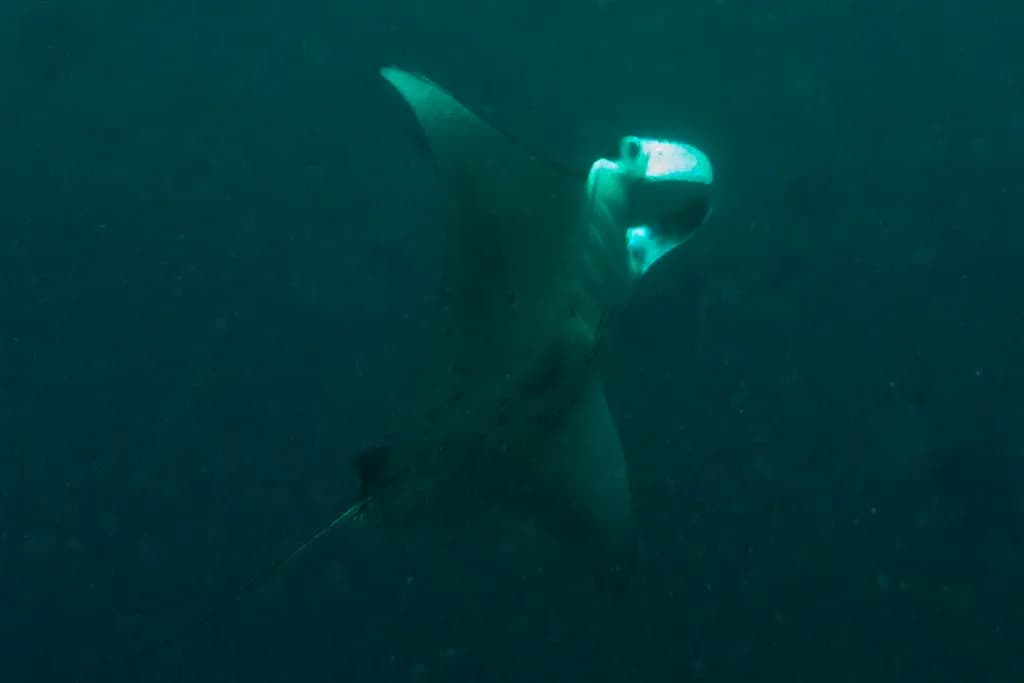
At Manta Bay the mantas come in to feed on plankton, and at Manta Point several of them gather over a shallow plateau at once. Both reef and oceanic mantas are fully protected in Indonesia throughout their life cycle. Let them come to you, keep your hands to yourself and never chase one, and stay with the group the crew sends in.
Is Nusa Penida snorkeling good for beginners?
Nusa Penida suits confident swimmers better than beginners, because the sea around the island can be rough, Manta Point is open to swell and Toyapakeh has a strong current; the inner part of Crystal Bay and Gamat Bay are the gentlest stops.
The levels in the spot table are a rough guide, not an official grade, and the conditions change by the day. If you are unsure in open water, ask for a life vest or a float before you leave the harbor, stay close to the boat, and skip the drift at Toyapakeh. A crew that cancels Manta Point because of swell is making the right call.
The water is warm year-round: the sea averages 28.9 °C (84 °F) in April and 26.7 °C (80 °F) in August, the coolest month.
What fees do snorkelers pay at Nusa Penida?
Snorkelers at Nusa Penida pay Bali's IDR 150,000 tourist levy and a marine-park charge reported at IDR 100,000 per person per day, usually collected by the boat crew; check the current amount on arrival.
The waters of Nusa Penida, Lembongan and Ceningan are a national marine protected area, run as a Marine Tourism Park of about 20,057 hectares (49,560 acres) and set up to protect species such as manta rays and the oceanic sunfish (mola). The daily charge for that area is not officially confirmed, and some snorkel tours from Bali list "entrance fees" as included without giving an amount, so ask what your trip covers before you pay.
The IDR 150,000 levy is separate: a provincial tourism charge for international visitors, paid through the official Love Bali system, not a marine-park fee.
- The waters of Nusa Penida, Lembongan and Ceningan are a national Marine Protected Area managed as a Marine Tourism Park of about 20,057 ha, set up to protect species such as mola-mola and manta rays (Ministerial Decree 24/KEPMEN-KP/2014).
- Reef and oceanic manta rays are fully protected in Indonesia throughout their life cycle (Ministerial Decree 4/KEPMEN-KP/2014); exceptions apply only to research.
- Nusa Penida is part of Bali province: international tourists pay the Bali tourist levy (IDR 150,000) under Bali Provincial Regulation 6/2023 as amended by Regulation 2/2025, through the official Love Bali system.
| Fee | Amount |
|---|---|
| Bali tourist levy for international visitors (provincial levy; the separate Nusa Penida MPA charge is not confirmed by an official page, see notes) | IDR 150,000 |
How do you get to Nusa Penida's snorkel spots?
Nusa Penida's snorkel spots are reached by boat on a day trip from mainland Bali: by fast boat from Sanur, for example combined with a land tour of west Penida, or on a full-day snorkel trip from Padang Bai across the Badung Strait to Manta Point.
A day tour from Sanur can bundle the fast boat, a car, lunch, snorkel gear and entrance fees, so compare what is included rather than the headline price. The full-day trips from Padang Bai are sold by the dive centers there. For more on the mainland side, see snorkeling in Bali.
If you are a certified diver, two boat dives on the islands cost IDR 1.6–2.0 million (prices checked November 2026), and divers meet the oceanic sunfish mainly from July to November. Our Nusa Penida diving guide covers the manta and sunfish dives.
Frequently asked questions
What is the difference between Manta Bay and Manta Point?
Manta Bay is a feeding area where reef mantas come in for plankton, in water no deeper than about 12 m (39 ft), and the crew signals when to jump in. Manta Point is a shallow plateau where several mantas gather at once; it rarely has current but is open to swell, so boats go there only on calm days.
Is it safe to snorkel at Nusa Penida?
It can be, on a calm day with a careful crew, but the sea around Nusa Penida can be rough and is not recommended for beginner swimmers. Manta Point is open to swell, and Toyapakeh has a strong current. Wear a life vest if you are unsure, stay close to the boat, and accept a change of plan when the crew calls one.
How much is the Nusa Penida marine park fee?
The marine-park charge is reported at IDR 100,000 per person per day for snorkeling and diving, usually collected by the boat crew, but the amount is not officially confirmed, so check it on arrival. Bali's IDR 150,000 tourist levy is a separate provincial charge for international visitors, paid through the Love Bali system, and it is not a park fee.
Can you see mola mola while snorkeling at Nusa Penida?
Plan your snorkel around mantas and turtles instead. The oceanic sunfish (mola) is a diving encounter: divers meet them mainly from July to November, and the fish are thought to follow a seasonal pulse of cold water from the deep. Mantas, by contrast, use Manta Bay and Manta Point all year, with a peak from April to June.
Where can you see turtles snorkeling at Nusa Penida?
Crystal Bay is the best bet, with turtles often around the inner bay alongside sergeant majors, butterflyfish and rabbitfish. Turtles also turn up at Gamat Bay, a shallow, calm stop with clear water, and on the drift at Toyapakeh, where the current is strong. Watch them from the surface and give them room to come up for air.


