Diving region
Scuba Diving in the Eastern Pacific
The Eastern Pacific guides cover Mexico's Baja tip and the Galápagos, and both are at their best from about December to April. Baja offers sea lions, Cabo Pulmo's reef and, in winter, humpbacks and La Paz whale sharks; the Galápagos adds schooling hammerheads at Gordon Rocks. Expect cool water, down to 21.3 °C (70 °F) off Cabo in April.
Dive trips in the Eastern Pacific
Trips run by local operators, booked on Viator or GetYourGuide.
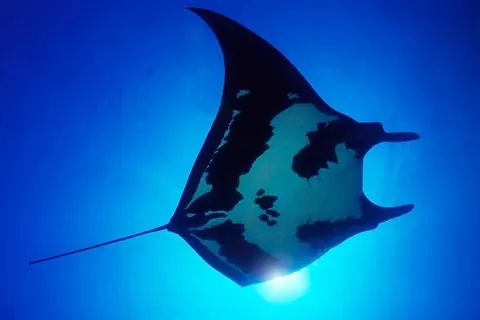 ViatorCabo San Lucas, Cabo Pulmo & La Paz2 Tank Dive for Certified Divers Cabo San Lucas Marine ParkView on Viator (opens in a new tab)
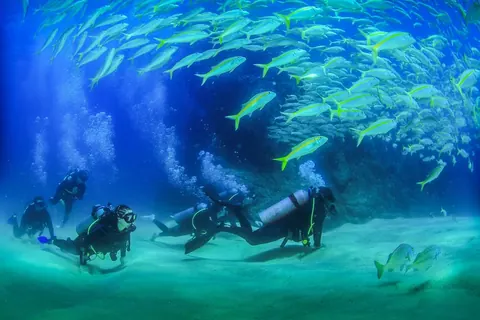 GetYourGuideCabo San Lucas, Cabo Pulmo & La PazLos Cabos: 3-Hour Introductory Scuba Diving AdventureView on GetYourGuide (opens in a new tab)
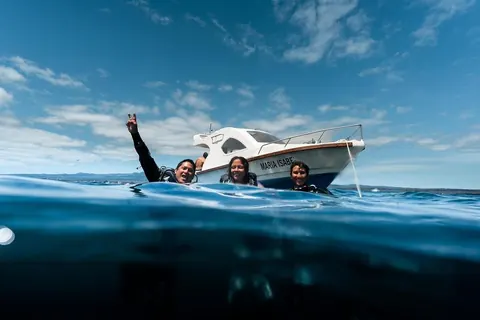 ViatorGalápagosDiving Discovery in Punta Estrada Santa CruzView on Viator (opens in a new tab)
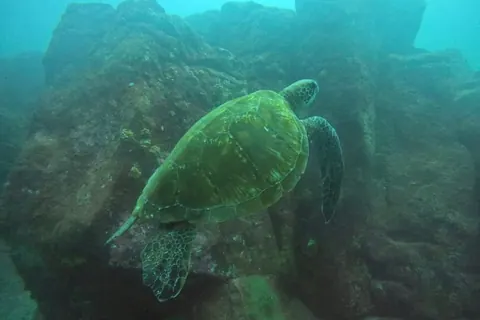 GetYourGuideGalápagosGalápagos: Discovery Diving One-Day ExperienceView on GetYourGuide (opens in a new tab)
Ratings from GetYourGuide travellers.
Baja or the Galápagos: where should you dive in the Eastern Pacific?
In the Eastern Pacific, choose Baja, from Cabo San Lucas to Cabo Pulmo and La Paz, for a flexible trip that mixes easy dives, sea lions and seasonal whales and whale sharks, and choose the Galápagos for current-swept day dives with hammerheads, Galápagos sharks and sea lions, with a US$200 park entry on top.
The table compares the two on season, water and price.
- Cabo San Lucas & La Paz: the Cabo San Lucas marine park around Land's End, with sea lions and sandfalls; the Corridor and the Gordo Banks seamount toward San José del Cabo; the Cabo Pulmo reef up the east coast; and the Espíritu Santo islands off La Paz, with the Los Islotes sea lion colony and the El Bajo seamount. Fly into Los Cabos (SJD) or La Paz (LAP).
- Galápagos: Ecuador's Pacific archipelago, dived on day trips from Santa Cruz and San Cristóbal, with Gordon Rocks, Kicker Rock and the North Seymour Channel as the headline sites. Flights land at Baltra (GPS) or San Cristóbal (SCY).
| Place | Best months | Water | Two-tank boat dive | Open Water course |
|---|---|---|---|---|
| Cabo San Lucas & La Paz | November to April | 21.3–28.7 °C (70–84 °F) | US$145 | US$639.50 |
| Galápagos | December to May | 21.8–26.8 °C (71–80 °F) | US$230 | US$630 |
Water: average temperature of the coolest and the warmest month. Prices: typical prices; each guide says when they were checked.
When is the best time to dive in the Eastern Pacific?
December to April is when both Eastern Pacific guides are in season: Baja's best months run from November to April, with humpbacks and La Paz whale sharks, and the Galápagos is easiest from December to May, when seas are calmer.
Baja
Cabo San Lucas, Cabo Pulmo and La Paz trade warm water for wildlife in winter. The official whale-watching season for the Cabo San Lucas protected area, San José del Cabo and Cabo Pulmo runs from 15 December 2026 to 30 April 2027; humpbacks arrive from late November and can be heard on dives. Juvenile whale sharks reach the Bahía de La Paz around October, and the season for swimming with them runs from 1 October to 30 April. The sea is coolest in April, at 21.3 °C (70 °F), and warmest in September and October, at 28.7 °C (84 °F). From June to August, swimming with the Los Islotes sea lions is restricted for their breeding season.
Galápagos
The warm season, roughly December to May, brings calmer seas and water at 23.3–26.8 °C (74–80 °F). From about June to November the cooler Humboldt-influenced season sets in, with choppier crossings, stronger surge and water down to 21.8 °C (71 °F) in August and September. Galápagos sharks, sea turtles, rays and sea lions are seen on day dives all year.
Where can you see hammerheads, sea lions and whale sharks in the Eastern Pacific?
Schooling hammerheads are the Eastern Pacific's headline dive, at Gordon Rocks off Santa Cruz in the Galápagos and at El Bajo, a seamount off La Paz, while sea lions play at Land's End and Los Islotes in Baja and at Bartolomé and Kicker Rock in the Galápagos.
- Sharks: Gordo Banks off San José del Cabo is a blue-water dive for hammerhead and silky sharks, with its top at around 30 m (98 ft). In the Galápagos, the North Seymour Channel has Galápagos, whitetip and hammerhead sharks at cleaning stations, and Kicker Rock adds Galápagos sharks and eagle rays.
- Whale sharks: juveniles feed in the Bahía de La Paz from about October to April.
- Rays: mobula schools pass Neptune's Finger in the Cabo marine park, mobulas visit Los Morros at Cabo Pulmo in season, and mantas and mobulas show up at Bartolomé some days.
- Big fish: at El Cantil in Cabo Pulmo, walls of bigeye trevally and big groupers appear from the first minute.
- Further offshore: the Revillagigedo Islands and Darwin and Wolf in the far north of the Galápagos are liveaboard trips; see our Socorro and Galápagos liveaboard pages.
How much does diving in the Eastern Pacific cost?
A two-tank dive in the Cabo San Lucas marine park costs US$119–145 and a La Paz island day US$175–319, while a two-dive day trip in the Galápagos costs US$230–250 before the US$200 park entry for visitors aged 12 and over (prices checked November 2026).
- Park fees in Mexico: the federal fee is MXN 125.32 per person per day in the Cabo San Lucas protected area and Cabo Pulmo National Park, and MXN 225.56 in the Espíritu Santo archipelago park off La Paz. An optional annual pass for most federal protected areas costs MXN 3,759.29.
- Galápagos entry: the protected-areas entry tribute is US$200 for foreign visitors aged 12 and over and US$100 for children under 12, paid separately from dive prices.
- Courses and try dives: an Open Water course costs US$610–999 around Cabo and La Paz and US$605–1,140 in the Galápagos, where some centers quote per person for two students and the top price leaves out the eLearning. Try dives run US$142–289 in Baja and US$125–380 in the Galápagos.
Some Baja centers quote before Mexico's 16% VAT, so ask for the total.
Is the Eastern Pacific good for beginner divers?
Baja is the Eastern Pacific's easier choice, with seven of the eleven sites in our Cabo San Lucas, Cabo Pulmo and La Paz table rated beginner, while every Galápagos day-dive site in our table is rated intermediate or advanced because of current and surge.
In Baja, Pelican Rock and North Wall in the Cabo marine park and Swanee Reef off La Paz (2–11 m, 7–36 ft) are easy dives, and North Wall, sheltered from swell, is the fallback site in rough weather. Neptune's Finger, Gordo Banks and El Bajo are rated advanced, and Gordo Banks requires Advanced certification.
In the Galápagos, Gordon Rocks is an eroded crater with strong currents and few visual references, and The Cave off San Cristóbal needs deep or advanced certification. Beginners can still try a Discover Scuba dive in a sheltered bay, such as the one to 8 m (26 ft) in Bahía Naufragio.
Where are the recompression chambers in the Eastern Pacific?
Eastern Pacific divers in Baja rely on the SSS Recompression Chamber in Cabo San Lucas, with no chamber confirmed in La Paz, and Galápagos divers on the Protesub chamber in Puerto Ayora on Santa Cruz, which you should confirm with your dive center before you dive.
An injured diver in La Paz may have to be taken to Cabo San Lucas. Gordo Banks, El Bajo, Gordon Rocks and the liveaboard routes to Socorro and to Darwin and Wolf are remote dives in open water, so carry dive insurance that covers evacuation and chamber treatment. For fitness to dive, ask a dive doctor or DAN.
Frequently asked questions
Where can you dive with hammerhead sharks in the Eastern Pacific?
In the Galápagos, schooling hammerheads gather at cleaning stations on Gordon Rocks off Santa Cruz, an advanced dive with strong currents, and hammerheads also visit the North Seymour Channel. In Baja, El Bajo, a three-peaked seamount off La Paz, is known for schooling hammerheads, and Gordo Banks off San José del Cabo is a blue-water dive for hammerhead and silky sharks.
How much is the Galápagos park fee for divers?
Foreign visitors aged 12 and over pay a US$200 Galápagos protected-areas entry tribute, and children under 12 pay US$100; citizens of CAN and Mercosur countries pay US$100 from age 12. The tribute is not included in dive prices, so add it to a two-dive day trip at US$230–250 or an Open Water course at US$605–1,140.
How cold is the water for diving in Baja and the Galápagos?
Cooler than the tropics. Off Cabo San Lucas the sea averages 21.3 °C (70 °F) in April, in the middle of the whale season, and 28.7 °C (84 °F) in September and October. The Galápagos ranges from 21.8 °C (71 °F) in August and September to 26.8 °C (80 °F) in March. Pack a thicker wetsuit than you would for a reef trip in the tropics.
Can you swim with whale sharks in La Paz?
Yes, in season. Juvenile whale sharks arrive in the Bahía de La Paz around October, and the official season for swimming with them runs from 1 October to 30 April. La Paz is also the base for the Espíritu Santo islands, the Los Islotes sea lion colony and the El Bajo seamount, so one stay covers several kinds of encounter.
Is Cabo San Lucas a good base for a Socorro liveaboard?
Yes. Liveaboards to the Revillagigedo Islands of San Benedicto, Socorro and Roca Partida leave from Cabo San Lucas on trips of 8–10 nights, sailing from about November to July, and they are meant for advanced divers. A few days of diving around Cabo before or after make a good warm-up; routes and boats are on our Socorro liveaboards page.

