Dive insurance
Scuba Diving Insurance: What Your Policy Must Cover
Scuba diving insurance must pay for what a dive injury actually needs: recompression treatment in a hyperbaric chamber, evacuation to a chamber that can take you, and dives to the depth you are qualified for. Dive accident plans (DAN, DiveAssure) and travel policies with a diving clause (World Nomads, SafetyWing) handle these three differently.
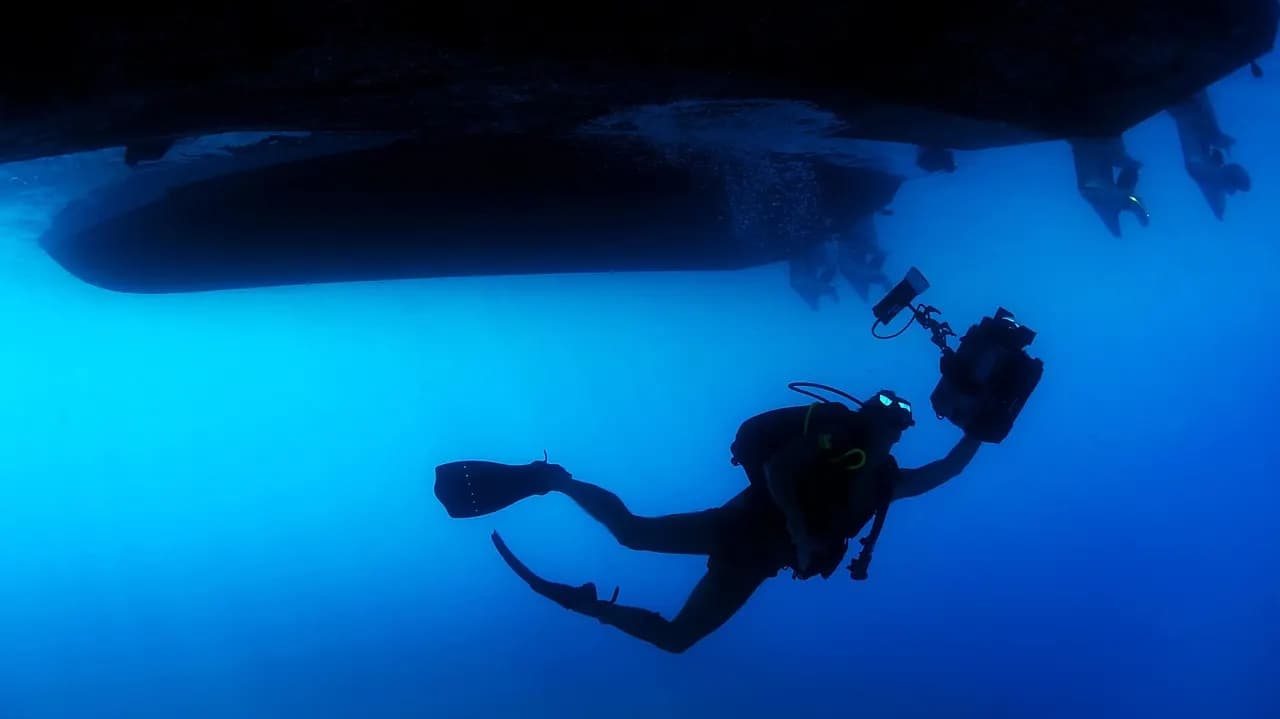
Why do scuba divers need specific insurance?
Scuba divers need specific cover because decompression sickness is treated with hyperbaric oxygen in a recompression chamber, where DAN puts the usual US Navy Treatment Table 6 session at just under five hours, sometimes repeated. Travel policies cover diving only on their own terms, and the nearest chamber that can treat you may be a flight away.
What the treatment involves
DAN's medical reference calls hyperbaric oxygen the definitive treatment for decompression sickness. Oxygen given as first aid helps, but often only temporarily if definitive treatment is not secured. A full resolution can often be achieved with one or sometimes multiple chamber treatments. DAN also notes that some facilities' chambers are not available to treat divers at all times, or ever, and that it is generally not appropriate to show up unannounced at the nearest chamber: call first.
Getting to a chamber
Several well-known dive areas have no chamber of their own. There is none on Nusa Penida; the nearest listed is at Kasih Ibu Hospital Saba in Gianyar, on Bali. Maui divers are treated in Honolulu, on Oahu, and Cairns divers in Townsville. Check that your policy pays for such a transfer and organizes it.
This page is general information, not medical advice. If you have symptoms after a dive, contact DAN's emergency line (+1-919-684-9111) or your insurer's assistance number, and see a dive doctor.
What should a dive insurance policy cover?
A dive insurance policy should name four things in its wording: hyperbaric chamber treatment, emergency medical evacuation with a stated limit, the depth and type of diving covered, and any conditions tied to your certification or country of residence.
Read the policy wording, not the sales page. World Nomads, for example, says its coverage varies with your country of residence and with the plan you choose (Standard or Explorer), and that diving to specific depths may require an additional premium. It also excludes pre-existing medical conditions unless the policy expressly states otherwise.
| Check | Why it matters | Example |
|---|---|---|
| Hyperbaric chamber treatment | Hyperbaric oxygen is the definitive treatment for decompression sickness | DAN (USA) Dive Accident Insurance lists hyperbaric chamber treatment under accident medical expenses, paid up to US$500,000 |
| Emergency evacuation | The nearest chamber may be on another island | DAN membership: up to US$150,000 (Regular) or US$500,000 (Enhanced); SafetyWing: up to US$100,000 lifetime for evacuation to a better-equipped hospital |
| Depth and dive type | Dives beyond a set depth or your qualification can be excluded | World Nomads: never deeper than 50 m (164 ft); DiveAssure: no depth limit or mixed-gas restriction when you dive within your certification |
| Certification | Uncertified or unaccompanied dives can be excluded | SafetyWing asks for a valid license where required (PADI, NAUI, SSI or BSAC); World Nomads covers Discover Scuba dives with qualified instructors |
| Residence | Plans and wording differ by country | DAN (USA) insurance is for residents of U.S. states and DC; World Nomads cover varies by country of residence |
How do DAN, DiveAssure, World Nomads and SafetyWing compare?
DAN and DiveAssure sell dive accident insurance built around diving injuries, while World Nomads and SafetyWing sell travel insurance in which scuba diving is one covered activity, with depth and certification conditions.
Dive accident plans
In the US, DAN membership and DAN's dive accident insurance are separate purchases: DAN states that membership alone does not cover dive accident costs and that the insurance must be bought separately for each member. DAN Europe's Sport plans combine worldwide dive accident cover with travel accident cover for non-diving emergencies abroad, and also cover freediving. DiveAssure puts its limits in the policy document, so read that document before you rely on chamber cover.
Travel insurance with a diving clause
World Nomads lists recreational scuba diving and Discover Scuba dives with qualified instructors among covered activities, and excludes any dive deeper than 50 m (164 ft) under any circumstance. SafetyWing's Essential plan covers scuba diving only through the Adventure Sports add-on, which is sold on subscription policies and cannot be added to a policy that is already active. Its Complete plan does not mention scuba diving, so ask SafetyWing before you buy.
This is how the plans were described in November 2026. Policies change, and the wording you receive when you buy is what counts.
| Provider | Type of cover | Chamber and medical | Evacuation | Depth and dive types | Who can buy |
|---|---|---|---|---|---|
| DAN (USA) | Membership, plus Dive Accident Insurance bought separately for each member | Accident medical expenses up to US$500,000, including hyperbaric chamber treatment | DAN TravelAssist: up to US$150,000 (Regular) or US$500,000 (Enhanced), aggregate for diving and non-diving emergencies | Not stated | Residents of U.S. states and DC; cover may vary by state |
| DAN Europe | Sport plans: worldwide dive accident insurance plus travel accident cover abroad | Emergency medical treatment, hyperbaric therapy and hospitalization | Emergency medical transportation, described as limitless | Depth not stated; freediving covered | Plans offered by country of residence |
| DiveAssure | Diving-Accident Insurance, annual or short-term | Limits in the policy document; chamber treatment not named on the plan page | Transport home by a medically appropriate mode once you are fit to travel | No depth limit or mixed-gas restriction within your certification; technical diving covered | Certified divers or students of an approved agency; options depend on residence |
| World Nomads | Travel insurance, Standard or Explorer plan | Oxygen or hyperbaric treatment named under emergency medical benefits | Evacuation to a medical facility | Qualified divers to 50 m (164 ft) on some plans; no dives beyond your qualification; no unaccompanied dives | Cover varies by country of residence |
| SafetyWing | Nomad Insurance Essential with the Adventure Sports add-on (subscription policies) | Chamber treatment not mentioned on the plan page | Up to US$100,000 lifetime, to a better-equipped hospital | To the depth you or the accompanying instructor is licensed for; not in your home country | Sold with a declared home country; add-ons cannot be added to an active policy |
Is travel insurance with scuba cover enough?
Travel insurance with scuba cover can be enough for recreational dives within its depth and certification limits, as long as the wording names chamber treatment and evacuation; a dive accident plan is built around diving injuries and can sit alongside a travel policy that pays for trip costs.
Questions that decide it:
- Will you dive deep, on mixed gas or on a technical course? Read the depth and dive-type clauses closely: World Nomads stops all cover at 50 m (164 ft), while DiveAssure states no depth limit within your certification.
- Are you diving far from a chamber? Check the evacuation limit and who organizes the transfer.
- Are you diving in your home country? SafetyWing excludes activities there.
- Do you already have a travel policy? Ask whether it names scuba diving at all, and to what depth, before you buy a second policy.
Where does evacuation cover matter most?
Evacuation cover matters most where the nearest chamber is off the island: Nusa Penida has none (the nearest listed is in Gianyar on Bali), Maui's nearest is in Honolulu on Oahu, and in Raja Ampat the status of the hospital chamber in Waisai is unclear, so check it before you dive.
Some popular places have a chamber close by, and its status is still worth a check:
- Koh Tao has its own recompression chamber, run by Hyperbaric Services of Thailand (SSS).
- Cozumel has the Costamed Hyperbaric Center.
- Palau's chamber is at Belau National Hospital in Koror.
- Cairns and the Great Barrier Reef rely on the Townsville Hyperbaric Medicine Unit.
- The only hospital-based chamber in the Florida Keys is at Mariners Hospital in Tavernier.
- On Bonaire, a chamber is reported at the hospital in Kralendijk; confirm it before you dive.
- Egypt has chambers in Hurghada, Sharm el Sheikh and Dahab, among other Red Sea towns.
For Maui, the University of Hawaiʻi Hyperbaric Treatment Center in Honolulu has closed temporarily in the past, so check its status before your trip.
How much does dive insurance cost?
Dive insurance has no single price: what you pay depends on your age, country of residence, trip length and plan, so get a quote on DAN's, DiveAssure's, World Nomads' or SafetyWing's own site.
When you compare quotes, compare like with like: the chamber cover, the evacuation limit, the depth limit and the excess you pay on a claim. A cheaper policy that excludes the dives you plan is no saving.
Do beginners on a dive course need insurance?
Beginners need cover too, and some travel policies include it: World Nomads lists Discover Scuba dives with qualified instructors as covered, and SafetyWing's Adventure Sports add-on covers dives to the depth the accompanying instructor is licensed for.
Tell your insurer you are a student and keep the course paperwork. For the course itself, see how to get scuba certified and what certification costs.
Popular dive trips
Trips run by local operators, booked on Viator or GetYourGuide.
 ViatorBaliDiscover Scuba Diving in Tulamben, BaliView on Viator (opens in a new tab)
 GetYourGuideBaliBali: Tulamben Bay Beginner's Dive ExperienceView on GetYourGuide (opens in a new tab)
 ViatorHurghadaHurghada Diving Adventure one Day with two Dives Boat TripView on Viator (opens in a new tab)
 GetYourGuideGili IslandsGili Trawangan: Discover Scuba Diving for BeginnersView on GetYourGuide (opens in a new tab)
 ViatorKoh TaoOpen Water Course - Become certified diver in 3 daysView on Viator (opens in a new tab)
 GetYourGuideHurghadaHurghada: Full-Day Boat Trip with 2 Scuba Dives and LunchView on GetYourGuide (opens in a new tab)
Ratings from GetYourGuide travellers.
Frequently asked questions
Does DAN membership include dive accident insurance?
Not in the US. DAN membership includes DAN TravelAssist emergency medical transportation, up to US$150,000 on the Regular level and US$500,000 on Enhanced, plus a 24/7 emergency hotline. DAN states that dive accident insurance must be purchased separately for each member; it pays eligible accident medical expenses up to US$500,000, including hyperbaric chamber treatment, for residents of U.S. states and DC.
Does regular travel insurance cover scuba diving?
Only on the policy's own terms. World Nomads lists recreational scuba diving as covered but excludes dives deeper than your qualification and any dive deeper than 50 m (164 ft); SafetyWing's Essential plan covers scuba diving only with its Adventure Sports add-on. Other travel policies may leave diving out entirely, so check that the wording names scuba diving, your depth and chamber treatment.
How deep does dive insurance cover you?
It depends on the policy. DiveAssure states that its policies have no depth limit or mixed-gas restriction as long as you dive according to your certification; World Nomads covers qualified divers to 50 m (164 ft) on some plans and never deeper; SafetyWing's add-on covers dives to the depth you or your instructor is licensed for. DAN does not state a depth limit for its US insurance, so ask before a deep trip.
Am I covered on a try dive without certification?
Possibly, if your policy says so. World Nomads lists Discover Scuba dives with qualified instructors among covered activities and excludes unaccompanied dives, and SafetyWing's Adventure Sports add-on covers diving to the depth the accompanying instructor is licensed for. Tell your insurer you are a beginner, check the wording before the dive, and keep the dive center's paperwork in case you need to claim.
What should I do if I think I have decompression sickness?
Get help straight away. DAN's medical reference names supplemental oxygen as the primary first aid and hyperbaric oxygen in a chamber as the definitive treatment. Call DAN's emergency line (+1-919-684-9111) or your insurer's assistance number before heading to a chamber, since DAN says showing up unannounced is generally not appropriate. This is not medical advice: follow the doctors' instructions.


