Dive guide · Mexico
Scuba Diving in Cabo San Lucas, Cabo Pulmo and La Paz
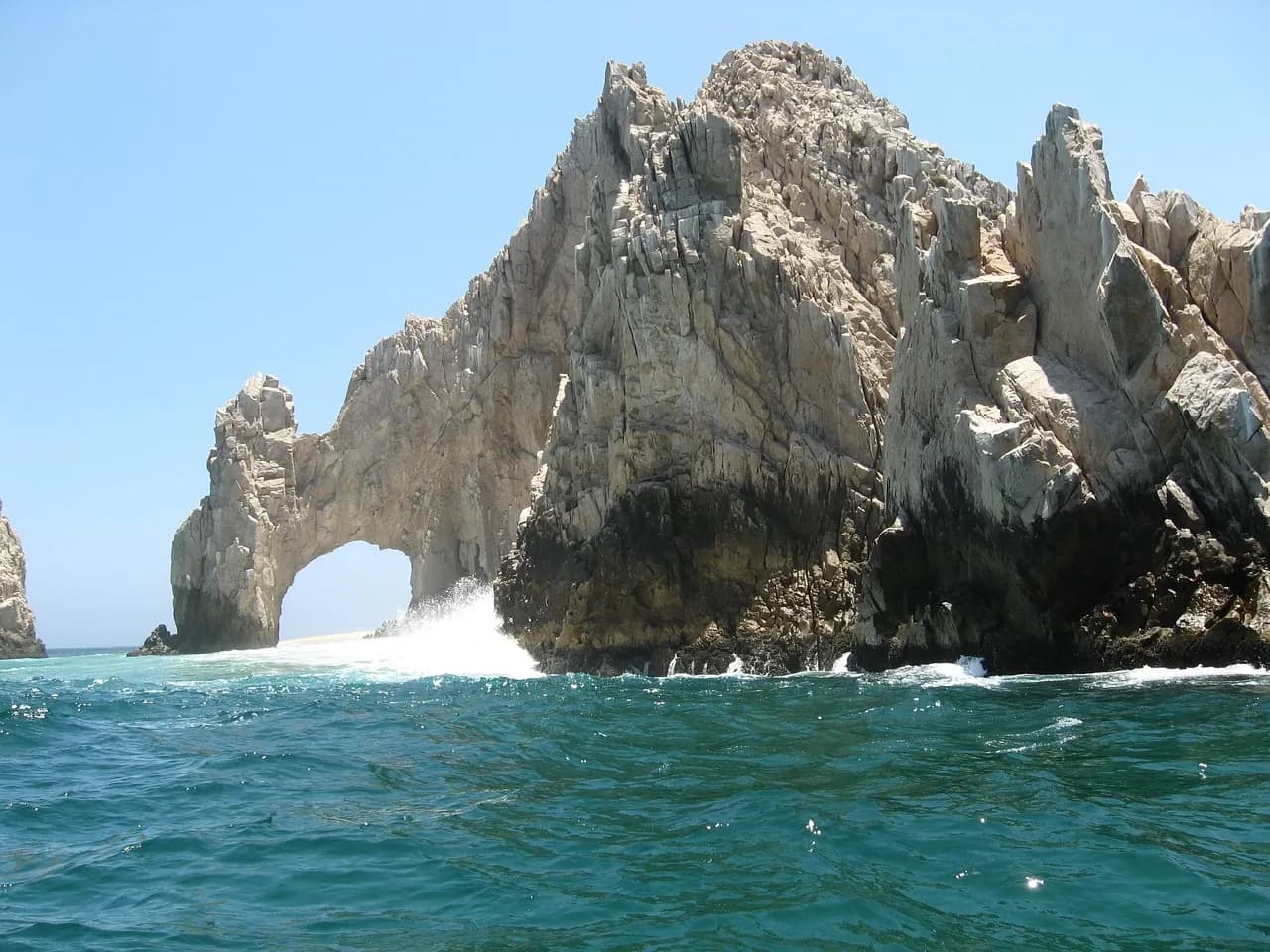
Cabo San Lucas sits where the Pacific meets the Sea of Cortez: sea lions and sandfalls in its bay, the Cabo Pulmo reef up the coast, and La Paz's seamounts and sea lion colony to the north. November to April brings humpbacks and whale sharks, with water at 21.3–27 °C (70–81 °F). Two tanks cost about US$145.
Key facts
- Best months
- November to April
- Water temperature
- 21.3–28.7 °C (70–84 °F)Monthly average, coolest to warmest month
- Level
- Beginner to advanced
- Open Water course
- US$639.50Typical price, checked
- Two-tank boat dive
- US$145Typical price, checked
- Discover Scuba (try dive)
- US$207Typical price, checked
- Snorkel tour
- US$150Typical price, checked
- Airports
- Los Cabos International Airport (SJD), La Paz International Airport (LAP)
- Park fee
- Cabo San Lucas Flora and Fauna Protection Area (bay marine park), per person per day: MX$125.32
- Park fee
- Cabo Pulmo National Park, per person per day: MX$125.32
- Park fee
- Archipielago de Espiritu Santo marine national park (La Paz, Los Islotes), per person per day: MX$225.56
- Park fee
- Optional annual pass for all federal protected areas except Revillagigedo and Isla Guadalupe: MX$3,759.29
- Nearest chamber
- SSS Recompression Chamber Cabo San Lucas, Cabo San Lucas
Book a dive trip in Cabo San Lucas, Cabo Pulmo & La Paz
Trips run by local operators, booked on Viator or GetYourGuide.
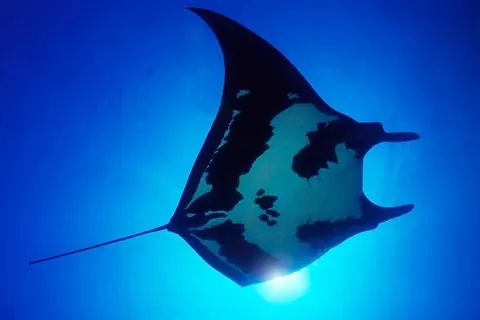 Viator2 Tank Dive for Certified Divers Cabo San Lucas Marine ParkView on Viator (opens in a new tab)
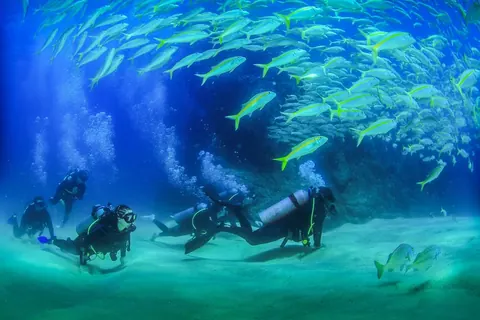 GetYourGuideLos Cabos: 3-Hour Introductory Scuba Diving AdventureView on GetYourGuide (opens in a new tab)
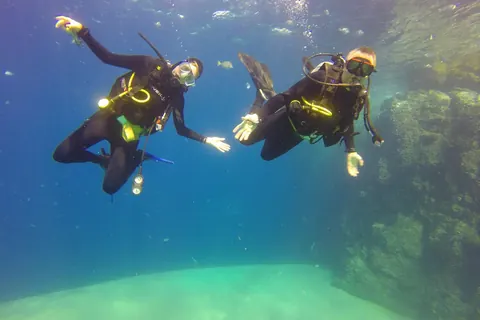 ViatorBeginner Scuba Diving in Cabo San LucasView on Viator (opens in a new tab)
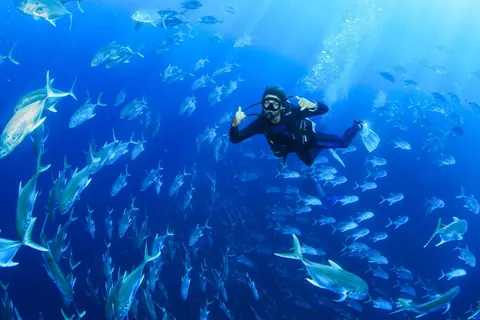 GetYourGuideLos Cabos 3-Hour Certified Scuba Diving TourView on GetYourGuide (opens in a new tab)
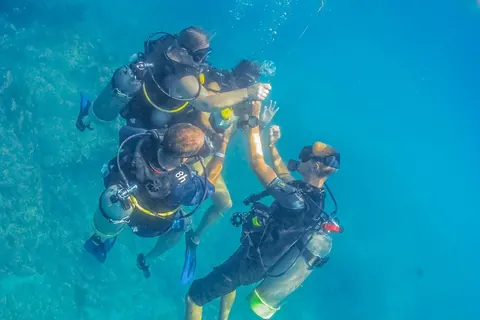 ViatorLearn to Scuba Dive in Cabo San Lucas with PADIView on Viator (opens in a new tab)
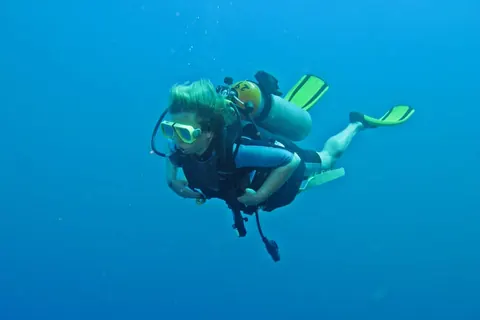 GetYourGuideCabo San Lucas: Beginner's Diving ExperienceView on GetYourGuide (opens in a new tab)
All Cabo San Lucas, Cabo Pulmo & La Paz trips on Viator (opens in a new tab)
Ratings from GetYourGuide travellers.
When is the best time to dive Cabo San Lucas, Cabo Pulmo and La Paz?
The best time to dive Cabo San Lucas, Cabo Pulmo and La Paz is November to April, the season of humpback whales and La Paz whale sharks and outside the main hurricane months; the trade-off is cooler water, down to 21.3 °C (70 °F) in April.
The sea here changes a lot over the year: about 21–22 °C (70–72 °F) from February to May, then up to 28.7 °C (84 °F) in September and October. Those warm months overlap the eastern Pacific hurricane season, which runs from 15 May to 30 November and peaks in late August, so a warm-water trip needs flexible dates.
Whales, whale sharks and sea lions
- Humpback whales, December to April: the official 2026–27 whale-watching season for the Cabo San Lucas protected area, San José del Cabo and Cabo Pulmo runs from 15 December 2026 to 30 April 2027. Humpbacks arrive from late November, and in winter you can hear them on dives.
- Whale sharks, October to April: juveniles arrive in the Bahía de La Paz around October, and the official season for swimming with them runs from 1 October to 30 April. The dates are set each year, so check them before you book.
- Sea lions at Los Islotes: swimming with the colony is restricted during the June–August breeding season, and La Paz operators restart trips on 1 September.
| Month | Average water temperature | Season |
|---|---|---|
| January | 23.1 °C (74 °F) | Best month to dive |
| February | 22.1 °C (72 °F) | Best month to dive |
| March | 21.5 °C (71 °F) | Best month to dive |
| April | 21.3 °C (70 °F) | Best month to dive |
| May | 22.2 °C (72 °F) | Outside the best months |
| June | 23.2 °C (74 °F) | Outside the best months |
| July | 26.4 °C (80 °F) | Outside the best months |
| August | 28.4 °C (83 °F) | Outside the best months |
| September | 28.7 °C (84 °F) | Outside the best months |
| October | 28.7 °C (84 °F) | Outside the best months |
| November | 27 °C (81 °F) | Best month to dive |
| December | 25 °C (77 °F) | Best month to dive |
In season in: January · February · March · April · November · December
What is diving in the Cabo San Lucas marine park like?
The Cabo San Lucas marine park, the protected area around the bay and Land's End, has four main sites at 5–34 m (16–112 ft): Pelican Rock and North Wall for easy dives, Land's End and Neptune's Finger for sea lions, sandfalls and current.
- Pelican Rock (5–27 m, 16–89 ft): a calm rock by Lover's Beach that slopes into a canyon with Cabo's famous sandfalls, plus macro life and schooling fish.
- North Wall (6–27 m, 20–89 ft): a rocky slope sheltered from swell and the fallback site in rough weather, with morays, lobsters and seahorses in summer.
- Land's End (9–24 m, 30–79 ft): where the Pacific meets the Sea of Cortez, with a sea lion colony, schooling fish and remains of the Nurnberg wreck at about 12 m (39 ft). Surge and currents can be strong.
- Neptune's Finger (9–34 m, 30–112 ft): a steep wall with the park's largest sandfall, a ray cleaning station and passing mobula schools.
Cabo Trek charges US$119 for a semi-private two-tank trip with park fees included, Dive Cabo US$130 and Dive Ninja from US$145, with rental gear US$35–40 extra.
What are the Corridor and Gordo Banks?
The Corridor is the coast between Cabo San Lucas and San José del Cabo, where Chileno Bay is a protected reef at 12–18 m (39–59 ft), and Gordo Banks is a seamount off San José del Cabo whose top lies around 30 m (98 ft), a blue-water dive for hammerhead and silky sharks.
Chileno Bay has sea fans, and turtles, rays and whitetip reef sharks are possible. Gordo Banks is a different kind of day: you descend in open water to the seamount and watch the blue for sharks, so shops ask for Advanced certification. Go for the dive itself; no shop can promise hammerheads.
Is Cabo Pulmo worth the trip from Cabo San Lucas?
Cabo Pulmo is worth a day for its coral reef and big fish: at El Cantil, a long coral ledge at 5–17 m (16–56 ft), walls of bigeye trevally and big groupers appear from the first minute, and Los Morros has the longest species list in the park.
Mobula rays and guitarfish pass Los Morros in season, and both sites are rated beginner. Cabo Pulmo Dive Center quotes in pesos: MXN 2,800 for two tanks, MXN 600 for gear and MXN 1,600 for a snorkel trip. It collects MXN 120 per person for the park authority, while the 2026 federal fee for Cabo Pulmo National Park is MXN 125.32 a day, so check the amount on the day. Cabo Pulmo is also inside the official humpback-watching area in winter.

What can you dive from La Paz?
From La Paz you dive the islands of the Espíritu Santo marine park: the Los Islotes sea lion colony, El Bajo, a seamount known for schooling hammerheads at 16–25 m (52–82 ft), and easy reefs such as Swanee Reef at 2–11 m (7–36 ft).
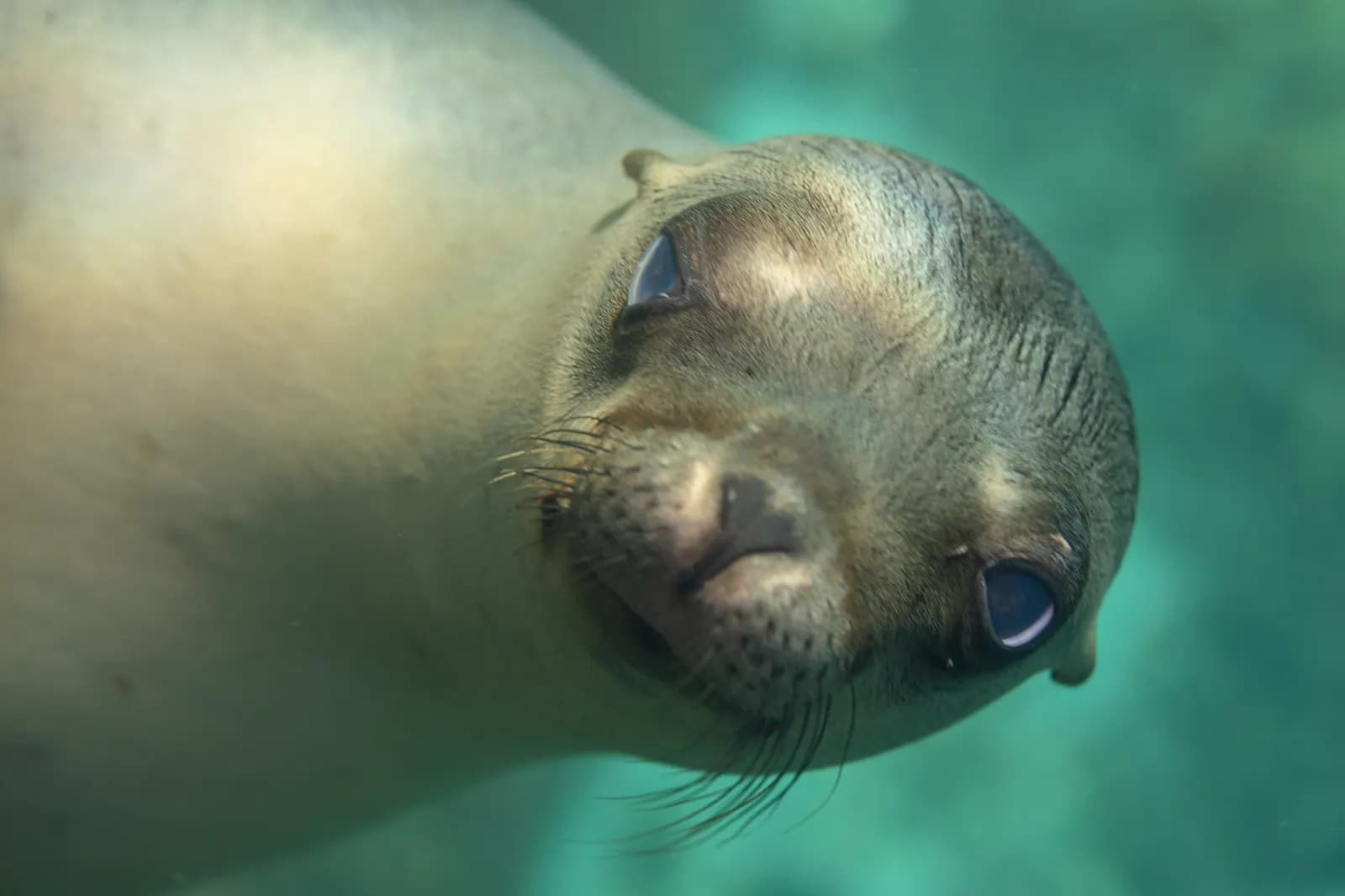
- Los Islotes: a California sea lion colony you can swim with outside the June–August breeding closure.
- El Bajo (Marisla Seamount): three peaks north-east of Los Islotes; an advanced dive.
- Isla Ballena (6–18 m, 20–59 ft): caves and eels off the west side of Isla Espíritu Santo.
- Wrecks: La Paz centers also dive the Salvatierra at about 18 m (59 ft) and the Fang Ming at about 21 m (69 ft).
The boat rides are long, and that shows in the price: The Cortez Club charges US$175 plus 16% tax for two tanks, with gear (US$45) and its US$18 park permit on top, and Koox Diving US$319 for a small-group day. The official Espíritu Santo fee is MXN 225.56 per person per day, higher than at Cabo or Cabo Pulmo. In whale-shark season, tours to the juveniles in the bay run from La Paz as well.
Should you add a Socorro liveaboard to a Cabo trip?
A Socorro liveaboard is a separate, multi-night trip rather than an add-on to day diving: boats to the Revillagigedo Islands leave from Cabo San Lucas, so the town is the natural base before or after one.
If you want the big oceanic animals of the open Pacific, plan Socorro as its own trip, with time in Cabo before or after for checkout dives in the marine park. The Revillagigedo park is not covered by Mexico's annual protected-area pass and has its own daily fee. Routes, seasons, boats and prices per night are in our Socorro liveaboard guide.
Which Cabo and La Paz dive sites suit your level?
Seven of the eleven sites in our Cabo San Lucas, Cabo Pulmo and La Paz table are beginner dives, Land's End is intermediate, and Neptune's Finger, Gordo Banks and El Bajo are advanced.
Pelican Rock and North Wall reach 27 m (89 ft) at their deepest but start at 5–6 m (16–20 ft), so new divers can stay shallow. Swanee Reef off La Paz, at 2–11 m (7–36 ft), is the shallowest site in the table and is used for novices.
| Dive site | Depth | Level | Entry | Highlights |
|---|---|---|---|---|
| Land's End | 9–24 m (30–79 ft) | Intermediate | Boat | Where the Pacific meets the Sea of Cortez: sea lion colony, schooling fish and remains of the Nurnberg wreck at about 12 m; surge and currents can be strong |
| Pelican Rock | 5–27 m (16–89 ft) | Beginner | Boat | Calm rock by Lover's Beach sloping into a canyon with Cabo's famous sandfalls; macro life and schooling fish |
| Neptune's Finger | 9–34 m (30–112 ft) | Advanced | Boat | Steep wall with the largest sandfall in the marine park, a ray cleaning station and passing mobula schools |
| North Wall | 6–27 m (20–89 ft) | Beginner | Boat | Rocky slope sheltered from swell, the fallback site in rough weather; morays, lobsters and summer seahorses |
| Chileno Bay (the Corridor) | 12–18 m (39–59 ft) | Beginner | Boat | Protected reef with sea fans between Cabo San Lucas and San Jose del Cabo; turtles, rays and whitetip reef sharks possible |
| Gordo Banks (inner seamount) | 30–40 m (98–131 ft) | Advanced | Boat | Seamount off San Jose del Cabo peaking around 30 m: blue-water dive for hammerhead and silky sharks, Advanced certification required |
| El Cantil (Cabo Pulmo) | 5–17 m (16–56 ft) | Beginner | Boat | The long coral ledge behind Cabo Pulmo's fame: walls of bigeye trevally and big groupers from the first minute |
| Los Morros (Cabo Pulmo) | 9–17 m (30–56 ft) | Beginner | Boat | Rocky reef with the longest species list in the park; mobula rays and guitarfish in season |
| El Bajo, Marisla Seamount (La Paz) | 16–25 m (52–82 ft) | Advanced | Boat | Three-peaked seamount north-east of Los Islotes, known for schooling hammerhead sharks |
| Swanee Reef (La Paz) | 2–11 m (7–36 ft) | Beginner | Boat | Shallow reef of coral heads and gorgonian walls with schooling fish, used for novices |
| Isla Ballena (La Paz) | 6–18 m (20–59 ft) | Beginner | Boat | Caves and eels off the west side of Isla Espiritu Santo |
How much does diving in Cabo San Lucas and La Paz cost?
A two-tank dive in the Cabo San Lucas marine park costs US$119–145, a La Paz island day US$175–319, and a Discover Scuba dive US$142–289 across the area (prices checked November 2026).
- Two tanks in the marine park: Cabo Trek US$119 with park fees, Dive Cabo US$130, Dive Ninja from US$145 with tanks and weights; gear US$35–40 extra.
- Two tanks from La Paz: The Cortez Club US$175 plus 16% tax, with the park permit (US$18) and gear (US$45) extra; Koox Diving US$319.
- Discover Scuba: Manta US$142 for one tank (gear US$40 extra), Dive Cabo US$190, Cabo Trek US$199 for two tanks in the marine park, Dive Ninja US$215 for two ocean dives; in La Paz, The Cortez Club US$258 plus tax and Koox Diving US$289.
- Snorkeling: Manta's short afternoon tour to Lover's Beach, the arch and Land's End costs US$70 with gear and wetsuit; a La Paz day to Espíritu Santo and the sea lions costs US$150 plus tax at The Cortez Club and US$209 at Koox Diving.
Tax is handled differently: The Cortez Club adds 16% sales tax, Manta includes it, and other shops do not say. To see the full price, ask local dive centers for a quote.
Prices checked
| Item | Typical price | Range |
|---|---|---|
| Open Water course | US$639.50 | US$610–US$999 |
| Two-tank boat dive | US$145 | US$119–US$319 |
| Discover Scuba (try dive) | US$207 | US$142–US$289 |
| Snorkel tour | US$150 | US$70–US$209 |
Prices change; confirm with the center before you book.
What are the marine park fees in Cabo San Lucas, Cabo Pulmo and La Paz?
Mexico's federal park fee is MXN 125.32 per person per day in the Cabo San Lucas protected area and Cabo Pulmo National Park, and MXN 225.56 in the Espíritu Santo archipelago park off La Paz (2026 amounts, paid rounded to MXN 125 and MXN 225).
The fees are set in article 198 of the Federal Duties Law, and when you dive with a center the center is responsible for paying them. Operators handle this in different ways: Cabo Trek's marine park price includes the fee, Cabo Pulmo Dive Center collects MXN 120, and The Cortez Club lists a US$18 permit for Espíritu Santo trips. Go by the official amount where a quote looks out of date.
Under-12s, people with disabilities, INAPAM-card seniors and pensioners are exempt; Mexican citizens and foreign residents pay 50%. The MXN 3,759.29 annual pass covers every federal protected area except Revillagigedo and Isla Guadalupe, so it does not help on a Socorro liveaboard. Fees are revised yearly; check them if you travel after 2026.
How much is an Open Water course in Cabo San Lucas and La Paz?
An Open Water course in Cabo San Lucas and La Paz costs US$610–999, typically about US$639.50, with theory, rental gear and four open-water dives; the highest price excludes 16% VAT.
That makes Baja California Sur one of the pricier places in our guide to learn: compare the course with Cancun and the Riviera Maya, where it costs US$450–684. Cabo's calm Pelican Rock and sheltered North Wall suit first dives after the pool. If you have a preferred agency, such as PADI or SSI, ask the center which it teaches; the instructor matters more. See all destinations in our Open Water price index.
Where is the nearest recompression chamber to Cabo San Lucas and La Paz?
The recompression chamber for this part of Baja is the SSS Recompression Chamber in Cabo San Lucas, operating since 1996; no chamber in La Paz is confirmed, so an injured diver there may have to be taken to Cabo San Lucas.
The chamber's hours are not published, so confirm it is staffed before deep days such as Gordo Banks and Neptune's Finger. Land's End can have strong surge and currents: follow the guide's plan and keep your depth within your training.
Carry dive insurance that covers chamber treatment and evacuation, which matters most on La Paz island days and on a Socorro trip. For any symptoms after diving, contact DAN or a dive doctor.
Dive centers in Cabo San Lucas, Cabo Pulmo & La Paz
Loading dive centers…
Frequently asked questions
Can you see whale sharks in Cabo San Lucas?
Not in Cabo's own bay: the whale sharks gather in the Bahía de La Paz, north of Cabo, where juveniles arrive around October and the official swimming season runs from 1 October to 30 April. Tours leave from La Paz, and the season dates are set each year, so check the current ones. La Paz is also the base for Espíritu Santo diving.
When can you swim with sea lions in La Paz?
From September to May. Swimming with the California sea lion colony at Los Islotes is restricted during the June–August breeding season, and La Paz operators restart trips on 1 September. A La Paz day to Espíritu Santo and the sea lions costs US$150 plus tax at The Cortez Club or US$209 at Koox Diving. Cabo's Land's End also has a colony.
Is Cabo San Lucas good for beginner divers?
Yes. Pelican Rock and North Wall in the marine park start at 5–6 m (16–20 ft), and North Wall is sheltered from swell. A Discover Scuba dive costs US$142–215 in Cabo. Cabo Pulmo's El Cantil and Los Morros are beginner sites too. Leave Land's End currents, Neptune's Finger and Gordo Banks until you have more experience.
How cold is the water in Cabo San Lucas?
Cooler than the Caribbean in spring. The sea off Cabo San Lucas averages 21.3 °C (70 °F) in April, the coolest month, and 21–22 °C (70–72 °F) from February to May. It warms to 26.4 °C (80 °F) in July and 28.7 °C (84 °F) in September and October, then cools again to 25 °C (77 °F) by December.
Can you hear humpback whales while diving in Cabo?
Yes, in winter. Humpbacks arrive off Cabo San Lucas from late November, and their song can be heard on dives through the winter months. The official 2026–27 whale-watching season for the Cabo San Lucas protected area, San José del Cabo and Cabo Pulmo runs from 15 December 2026 to 30 April 2027, when the water is at its coolest, 21.3–25 °C (70–77 °F).
Which airport is best for diving Cabo San Lucas and La Paz?
Los Cabos International Airport (SJD) serves Cabo San Lucas, San José del Cabo and the Corridor, and it is also the closer choice for Cabo Pulmo. For Espíritu Santo, Los Islotes and the whale sharks, fly into La Paz International Airport (LAP). Socorro liveaboards leave from Cabo San Lucas, so SJD is the airport for them.


