Dive guide · Thailand
Scuba Diving in Thailand
Thailand has two dive coasts with opposite seasons: the Andaman Sea off Phuket and the Similan Islands, best from November to April, and the Gulf of Thailand around Koh Tao, best from February to October. February to April is the only stretch when both are in season. An Open Water course costs THB 11,000–17,400 (prices checked November 2026).
Key facts
- Best months
- February to April
- Water temperature
- 28.4–29.9 °C (83–86 °F)Monthly average, coolest to warmest month
- Level
- Beginner to advanced
- Two-tank boat dive
- THB 3,750Typical price, checked
- Open Water course
- THB 13,900Typical price, checked
- Discover Scuba (try dive)
- THB 4,000Typical price, checked
- Airports
- Suvarnabhumi Airport, Bangkok (BKK), Phuket International Airport (Andaman coast) (HKT), Samui International Airport (Gulf coast, ferry to Koh Tao) (USM)
- Park fee
- Hat Noppharat Thara-Mu Ko Phi Phi National Park special service fee, foreign adult (Phi Phi Don, Phi Phi Le, Bamboo Island): THB 400
- Park fee
- Mu Ko Lanta National Park special service fee, foreign adult (Koh Rok, Koh Haa, Hin Daeng-Hin Muang): THB 400
- Park fee
- Mu Ko Ang Thong National Park special service fee, foreign adult (Koh Wua Ta Lap, Koh Mae Ko; Gulf coast): THB 300
- Nearest chamber
- SSS Recompression Chamber Network Thailand (Hyperbaric Services of Thailand): 24/7 chambers in Phuket and on Koh Tao, Phuket and Koh Tao
Book a dive trip in Thailand
Trips run by local operators, booked on Viator or GetYourGuide.
 ViatorOpen Water Course - Become certified diver in 3 daysView on Viator (opens in a new tab)
 GetYourGuidePhuket: Scuba Diving Maithon Or Racha Islands For All LevelsView on GetYourGuide (opens in a new tab)
 ViatorScuba Diving in Phuket – Full-Day Trip (3 Dives, All Included)View on Viator (opens in a new tab)
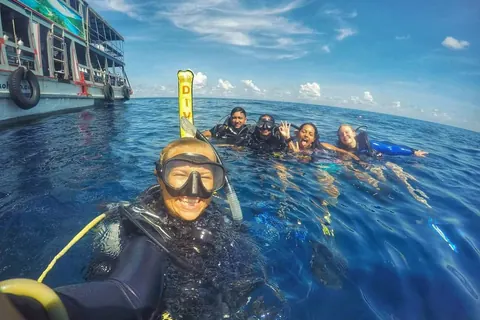 GetYourGuideKoh Tao: PADI 1-Day Try Diving ExperienceView on GetYourGuide (opens in a new tab)
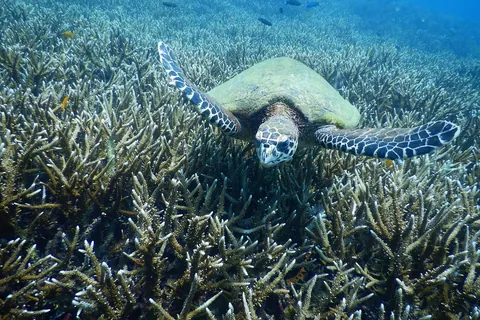 ViatorDiving Tour for Certified Divers: Sail Rock or Koh TaoView on Viator (opens in a new tab)
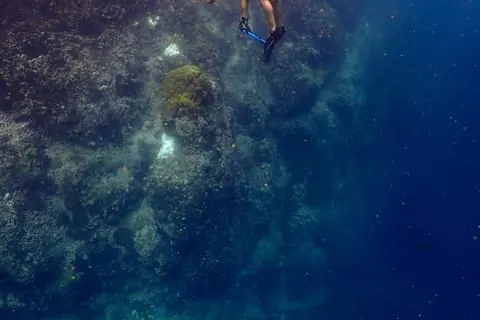 GetYourGuideKoh Samui: Discovery Dive to Koh Tao or Sail RockView on GetYourGuide (opens in a new tab)
All Thailand trips on Viator (opens in a new tab)
Ratings from GetYourGuide travellers.
Koh Tao or Phuket: which part of Thailand should you dive?
Choose Koh Tao, in the Gulf of Thailand, for the cheapest courses, granite pinnacles and whale sharks from February to October, and Phuket, on the Andaman Sea, for day boats to Phi Phi and the King Cruiser wreck and, from Khao Lak, trips to the Similan Islands between November and April.
Because the two seasons barely overlap, most trips suit one coast or the other. The table sets the two guides side by side; in short:
- Koh Tao is a small island where diving is the main business. It is set up for learning, with Open Water courses at THB 11,000–12,500 over 2.5–3 days, and its offshore pinnacles, Chumphon and Sail Rock, keep experienced divers busy.
- Phuket is the gateway to the Andaman Sea. Its own boats run to the King Cruiser wreck, Anemone Reef and the Phi Phi islands, while the Similan Islands national park, open from 15 October to mid-May, is reached on day trips from Khao Lak or on Similan liveaboards.
Thailand's national parks also protect dive areas that have no guide here yet: Mu Ko Lanta on the Andaman coast, with Koh Rok, Koh Haa and Hin Daeng-Hin Muang, and Mu Ko Ang Thong in the Gulf. Their entry fees are listed in the cost section below.
| Place | Best months | Water | Two-tank boat dive | Open Water course |
|---|---|---|---|---|
| Koh Tao | February to October | 27.7–30.2 °C (82–86 °F) | THB 2,200 | THB 11,500 |
| Phuket | November to April | 28.4–29.9 °C (83–86 °F) | THB 5,600 | THB 14,500 |
Water: average temperature of the coolest and the warmest month. Prices: typical prices; each guide says when they were checked.
When is the best time to dive in Thailand?
For Thailand as a whole, the best time to dive is February to April, the only months when both the Andaman coast (in season November to April) and the Gulf coast around Koh Tao (February to October) have settled weather. Outside those months one coast is always in season, so the right month depends on where you go.
Two monsoons set the calendar, and they reach the coasts at different times.
- Andaman Sea (Phuket, Khao Lak, the Similans): the Similan Islands national park closes for about five months over the south-west monsoon, from mid-May to 15 October, to let the reefs recover and to avoid storm damage. Similan trips therefore run from mid-October to mid-May, and the weather is most settled from November to April.
- Gulf of Thailand (Koh Tao): the north-east monsoon brings rain, bigger waves and lower visibility around November and December. Boats then stick to sheltered sites, and February to October is the main season.
Why February to April
These three months are the overlap, and they also hold the big-animal highlights of both coasts: oceanic manta rays are seen most often in the Similan–Surin area from February to April, and April opens one of Koh Tao's two whale-shark peaks. If you can only travel from June to September, choose the Gulf; from November to January, choose the Andaman side.
Water temperature
Off Phuket the sea averages 28.4 °C (83 °F) in January and 29.9 °C (86 °F) in May. Koh Tao swings a little more, from 27.7 °C (82 °F) in January to 30.2 °C (86 °F) in May. On either coast a light suit is enough for most divers.
| Month | Average water temperature | Season |
|---|---|---|
| January | 28.4 °C (83 °F) | Outside the best months |
| February | 28.7 °C (84 °F) | Best month to dive |
| March | 29.2 °C (85 °F) | Best month to dive |
| April | 29.7 °C (85 °F) | Best month to dive |
| May | 29.9 °C (86 °F) | Outside the best months |
| June | 29.6 °C (85 °F) | Outside the best months |
| July | 29.3 °C (85 °F) | Outside the best months |
| August | 29.2 °C (85 °F) | Outside the best months |
| September | 28.8 °C (84 °F) | Outside the best months |
| October | 28.6 °C (83 °F) | Outside the best months |
| November | 28.7 °C (84 °F) | Outside the best months |
| December | 28.6 °C (83 °F) | Outside the best months |
When can you see whale sharks and manta rays in Thailand?
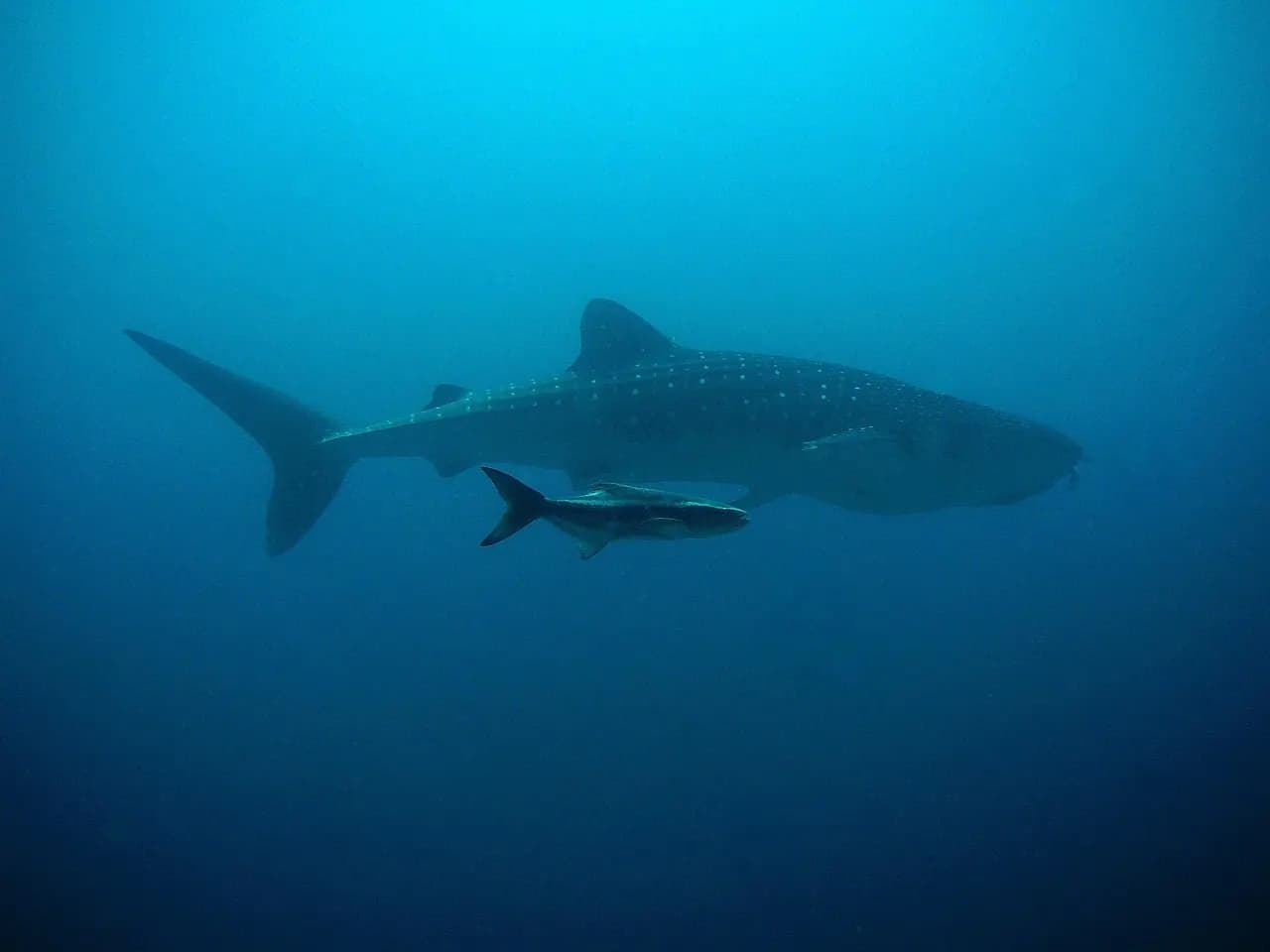
In Thailand, whale sharks are recorded around Koh Tao in every season, with peaks in April–May and October–November, while oceanic manta rays visit the Similan–Surin area through its October–May season and are seen most often from February to April.
On the Andaman side, dive centers also report whale sharks at Richelieu Rock, mainly from about February to April. Treat a sighting there as luck, not a promise.
Leopard sharks are the dependable shark of the Andaman coast. They rest on the deep sand at Koh Tachai, around the Similan boulders and at the Phi Phi pinnacles of Hin Bida and Garang Heng, where they turn up on most dives.
In the Gulf, Chumphon Pinnacle off Koh Tao is one of the offshore sites where whale sharks pass. On both coasts, keep your distance from big animals, never touch or chase them, and let them choose how close to come.
What are the best dive sites in Thailand?
Thailand's best-known dive sites include Koh Tachai (16–40 m, 52–131 ft) and the King Cruiser wreck (10–30 m, 33–98 ft) on the Andaman side, and Chumphon Pinnacle (14–36 m, 46–118 ft) and Sail Rock (5–40 m, 16–131 ft) in the Gulf.
The table takes three sites from each coast; the Phuket and Koh Tao guides list more.
Andaman Sea
Koh Tachai is a current-swept plateau reached down a buoy line, covered in sea fans and soft corals, and rated advanced. The King Cruiser, a car ferry that sank in 1997 after striking Anemone Reef, sits upright with snapper schools and trevally around it. Hin Bida, off Phi Phi, is a pinnacle nicknamed Phi Phi Shark Point and rated beginner.
Gulf of Thailand
Chumphon Pinnacle is an offshore granite peak with barracuda schools, rated advanced. Sail Rock rises between Koh Phangan and Koh Tao, and divers swim up through its vertical chimney. Twins, at 6–18 m (20–59 ft), is a pair of boulder clusters where many Koh Tao courses hold their training dives.
| Dive site | Depth | Level | Entry | Highlights |
|---|---|---|---|---|
| Koh Tachai | 16–40 m (52–131 ft) | Advanced | Boat | Current-swept plateau reached by a buoy line; soft corals and sea fans, leopard sharks and stingrays on the deep sand |
| King Cruiser Wreck | 10–30 m (33–98 ft) | Intermediate | Boat | Car ferry that sank in 1997 after hitting Anemone Reef; sits upright with soft corals, snapper schools and trevally |
| Hin Bida, Phi Phi | 5–30 m (16–98 ft) | Beginner | Boat | Pinnacle nicknamed Phi Phi Shark Point for its leopard sharks; soft corals and whiptail rays |
| Chumphon Pinnacle, Koh Tao | 14–36 m (46–118 ft) | Advanced | Boat | Offshore granite pinnacle with barracuda schools; whale sharks pass at times |
| Sail Rock, Koh Tao | 5–40 m (16–131 ft) | Intermediate | Boat | Pinnacle between Koh Tao and Koh Phangan with a vertical swim-through chimney |
| Twins, Koh Tao | 6–18 m (20–59 ft) | Beginner | Boat | Two boulder clusters and sandy channels, widely used for training |
How much does diving in Thailand cost?
Two dives in Thailand cost from THB 2,000 on a Koh Tao half-day boat to THB 5,300–6,100 on a Similan day trip from Khao Lak, and an Open Water course costs THB 11,000–17,400, typically THB 13,900 (prices checked November 2026).
The national figures mix two very different products, so read them coast by coast.
- Gulf (Koh Tao): two dives with equipment cost THB 2,000–2,200, an Open Water course THB 11,000–12,500, and a one-day try dive from THB 2,500.
- Andaman (Phuket and Khao Lak): two dives on a Similan day trip cost THB 5,300–6,100 before gear rental and the park fee, an Open Water course THB 13,900–17,400, and a try dive with two sea dives THB 4,000–5,900.
National park fees
Many Andaman dives take place inside national parks, which charge foreign visitors a fee valid for up to five days per park: THB 400 per adult for Mu Ko Phi Phi and for Mu Ko Lanta, and THB 300 for Mu Ko Ang Thong in the Gulf. For the Similan Islands, day-trip operators collect THB 700 per diver. Koh Tao is not a national park, so it has no marine-park fee. Fees change and operators may add their own charges, so check the current amount before you go.
Prices checked
| Item | Typical price | Range |
|---|---|---|
| Two-tank boat dive | THB 3,750 | THB 2,000–THB 6,100 |
| Open Water course | THB 13,900 | THB 11,000–THB 17,400 |
| Discover Scuba (try dive) | THB 4,000 | THB 2,500–THB 5,900 |
Prices change; confirm with the center before you book.
Where is the best place to learn to dive in Thailand?
Koh Tao is the cheaper of Thailand's two main places to learn, with Open Water courses at THB 11,000–12,500 in 2.5–3 days including equipment and materials, against THB 13,900–17,400 for the cheapest course at Phuket and Khao Lak centers, where park fees come on top.
Price is not the only difference. Koh Tao trains all year at shallow, sheltered sites, so it suits a trip built around the course itself. Phuket suits a beach holiday with a course added on: its cheapest courses train at the Racha islands or on Khao Lak's local reefs, and versions with Phi Phi or Similan dives cost more. Pick a school by its instructors and class sizes rather than by the agency on the certificate.
Our Open Water price index shows Koh Tao and Phuket as separate rows, and what a dive course costs explains what to check in a quote.
Where are the recompression chambers in Thailand?
Thailand's SSS Recompression Chamber Network, run by Hyperbaric Services of Thailand, operates 24/7 chambers in Phuket and on Koh Tao, one on each of the two main dive coasts.
The Similan Islands, Koh Tachai and Richelieu Rock lie far offshore from Khao Lak, so a diver hurt there faces a boat ride back to the mainland and then a transfer to Phuket. Carry dive insurance that covers chamber treatment and evacuation on either coast, and keep its emergency number with you; DAN can also direct you to the nearest open chamber.
Currents are the main hazard at the offshore pinnacles, Koh Tachai and Chumphon Pinnacle among them, both rated advanced. Dive them with a guide and within your training, and leave the recommended interval before flying home from Phuket, Samui or Bangkok. For fitness to dive, ask a dive doctor or DAN.
Dive centers in Thailand
Loading dive centers…
Frequently asked questions
What is the best month to dive in Thailand?
If you want both coasts, go between February and April, the only months when the Andaman Sea and the Gulf of Thailand are both in season. For one coast only, the Andaman side around Phuket and the Similan Islands is best from November to April, and Koh Tao in the Gulf from February to October. March is a good single pick, with manta rays at their peak around the Similans.
Is Koh Tao or Phuket better for beginner divers?
Koh Tao is the easier and cheaper place to start: an Open Water course costs THB 11,000–12,500, and training happens at shallow sites such as Twins, at 6–18 m (20–59 ft). Phuket works well if you are already on holiday there, with courses at THB 13,900–17,400 and beginner-rated Phi Phi sites such as Hin Bida. Leave Koh Tachai and Chumphon Pinnacle until you have more experience.
Can you dive in Thailand during the rainy season?
Yes, if you pick the right coast. From mid-May to 15 October the Similan Islands national park is closed for the south-west monsoon, but those are good months on Koh Tao in the Gulf. Around November and December the north-east monsoon brings rain and bigger waves to Koh Tao, just as the Andaman coast starts its best months. Plan by coast, not by country.
How warm is the water for diving in Thailand?
Thailand's sea is warm all year. Off Phuket it averages 28.4 °C (83 °F) in January, the coolest month, and 29.9 °C (86 °F) in May. Around Koh Tao the range is a little wider, from 27.7 °C (82 °F) in January to 30.2 °C (86 °F) in May. A light wetsuit is enough for most divers; bring a fuller suit if you feel the cold on repeated dives.
Which airport should you fly into for diving in Thailand?
For the Andaman coast, fly into Phuket (HKT); Khao Lak, the base for most Similan day trips, is reached by road from there. For Koh Tao, fly to Koh Samui (USM) and take the ferry, since the island has no airport. Bangkok's Suvarnabhumi (BKK) is the long-haul gateway for both coasts. Leave slack for the ferry, which can be rough around November and December.
Do you pay national park fees to dive in Thailand?
On the Andaman coast, usually yes. Foreign adults pay THB 400 for Mu Ko Phi Phi or Mu Ko Lanta, valid for up to five days per park, and Similan day-trip operators collect THB 700 per diver. In the Gulf, Mu Ko Ang Thong charges THB 300, while Koh Tao itself has no marine-park fee. Amounts change, so confirm them with your dive center before the trip.


