Snorkeling guide
Snorkeling in Kona
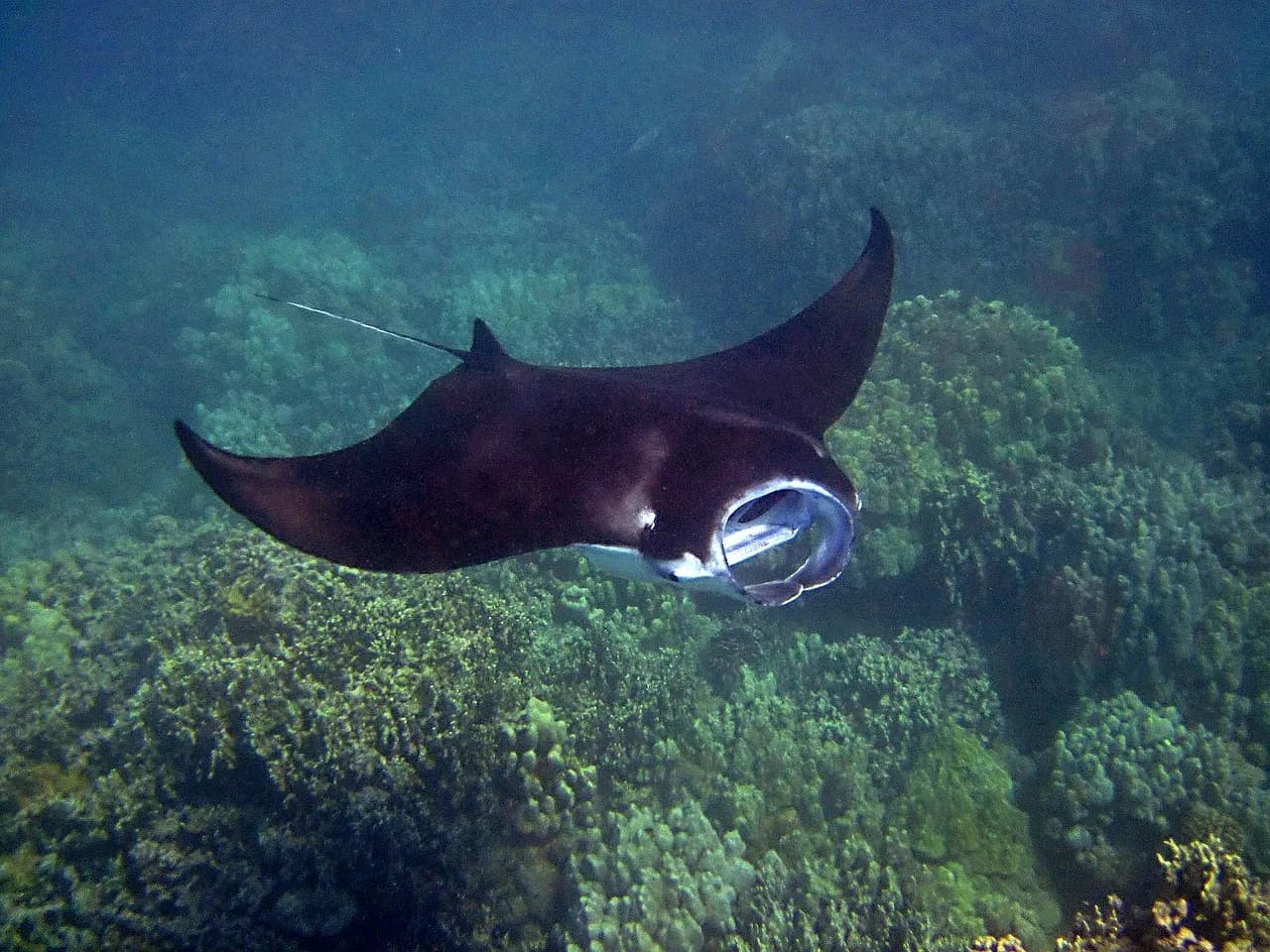
Kona's best-known snorkel happens after dark: you float at the surface off Keauhou or the airport coast while manta rays feed on plankton drawn to the lights, for about US$149 per adult. By day, the top reef is Kaʻawaloa Cove below the Captain Cook Monument, and Two Step and Kahaluʻu are the easy shore entries.
Key facts
- Water temperature
- 24.7–27.2 °C (76–81 °F)Monthly average, coolest to warmest month
- Snorkel tour
- US$149Typical price, checked
Book a snorkeling trip in Kona
Trips run by local operators, booked on Viator or GetYourGuide.
 ViatorBig Island Manta Ray Night SnorkelView on Viator (opens in a new tab)
 GetYourGuideKailua Kona: Manta Ray Night Snorkel Tour with GuideView on GetYourGuide (opens in a new tab)
 ViatorKona Morning Snorkel: Captain Cook & Kealakekua BayView on Viator (opens in a new tab)
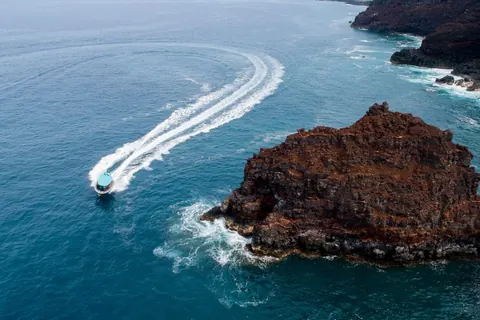 GetYourGuideBig Island: South Kona Snorkeling and Coastline ExplorationView on GetYourGuide (opens in a new tab)
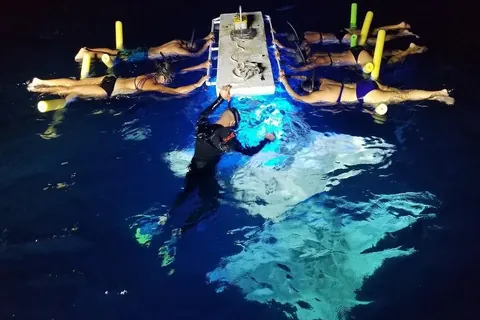 ViatorKONA Manta Ray Night Snorkel - FREE re-ride if no SightingsView on Viator (opens in a new tab)
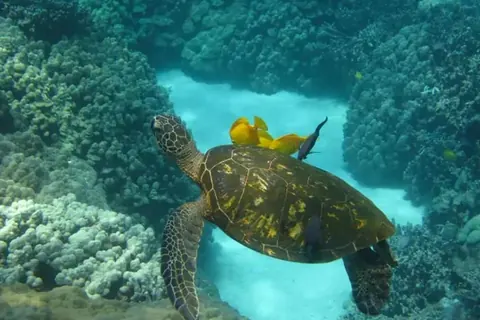 GetYourGuideKona: Captain Cook Snorkel TourView on GetYourGuide (opens in a new tab)
All Kona trips on Viator (opens in a new tab)
Ratings from GetYourGuide travellers.
Where is the best snorkeling in Kona?
The best snorkeling in Kona is Kaʻawaloa Cove below the Captain Cook Monument in Kealakekua Bay by day and the two manta sites, Manta Village off Keauhou and Manta Heaven off the airport, by night; Two Step, Kahaluʻu Beach Park and the Old Kona Airport reserve are the main shore entries.
- Kaʻawaloa Cove (Captain Cook Monument): coral and tame reef fish from about 1.5 m (5 ft) down to 36 m (118 ft) below the cliff, usually calm. You get there by boat, with a permitted kayak company or on foot.
- Nāpōʻopoʻo: the road-access side of Kealakekua Bay. Little coral near the landing; encrusting coral, caves and ledges to about 9 m (30 ft) toward Manini Beach Point.
- Two Step: a shore entry at the Hōnaunau Bay boat ramp, next to Puʻuhonua o Hōnaunau National Historical Park.
- Kahaluʻu Beach Park: a calm bay south of Kailua-Kona with a lifeguard and turtles close to shore.
- Old Kona Airport: low lava fingers with good coral cover a short swim from the beach.
- Manta Village and Manta Heaven: night boat sites only.
Every Kona spot is marked with mild currents in the table, but Nāpōʻopoʻo turns dangerous in high surf and in southerly kona storms, so look at the water before any shore entry.
| Spot | Entry | Level | Currents | Facilities | Highlights |
|---|---|---|---|---|---|
| Manta Village (Kaukalaelae Point, Keauhou) | Boat | Intermediate | Mild | Evening boat tours only, about five minutes from Keauhou Bay; operators supply wetsuits and lights | The busiest manta site, just outside the Keauhou harbor mouth: snorkelers float at the surface while mantas feed on plankton drawn to the boat lights. DLNR has proposed it as one of two official manta viewing zones. |
| Manta Heaven (Makako Bay / Garden Eel Cove, off Kona airport) | Boat | Intermediate | Mild | Boat access only | The second manta site, just off the shore by Kona airport. In 2022 DLNR counted 60 to 70 commercial vessels working the two manta sites. |
| Kaʻawaloa Cove (Captain Cook Monument), Kealakekua Bay | Boat | Beginner | Mild | No facilities at the monument; reached by boat, a permitted kayak tour or the Kaʻawaloa Trail (no restrooms on the trail) | The best snorkeling in Kealakekua Bay: diverse coral and tame reef fish from about 1.5 m down to 36 m below the cliff, inside a Marine Life Conservation District. Usually calm, and dolphins are often seen in the bay. |
| Nāpōʻopoʻo (Kealakekua Bay, east shore) | Shore | Intermediate | Mild | Restrooms and showers at the beach park; no lifeguards | The only road access to Kealakekua Bay. Shallow with little coral near the landing; encrusting coral, caves and ledges to about 9 m toward Manini Beach Point. Dangerous in high surf and southerly (kona) storms. |
| Two Step (Hōnaunau Bay boat ramp) | Shore | Intermediate | Mild | Public coastal access managed by Hawaiʻi County; park outside the national park gate (its small lot fills by midday) | Popular shore entry at the Hōnaunau Bay boat ramp, just outside Puʻuhonua o Hōnaunau National Historical Park. It is a working boat ramp, so watch for boat traffic and check conditions before entering. |
| Kahaluʻu Beach Park (Keauhou) | Shore | Beginner | Mild | Lifeguard, parking; Kahaluʻu Bay Education Center teaches reef etiquette | Calm bay just south of Kailua-Kona where green sea turtles often come close to shore. The beach sometimes closes during coral spawning. |
| Old Kona Airport Marine Life Conservation District | Shore | Intermediate | Mild | Restrooms, showers and emergency phone at the state park; no lifeguards | Low lava fingers with substantial coral cover, reef fish, turtles and rays within about 45 m of shore, then a drop into deep water. Sharp lava and coral line the shore: enter at the partly protected cove at the northwest end. |
How does the Kona manta ray night snorkel work?
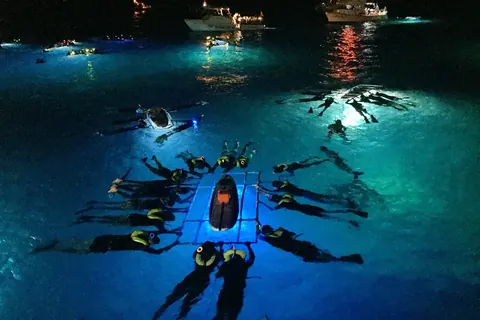
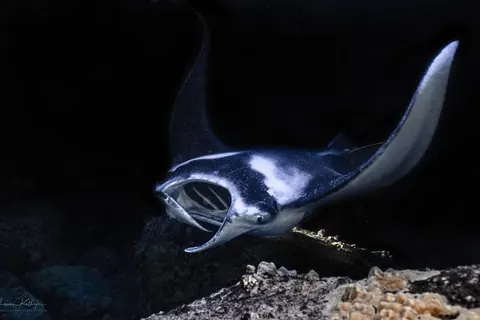
On the Kona manta ray night snorkel, a boat takes you after dark to Manta Village off Keauhou or Manta Heaven off the airport, and you float at the surface while manta rays feed on the plankton that the tour lights draw in.
Manta Village sits just outside the Keauhou harbor mouth, about five minutes by boat from Keauhou Bay, and is the busier site. Manta Heaven lies off Makako Bay, also called Garden Eel Cove, near Kona airport. In 2022 the state counted 60 to 70 commercial vessels working the two sites, so expect other boats around you. Operators supply the lights, a wetsuit, mask and snorkel.
Mantas turn up often but never on a promise: sightings vary with the plankton and the surf, and there is no fixed season. Booking early in your stay leaves room for a second try if the first night is quiet. Certified divers can watch the same feeding from below on a manta night dive; our Hawaii diving guide covers the dive side of Kona.
How much is the manta ray night snorkel in Kona?
A manta ray night snorkel in Kona usually costs about US$149 per adult, with listed prices from US$139 to US$175 before tax and fees (prices checked November 2026).
Kona Snorkel Trips starts at US$139 and rises to US$169 with demand. Fair Wind and Big Island Divers both list US$149; Fair Wind takes ages 7 and up and its price varies by season. Jack's Diving Locker charges US$175. On top of the ticket, permitted commercial ocean tours collect Hawaii's Ocean Stewardship User Fee of US$1 per passenger, charged since 1 January 2024.
Are there manta viewing rules?
In 2022 Hawaii's Department of Land and Natural Resources proposed manta viewing rules that would make Manta Village and the Makako Bay site the two official viewing zones. A proposal is not a rule: check whether anything has been adopted before your trip, and ask the operator about group size and the in-water briefing when you book. The wildlife basics apply either way: never touch, chase or feed a manta.
Prices checked
| Item | Typical price | Range |
|---|---|---|
| Snorkel tour | US$149 | US$139–US$175 |
Prices change; confirm with the operator before you book.
How do you snorkel Kealakekua Bay and the Captain Cook Monument?
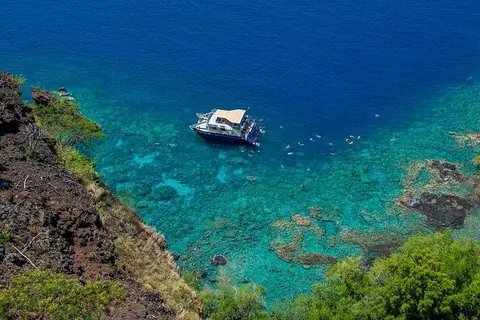
To snorkel Kaʻawaloa Cove at the Captain Cook Monument in Kealakekua Bay, you come on a boat tour, with one of the permitted kayak companies or on foot down the Kaʻawaloa Trail, because permitted vessels may not land at Kaʻawaloa Flat.
Every vessel on the bay, kayaks and stand-up paddleboards included, needs a State Parks transit permit, so if you rent a kayak, check that it carries one. Permitted vessels may not launch from the Nāpōʻopoʻo wharf either. There are no restrooms at the monument or on the trail, so bring water. Entry to Kealakekua Bay State Historical Park costs nothing.
The whole bay is a Marine Life Conservation District: take nothing alive, leave sand and coral where they are, and do not feed the fish. Boats may not anchor in the northern subzone around Kaʻawaloa Cove. Dolphins are often seen in the bay, and a federal law bans swimming with spinner dolphins or coming within 50 yards (46 m) of them.
Nāpōʻopoʻo, on the east shore, is the only road access to the bay, with restrooms and showers at the beach park but no lifeguards. The snorkeling there gets better toward Manini Beach Point.
How do you snorkel Two Step at Hōnaunau Bay?
Two Step is a shore entry at the Hōnaunau Bay boat ramp, just outside Puʻuhonua o Hōnaunau National Historical Park, so the park's entrance fee of US$20 per vehicle applies only if you also visit the park itself.
Hawaiʻi County manages the coastal access. Park outside the national park gate, since the park's small lot fills by midday, and do not use the park restrooms to change or rinse off. Water entry at Keoneʻele Cove, inside the park, is not allowed.
Two Step is a working boat ramp, so watch for boats coming and going and check the conditions before you get in. If you do visit the park, the US$20 vehicle pass is valid for 7 days, and visitors on foot or bicycle pay US$10 each (15 and under free).
The park service asks snorkelers to leave behind sunscreens with oxybenzone, avobenzone, homosalate, octinoxate, octisalate, octocrylene or nanoparticles; Hawaii has banned the sale of coral-harmful sunscreens since 1 January 2021.
Where can beginners snorkel in Kona?
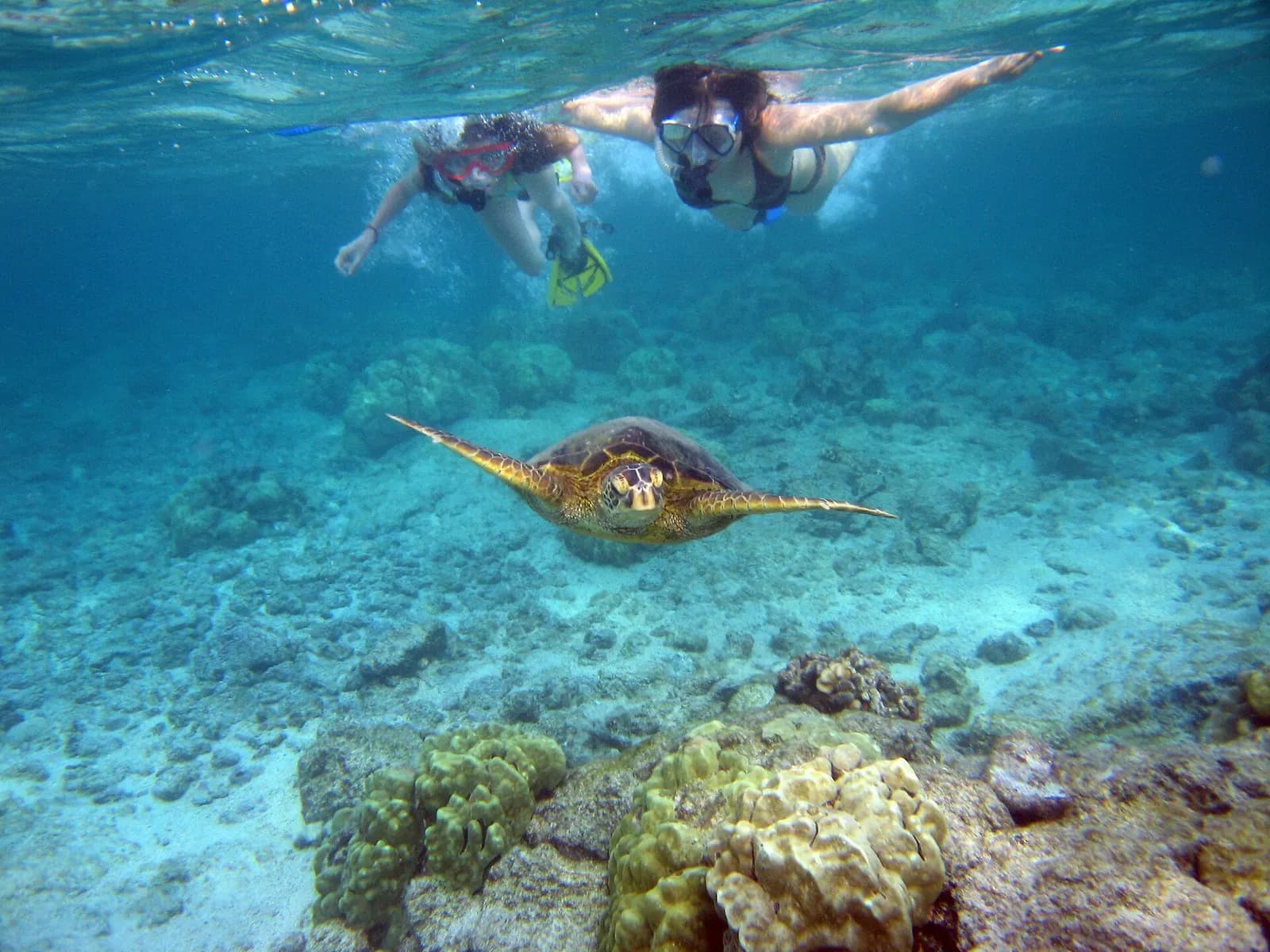
Kahaluʻu Beach Park in Keauhou is Kona's easiest snorkel, a calm bay with a lifeguard where green sea turtles often swim close to shore.
The Kahaluʻu Bay Education Center teaches reef etiquette on the beach, and the beach sometimes closes during coral spawning, so check before you drive over. Give turtles at least 10 ft (3 m) and let them surface without blocking them.
The Old Kona Airport reserve is the next step up: low lava fingers with substantial coral cover, reef fish, turtles and rays within about 45 m (150 ft) of shore, then a drop into deep water. Sharp lava and coral line the shore, so enter at the partly protected cove at the northwest end. The state park has restrooms, showers and an emergency phone but no lifeguards.
What rules apply to snorkeling in Kona?
In Kona, Kealakekua Bay and Old Kona Airport are Marine Life Conservation Districts where you may not take marine life or feed fish, and anywhere in Hawaii you must stay 50 yards (46 m) from spinner dolphins.
Federal wildlife guidelines also ask for 10 ft (3 m) around sea turtles and 50 ft (15 m) around monk seals. Off Old Kona Airport, motorboats may not enter the No Boating Zone. The full list, with the fees for the bay, the national park and commercial ocean tours, is below.
- Kealakekua Bay is a Marine Life Conservation District: no taking or injuring marine life, no feeding fish, no taking sand or coral, and no anchoring in the northern subzone that includes Kaʻawaloa Cove.
- Every vessel on Kealakekua Bay, kayaks and stand-up paddleboards included, needs a State Parks transit permit (if you rent, check that the kayak has one). Permitted vessels may not land at Kaʻawaloa Flat or launch from Nāpōʻopoʻo wharf: to go ashore at the Captain Cook Monument, hike the Kaʻawaloa Trail or join a guided tour with one of the permitted kayak companies.
- Do not enter the water at Keoneʻele Cove inside Puʻuhonua o Hōnaunau National Historical Park; snorkel at Two Step outside the park, park outside the gate, and do not use the park restrooms to change or rinse off.
- Federal law bans swimming with, approaching or staying within 50 yards (46 m) of spinner dolphins in Hawaiʻi. NOAA guidelines ask for at least 10 ft (3 m) from sea turtles and 50 ft (15 m) from monk seals, and never touching, chasing or feeding wildlife.
- Old Kona Airport Marine Life Conservation District: no taking marine life (beyond a few listed shore-fishing exceptions), no feeding fish, no anchoring, and no motorboats in the No Boating Zone off the park.
- Hawaiʻi has banned the sale of sunscreens with chemicals harmful to coral since 1 January 2021; the National Park Service asks snorkelers to avoid oxybenzone, avobenzone, homosalate, octinoxate, octisalate, octocrylene and nanoparticles.
| Fee | Amount |
|---|---|
| Kealakekua Bay State Historical Park entry | Free |
| Puʻuhonua o Hōnaunau National Historical Park entrance, private vehicle, valid 7 days (only to visit the park; Two Step is outside it) | US$20 |
| Puʻuhonua o Hōnaunau National Historical Park entrance, per person on foot or bicycle (15 and under free) | US$10 |
| Ocean Stewardship User Fee, collected per passenger by permitted commercial ocean tours (since 1 January 2024) | US$1 |
When is the best time to snorkel in Kona?
Kona is a year-round snorkel destination: the manta trips have no fixed season, and the sea around the main Hawaiian islands stays between about 24.4 °C (76 °F) in February and March and 27 °C (81 °F) in September and October.
Humpback whales spend roughly November to April in Hawaiian waters, and on winter trips off Kona you may see them or hear their song underwater. For the shore spots, the day's surf matters more than the month, and the manta boats hand out wetsuits for the night swim in any season.
Frequently asked questions
Are manta rays guaranteed on the Kona night snorkel?
No. Mantas show up on many Kona night trips, but no operator can promise them: sightings depend on the plankton and the surf, and there is no fixed season. Boats use two sites, Manta Village off Keauhou and Manta Heaven off Makako Bay near the airport. Booking early in your trip leaves time for a second attempt if the first night is quiet.
How much does it cost to snorkel with manta rays in Kona?
Expect about US$149 per adult for a Kona manta night snorkel, with listed prices from US$139 at Kona Snorkel Trips to US$175 at Jack's Diving Locker, before tax and fees. A wetsuit, mask and snorkel are included. Permitted tours add Hawaii's US$1 Ocean Stewardship User Fee per passenger. Fair Wind's trip takes children from age 7.
Can you swim with dolphins in Kealakekua Bay?
No. Dolphins are often seen in Kealakekua Bay, but federal law bans swimming with spinner dolphins in Hawaii or approaching within 50 yards (46 m) of them. If a pod passes while you snorkel at Kaʻawaloa Cove, stay where you are, keep your distance and let them move on; the same rule applies from a kayak or a tour boat.
Can you kayak to the Captain Cook Monument?
Only in a permitted vessel, and you cannot land it. Every kayak and paddleboard on Kealakekua Bay needs a State Parks transit permit, and permitted vessels may not land at Kaʻawaloa Flat or launch from the Nāpōʻopoʻo wharf. To go ashore at the monument, join a guided tour with one of the permitted kayak companies or hike the Kaʻawaloa Trail.
Is there a fee to snorkel at Two Step?
Two Step lies outside Puʻuhonua o Hōnaunau National Historical Park, so the park's entrance fee, US$20 per vehicle or US$10 per person on foot, is only for visiting the park itself. The practical cost is parking: leave the car outside the park gate, because the park's small lot fills by midday, and do not use the park restrooms to rinse off.
Are there rules for snorkeling with manta rays in Hawaii?
Hawaii's Department of Land and Natural Resources proposed manta viewing rules in 2022, with Manta Village and the Makako Bay site as official viewing zones. Treat them as a proposal and check whether anything is in force before you go. The general wildlife guidance applies in any case: do not touch, chase or feed mantas, and follow the crew's briefing.


