Dive guide · Indonesia
Scuba Diving in Raja Ampat
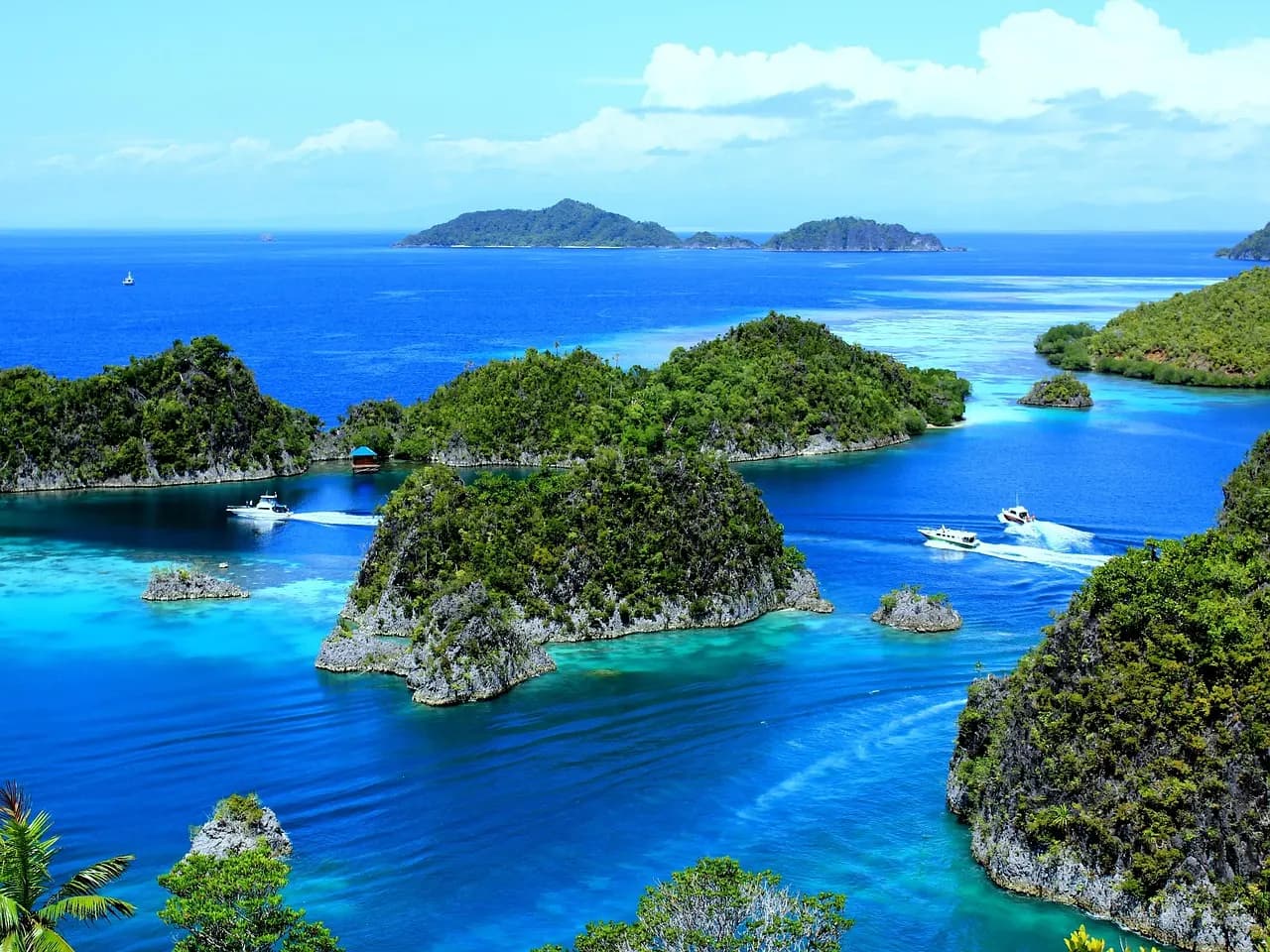
Raja Ampat, off Sorong in Indonesian Papua, is a remote reef region of current-swept sites, where a record 283 fish species were counted on a single dive at Cape Kri. October to April is the main season. Resort dives cost EUR 60–62 each, and liveaboards EUR 356–606 a night (checked November 2026).
Key facts
- Best months
- October to April
- Water temperature
- 28.5–29.4 °C (83–85 °F)Monthly average, coolest to warmest month
- Level
- Beginner to intermediate
- Two-tank boat dive
- €120Typical price, checked
- Open Water course
- €655Typical price, checked
- Discover Scuba (try dive)
- €125Typical price, checked
- Liveaboard, per night
- €503Typical price, checked
- Airport
- Domine Eduard Osok Airport, Sorong (SOQ)
- Park fee
- Raja Ampat marine park entry card (TLPJL), foreign visitor, valid 12 months; under 12 free: IDR 700,000
- Park fee
- Raja Ampat regency tourism entry fee, foreign visitor, once per visit (Regency Regulation No. 34 of 2025): IDR 1,000,000
- Nearest chamber
- RSUD Raja Ampat (regional hospital) hyperbaric chamber, Waisai
Popular dive trips
Trips run by local operators, booked on Viator or GetYourGuide.
 ViatorBaliDiscover Scuba Diving in Tulamben, BaliView on Viator (opens in a new tab)
 GetYourGuideBaliBali: Tulamben Bay Beginner's Dive ExperienceView on GetYourGuide (opens in a new tab)
 ViatorMalaysiaHike and Dive in Bohey Islands with Local LunchView on Viator (opens in a new tab)
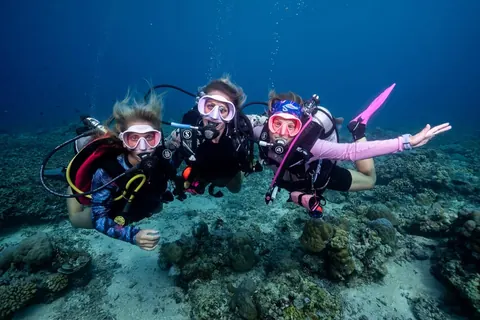 GetYourGuideGili IslandsGili Trawangan: Discover Scuba Diving for BeginnersView on GetYourGuide (opens in a new tab)
 ViatorPhilippinesCebu: Scuba Diving Experience beach entry in MactanView on Viator (opens in a new tab)
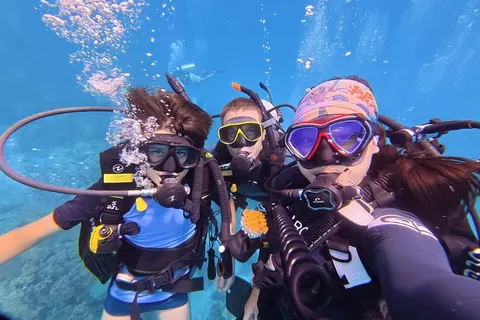 GetYourGuideKomodoLabuan Bajo: Try Scuba 1-Day Experience for First-TimersView on GetYourGuide (opens in a new tab)
Ratings from GetYourGuide travellers.
When is the best time to dive in Raja Ampat?
October to April is the main dive season in Raja Ampat, when seas are generally calmer, and most liveaboards run their Raja Ampat trips from November to May. The water stays between 28.5 °C (83 °F) and 29.4 °C (85 °F) all year.
Raja Ampat lies just south of the equator, so the year is shaped by wind and rain rather than by water temperature. Monthly sea temperatures barely move: the low is 28.5 °C (83 °F) in August, the high 29.4 °C (85 °F) in November, and the main-season months sit at 28.9–29.4 °C (84–85 °F), so a thin wetsuit is enough for most divers.
Resorts and liveaboards alike name October to April as the main season. One resort, Cove Eco, breaks the year down further: north-west winds and wetter weather from December to March, southerly winds from June to September, and drier months from May to August. Take that as one local view, but it shows that "calmer" does not mean "dry".
The bigger practical change after May is the boats: most of the liveaboard fleet leaves for other parts of Indonesia, so outside November to May you will mostly dive from a resort or homestay.
| Month | Average water temperature | Season |
|---|---|---|
| January | 29 °C (84 °F) | Best month to dive |
| February | 28.9 °C (84 °F) | Best month to dive |
| March | 29.1 °C (84 °F) | Best month to dive |
| April | 29.3 °C (85 °F) | Best month to dive |
| May | 29.3 °C (85 °F) | Outside the best months |
| June | 29 °C (84 °F) | Outside the best months |
| July | 28.6 °C (83 °F) | Outside the best months |
| August | 28.5 °C (83 °F) | Outside the best months |
| September | 28.7 °C (84 °F) | Outside the best months |
| October | 29.1 °C (84 °F) | Best month to dive |
| November | 29.4 °C (85 °F) | Best month to dive |
| December | 29.3 °C (85 °F) | Best month to dive |
In season in: January · February · March · April · October · November · December
What are the best dive sites in Raja Ampat?
The best-known Raja Ampat sites are in the Dampier Strait: Cape Kri (3–40 m, 10–131 ft), Blue Magic, Sardines Reef, Mike's Point and Chicken Reef, with dense schools of fusiliers, snappers and hunting Spanish mackerel and currents from mild to strong.
- Cape Kri: a steep slope where a record 283 fish species were counted on one dive.
- Blue Magic (9–30 m, 30–98 ft): a submerged reef in open water, where Spanish mackerel hunt the fish schools.
- Sardines Reef: an oval reef patch in open water packed with fusiliers, surgeonfish and snappers.
- Mike's Point (2–35 m, 7–115 ft): an islet bombed in WWII, now full of crevices and overhangs.
- Chicken Reef: fusilier schools in the shallows, plus pipefish and pygmy seahorses for macro fans.
- Mioskon, Batu Lima and Kabui: gentler sites rated for all levels.
Misool in the south and Wayag in the north are reached on most liveaboard routes rather than from the Dampier Strait resorts. Several Dampier Strait sites go below 30 m (98 ft), so agree a maximum depth with your guide before each dive.
| Dive site | Depth | Level | Entry | Highlights |
|---|---|---|---|---|
| Cape Kri | 3–40 m (10–131 ft) | Intermediate | Boat | Steep slope where a record 283 fish species were counted on one dive; currents mild to strong |
| Blue Magic | 9–30 m (30–98 ft) | Intermediate | Boat | Submerged reef in open water with dense schools hunted by Spanish mackerel |
| Sardines Reef | 3–30 m (10–98 ft) | Intermediate | Boat | Oval reef patch in open water packed with fusiliers, surgeonfish and snappers |
| Mike's Point | 2–35 m (7–115 ft) | Intermediate | Boat | Islet bombed in WWII, now full of crevices and overhangs |
| Chicken Reef | 3–30 m (10–98 ft) | Intermediate | Boat | Shallow reef with fusilier schools plus pipefish and pygmy seahorses |
| Mioskon | 2–25 m (7–82 ft) | Beginner | Boat | Gentle drift past schools of yellowtail and blue-lined snappers |
| Batu Lima | 3–35 m (10–115 ft) | Beginner | Boat | Five rocks with a sloping reef rich in reef fish; close to Gam |
| Kabui | 5–15 m (16–49 ft) | Beginner | Boat | Sheltered sandy bay with coral bommies, used for training and refreshers |

Should you dive Raja Ampat from a resort or a liveaboard?
Choose a Raja Ampat resort for the Dampier Strait sites, shorter stays or a course, and a liveaboard if you also want Misool and Wayag: boats charge EUR 356–606 per person per night, against EUR 60–62 per resort dive plus your room.
The resorts sell dives one at a time (Raja Ampat Biodiversity EUR 62, Kri Eco EUR 60 and Cove Eco EUR 60 for the first dives), with equipment rental extra, EUR 35 a day at Biodiversity, and accommodation priced separately. Liveaboard routes run 5–12 nights and add the far north and south of the archipelago. Most boats sail here only from November to May, and many add park, port or fuel fees per trip. Compare routes, boats and those extras on our Raja Ampat liveaboards page.
How much does diving in Raja Ampat cost?
Two dives at a Raja Ampat resort cost EUR 120–124, an Open Water course EUR 520–680 and a Discover Scuba EUR 120–150 (prices checked 22 November 2026), with marine park and regency fees on top.
Resorts here sell dives singly or in packages rather than by the boat trip, so two dives simply cost twice the rate for the first dives, with tank, weights, boat and guide included. Equipment rental is extra.
- Open Water: EUR 520 at Raja Ampat Biodiversity, EUR 655 at Cove Eco (PADI eLearning included) and EUR 680 at Kri Eco, all with equipment and certification but without accommodation.
- Discover Scuba: theory plus one introductory dive, EUR 120–150; Cove Eco runs it on its house reef.
- Liveaboards: priced per night, EUR 356–606 for the lowest cabin, typically about EUR 503.
Prices are in euros because the resorts quote them that way. For current package prices, ask local dive centers.
Prices checked
| Item | Typical price | Range |
|---|---|---|
| Two-tank boat dive | €120 | €120–€124 |
| Open Water course | €655 | €520–€680 |
| Discover Scuba (try dive) | €125 | €120–€150 |
| Liveaboard, per night | €503 | €356–€606 |
Prices change; confirm with the center before you book.
What are the park fees for Raja Ampat?
Raja Ampat visitors currently pay two separate charges, the marine park entry card, published at IDR 700,000 for foreign visitors and valid 12 months, and a regency tourism fee reported at IDR 1,000,000 per visit since January 2026, and both should be confirmed before you travel.
- Marine park card: IDR 700,000 for foreign visitors, valid 12 months, free for children under 12. A resort reported in September 2026 that the provincial marine park charge changed in August 2026, with no official new figure published yet.
- Regency tourism entry fee: IDR 1,000,000 for foreign visitors, paid once per visit, under a 2025 regency regulation. It is reported locally rather than posted on a government page, so confirm it with your resort or boat.
On top of these, several liveaboards add their own park and port fees per trip. Ask your resort or boat exactly which government charges its price includes and which you pay yourself, and check the current amounts again shortly before you fly, since both have changed within the last year.
Is there a recompression chamber in Raja Ampat?
Raja Ampat's only listed hyperbaric chamber is at the regional hospital (RSUD Raja Ampat) in Waisai, but its working status is unclear, so check it with your resort or boat before you dive and plan for evacuation to Sorong, Bali or Jakarta.
The Waisai chamber may not be in service. Treat Raja Ampat as a remote destination where a serious dive injury means a long evacuation, and take out dive insurance with emergency evacuation cover before you go; our dive insurance guide explains what to look for. Save the DAN Indonesia hotline number before you travel.
The practical rules follow from that distance: dive within your training, make every safety stop, respect the guide's current calls on sites like Cape Kri, and say early if you feel unwell after a dive.
Dive centers in Raja Ampat
Loading dive centers…
Frequently asked questions
Is Raja Ampat good for beginner divers?
Raja Ampat has gentle sites for new divers, such as Kabui Bay at 5–15 m (16–49 ft), Mioskon and Batu Lima, and resorts teach Open Water courses for EUR 520–680. Most of the famous sites, though, have currents from mild to strong, and the usual liveaboard routes are rated intermediate. Newly certified divers do better at a resort, where guides can pick sites day by day.
How much does a week of diving in Raja Ampat cost?
On a liveaboard, seven nights at a typical EUR 503 a night comes to about EUR 3,500 per person, before park, port and fuel fees. At a resort, two dives a day at EUR 60–62 each add up to roughly EUR 720–745 for six diving days, plus your room, meals and equipment. Add the marine park card and the regency tourism fee to either.
Do I need dive insurance for Raja Ampat?
Yes. Raja Ampat is remote, and the only listed chamber, at the hospital in Waisai, may not be in service. A dive injury can therefore mean evacuation to Sorong, Bali or Jakarta, which is expensive without cover. Choose a policy that pays for recompression treatment and emergency evacuation, check its depth limit, and read our dive insurance guide before you buy.
What is the water temperature in Raja Ampat?
Raja Ampat's surface water averages 28.5–29.4 °C (83–85 °F) in every month, with August the coolest and November the warmest month. The difference between the two is less than one degree, so you can pack the same thin wetsuit whenever you go. Divers who get cold easily on a liveaboard schedule of several dives a day may still want a hood or vest.
How many fish species can you see in Raja Ampat?
Cape Kri in the Dampier Strait holds a famous record: 283 fish species counted on a single dive. You will not log that many yourself, but sites such as Sardines Reef and Blue Magic are known for dense schools of fusiliers, snappers and surgeonfish, with Spanish mackerel hunting them. Chicken Reef adds pipefish and pygmy seahorses for macro photographers.
Which airport do you fly into for Raja Ampat diving?
Divers fly into Domine Eduard Osok Airport in Sorong (SOQ), the gateway to the islands. Arrange the onward transfer with your resort or liveaboard and ask what it includes and how much time it needs. Plan a buffer day on the way home, both for connections and to leave a safe interval between your last dive and the flight. Budget for the marine park card and the regency tourism fee, which are paid separately from your dive package.


