Dive guide · United States
Scuba Diving in Maui
Maui's diving runs from boat trips to Molokini Crater and the lava chambers off Lanai to easy shore dives at Black Rock and Kapalua Bay. We rate May to September best, when Honolua Bay is in season and water is 25.1–26.9 °C (77–80 °F). An Open Water course usually costs about US$810.
Key facts
- Best months
- May to September
- Water temperature
- 24.3–26.9 °C (76–80 °F)Monthly average, coolest to warmest month
- Level
- Beginner to intermediate
- Open Water course
- US$809.50Typical price, checked
- Discover Scuba (try dive)
- US$222Typical price, checked
- Snorkel tour
- US$249Typical price, checked
- Two-tank boat dive
- US$254Typical price, checked
- Airports
- Kahului Airport (OGG), Kapalua Airport (JHM)
- Park fee
- Mākena State Park entry, non-residents, per person: US$5
- Park fee
- Mākena State Park parking, non-resident vehicle: US$10
- Nearest chamber
- University of Hawaiʻi Hyperbaric Treatment Center (Kuakini Medical Center), Honolulu
Book a dive trip in Maui
Trips run by local operators, booked on Viator or GetYourGuide.
 Viator2 Tank Lanai Cathedral Scuba Dive Via Boat for Certified DiversView on Viator (opens in a new tab)
 GetYourGuideMaui: Small Group Shark & Turtle Scuba Dive from ShoreView on GetYourGuide (opens in a new tab)
 ViatorScuba for Beginners: No Experience NeededView on Viator (opens in a new tab)
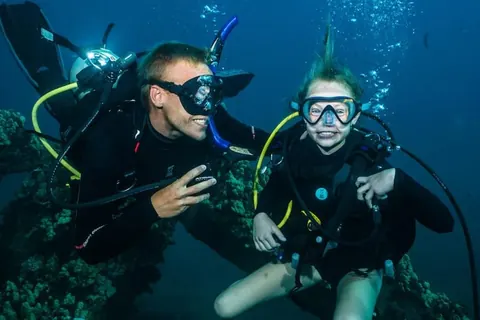 GetYourGuideMaui: Intro to Scuba Diving from Shore - LahainaView on GetYourGuide (opens in a new tab)
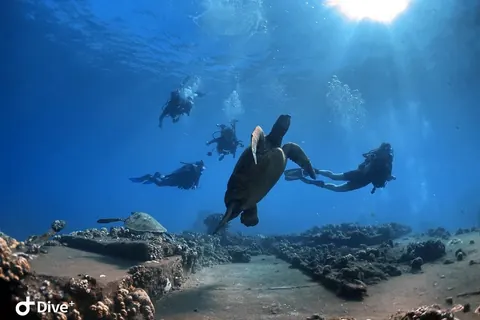 ViatorBeginner Scuba Diving in KaanapaliView on Viator (opens in a new tab)
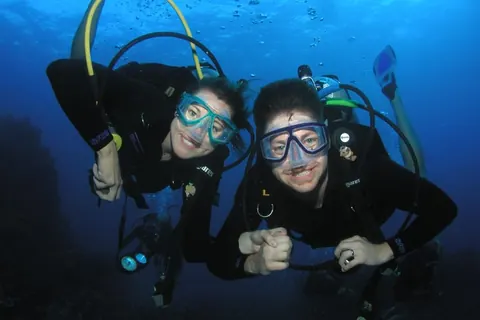 GetYourGuideMaui: Intro Scuba Dive in Kaanapali, LahainaView on GetYourGuide (opens in a new tab)
All Maui trips on Viator (opens in a new tab)
Ratings from GetYourGuide travellers.
When is the best time to dive in Maui?
The best time to dive in Maui is May to September, when Honolua Bay's summer season runs and the sea warms from 25.1 °C (77 °F) to 26.9 °C (80 °F); from November to April humpback whales winter around the island instead.
The May–September window follows Honolua Bay: Hawaii's Division of Aquatic Resources advises staying out of the bay in winter, when high surf is common on the north-west coast, and a Lahaina dive shop runs its Honolua trips in summer. Summer here is a season, not a fixed set of months, so treat the edges of the window as approximate.
Winter is whale season. Humpbacks spend roughly November to April around Maui; local operators see numbers build in December and peak in February and March. The sea is coolest then, 24.3 °C (76 °F) in February and March.
| Month | Average water temperature | Season |
|---|---|---|
| January | 24.7 °C (76 °F) | Outside the best months |
| February | 24.3 °C (76 °F) | Outside the best months |
| March | 24.3 °C (76 °F) | Outside the best months |
| April | 24.6 °C (76 °F) | Outside the best months |
| May | 25.1 °C (77 °F) | Best month to dive |
| June | 25.7 °C (78 °F) | Best month to dive |
| July | 26.1 °C (79 °F) | Best month to dive |
| August | 26.6 °C (80 °F) | Best month to dive |
| September | 26.9 °C (80 °F) | Best month to dive |
| October | 26.8 °C (80 °F) | Outside the best months |
| November | 26.2 °C (79 °F) | Outside the best months |
| December | 25.3 °C (78 °F) | Outside the best months |
How do you dive Molokini Crater?
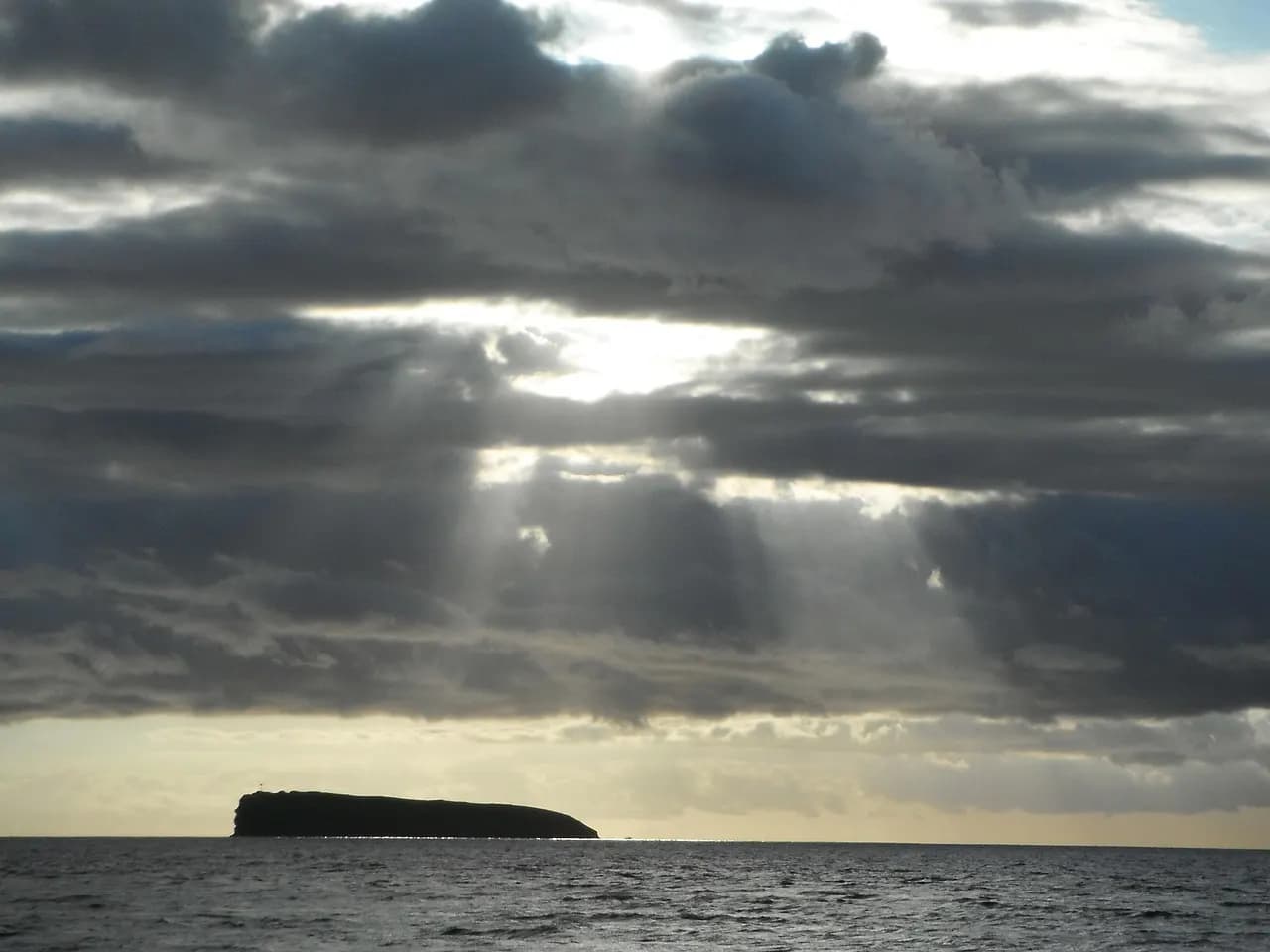
Molokini Crater, a crescent-shaped islet about 5 km (3 miles) off Maui, can be reached only on permitted commercial boats, and its inner cove slopes from the rim to about 30 m (100 ft).
Molokini Shoal is a Marine Life Conservation District with some of the most diverse fish life in Hawaii. Fishing and taking marine life are banned (trolling is allowed only in the outer Subzone B), fish feeding is banned, and boats must use the day-use moorings rather than anchor. The islet itself is a state seabird sanctuary, so no landing.
Currents run outside the cove and tend to pick up in the afternoon, so the cove is an intermediate dive. The back wall drops past 60 m (200 ft), deeper than any recreational dive.
A Molokini two-tank trip costs US$239 with Maui Diamond and from US$269 with Island Style Diving, with BCD, regulator and wetsuit extra. Treat those two as a rough guide: most Maui dive boats show prices only inside their online booking systems.
What are the best shore dives on Maui?
Maui's easiest shore dives are Black Rock at Kaʻanapali and Kapalua Bay, both 0–12 m (0–39 ft), plus Honolua and Mokulēʻia bays on the north-west coast in summer.
- Black Rock, Kaʻanapali (0–12 m, 0–39 ft): a favorite local shore dive where frogfish and scorpionfish turn up.
- Kapalua Bay (0–12 m, 0–39 ft): a shallow bay at the north end of West Maui, past Kaʻanapali.
- Honolua Bay (3–18 m, 10–59 ft): coral on both sides at 3–12 m (10–39 ft) and a sand channel to the mouth; summer only.
- Mokulēʻia Bay, also called Slaughterhouse (3–15 m, 10–49 ft): a sandy bay with boulders and lava fingers, reached by a stairway down the cliff.
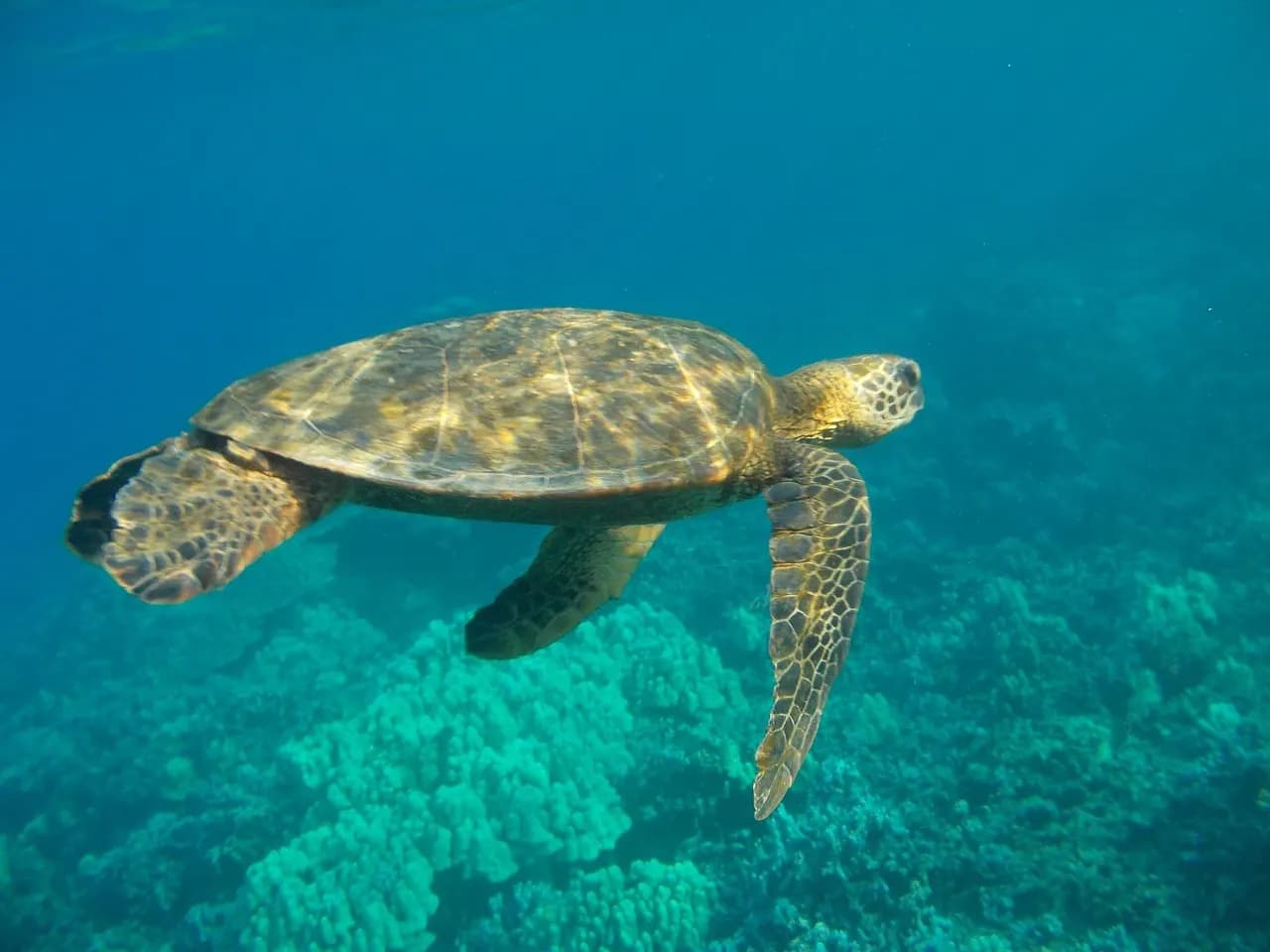
- Makena Landing, known as Turtle Town: a Wailea-coast reef known for Hawaiian green sea turtles, octopus, crabs and shrimp.
A Lahaina shop keeps its shore dives no deeper than about 9–12 m (30–40 ft). If you also visit Mākena State Park (Big Beach), non-residents pay US$5 per person plus US$10 for parking.
Which Maui dive sites suit beginners, and which need experience?
Four of the six Maui sites in the table are beginner shore dives no deeper than 18 m (59 ft), while Molokini's inner cove (0–30 m, 0–98 ft) and the Lanai Cathedrals (15–23 m, 49–75 ft) are intermediate boat dives.
The Lanai Cathedrals are sunlit lava chambers off the neighboring island of Lanai; most Lanai dives run at 15–23 m (49–75 ft). Boat operators also dive the Carthaginian wreck at about 29 m (95 ft), which is not in the table.
| Dive site | Depth | Level | Entry | Highlights |
|---|---|---|---|---|
| Molokini Crater (inner cove) | 0–30 m (0–98 ft) | Intermediate | Boat | Submerged crater floor sloping from the rim; very diverse fish, currents outside the cove |
| Honolua Bay | 3–18 m (10–59 ft) | Beginner | Shore | Coral on both sides of the bay at 3-12 m, sand channel to the mouth; summer site |
| Mokulēʻia Bay (Slaughterhouse) | 3–15 m (10–49 ft) | Beginner | Shore | Sandy bay with boulders and lava fingers on both points; reached by a stairway |
| Lanai Cathedrals | 15–23 m (49–75 ft) | Intermediate | Boat | Sunlit lava chambers off Lanai; most Lanai dives run 15-23 m |
| Black Rock (Kaʻanapali) | 0–12 m (0–39 ft) | Beginner | Shore | Favourite local shore dive off Kaʻanapali; shallow reef where frogfish and scorpionfish turn up |
| Kapalua Bay | 0–12 m (0–39 ft) | Beginner | Shore | Shallow shore-dive bay at the north end of West Maui, past Kaʻanapali |
How much does diving in Maui cost?
An Open Water course in Maui costs US$499–850, typically about US$809.50, and a Discover Scuba session US$200–229, with about US$222 usual (prices checked November 2026).
- Discover Scuba: Destination Diving Maui US$200 for a one-tank intro dive, Extended Horizons from US$215, Maui Dive Shop US$229 with pool and ocean, Pro Diver Maui US$229 plus local fees and taxes, with regulator, BCD and wetsuit extra.
- Molokini snorkel cruise: US$180–269 per adult, typically about US$249, useful if a non-diver travels with you; see our Maui snorkeling guide.
- Two-tank boat dive: US$239 and from US$269 for Molokini (see above); most boats quote only in their booking systems.
Ask whether a quote includes Hawaii tax: Maui Dive Shop's Open Water card says from US$819, while its course page shows US$857.59 with tax. For a current price, ask Maui dive centers.
Prices checked
| Item | Typical price | Range |
|---|---|---|
| Open Water course | US$809.50 | US$499–US$850 |
| Discover Scuba (try dive) | US$222 | US$200–US$229 |
| Snorkel tour | US$249 | US$180–US$269 |
| Two-tank boat dive | US$254 | US$239–US$269 |
Prices change; confirm with the center before you book.
Is Maui a good place to learn to dive?
Maui has shallow shore sites for new divers, such as Black Rock and Kapalua Bay at 0–12 m (0–39 ft), but Open Water prices vary widely, from US$499 to US$850, because each center includes something different.
- Pro Diver Maui, US$499: diving only; gear costs US$49 per day on top.
- Destination Diving Maui, US$800: the single-diver rate; two or more students pay US$600 each.
- Maui Dive Shop, from US$819: US$857.59 with Hawaii tax on the course page.
- Extended Horizons, from US$850.
Whether eLearning is included differs between centers, so ask before you compare. All four sell PADI courses; for SSI, RAID or another agency, ask the shop. Our Open Water price index puts the Maui figures next to other places.
Where is the nearest recompression chamber to Maui?
Maui has no recompression chamber of its own: the nearest is the University of Hawaiʻi Hyperbaric Treatment Center at Kuakini Medical Center in Honolulu, on Oahu, which offers emergency dive treatment around the clock.
The center lists 24-hour emergency dive medicine and hyperbaric treatment, and in 2009 it was Hawaii's only facility accredited by the Undersea and Hyperbaric Medical Society. It closed for a while in 2017–18 and again briefly in 2021 for renovations, so ask your operator to check it is taking patients when you travel.
A diver with symptoms on Maui would have to be flown to Oahu. Carry dive insurance that covers air evacuation and chamber treatment, keep DAN's emergency number in your phone, and see a dive doctor or DAN for any medical question.
Dive centers in Maui
Loading dive centers…
Frequently asked questions
Can beginners dive Molokini Crater?
Molokini's inner cove is rated intermediate: it slopes from the rim to about 30 m (100 ft), and currents run outside the cove, picking up in the afternoon. If you are newly certified, tell the operator and stay with the guide inside the cove. Beginners who want an easier start can try Black Rock or Kapalua Bay from shore first.
Do you need a boat to dive in Maui?
Not for the shore sites. Black Rock at Kaʻanapali and Kapalua Bay, both 0–12 m (0–39 ft), are entered from the beach, as are Honolua and Mokulēʻia bays in summer. You do need a boat for Molokini Crater, which only permitted commercial boats can visit, and for the Lanai Cathedrals off the neighboring island.
When is humpback whale season in Maui?
Humpback whales spend the winter around Maui from about November to April. Local operators see numbers build in December and peak in February and March. Whale season falls outside the May–September diving window, so a winter trip trades Honolua Bay for whales and slightly cooler water, about 24.3 °C (76 °F).
What is the water temperature in Maui?
Maui's sea averages 24.3 °C (76 °F) in February and March, the coolest months, rising to 26.9 °C (80 °F) in September. From May to September it ranges from 25.1 to 26.9 °C (77–80 °F). In February that is about 2 °C (4 °F) cooler than Cozumel or Bonaire, so consider a thicker suit.
Can you dive Honolua Bay all year?
No. Honolua Bay is a summer site. Hawaii's Division of Aquatic Resources advises staying out of Honolua and Mokulēʻia bays in winter, when high surf is common, and local operators run trips there in summer. Both bays form a Marine Life Conservation District, so no taking or injuring marine life and no removing sand or coral.
Which airport do you fly into for diving in Maui?
Maui has two airports: Kahului Airport (OGG) and Kapalua Airport (JHM) in West Maui, near the Kaʻanapali and Kapalua shore sites. Wherever you land, plan your flight home with a surface interval: follow DAN's or your training agency's guidance on flying after diving.


