Dive guide · Thailand
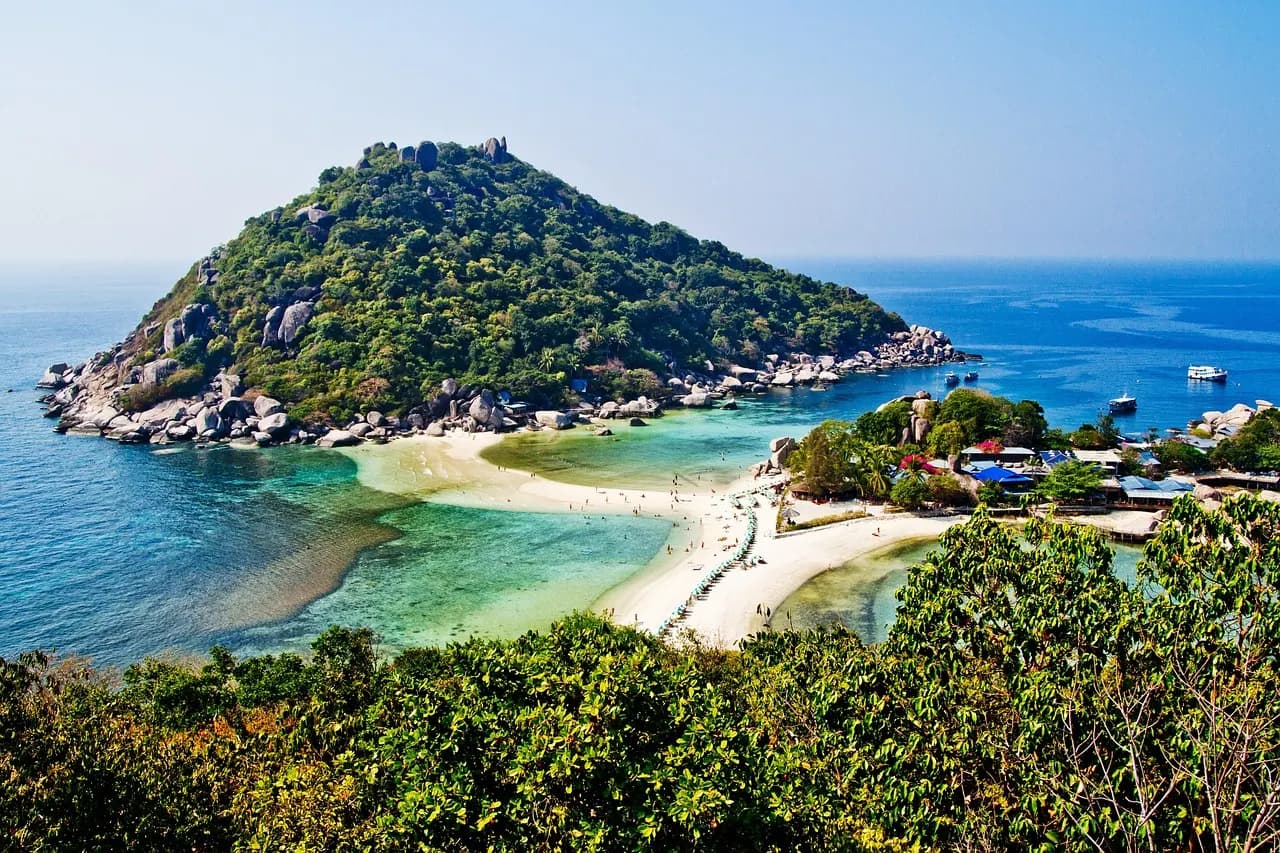
Scuba Diving in Koh Tao
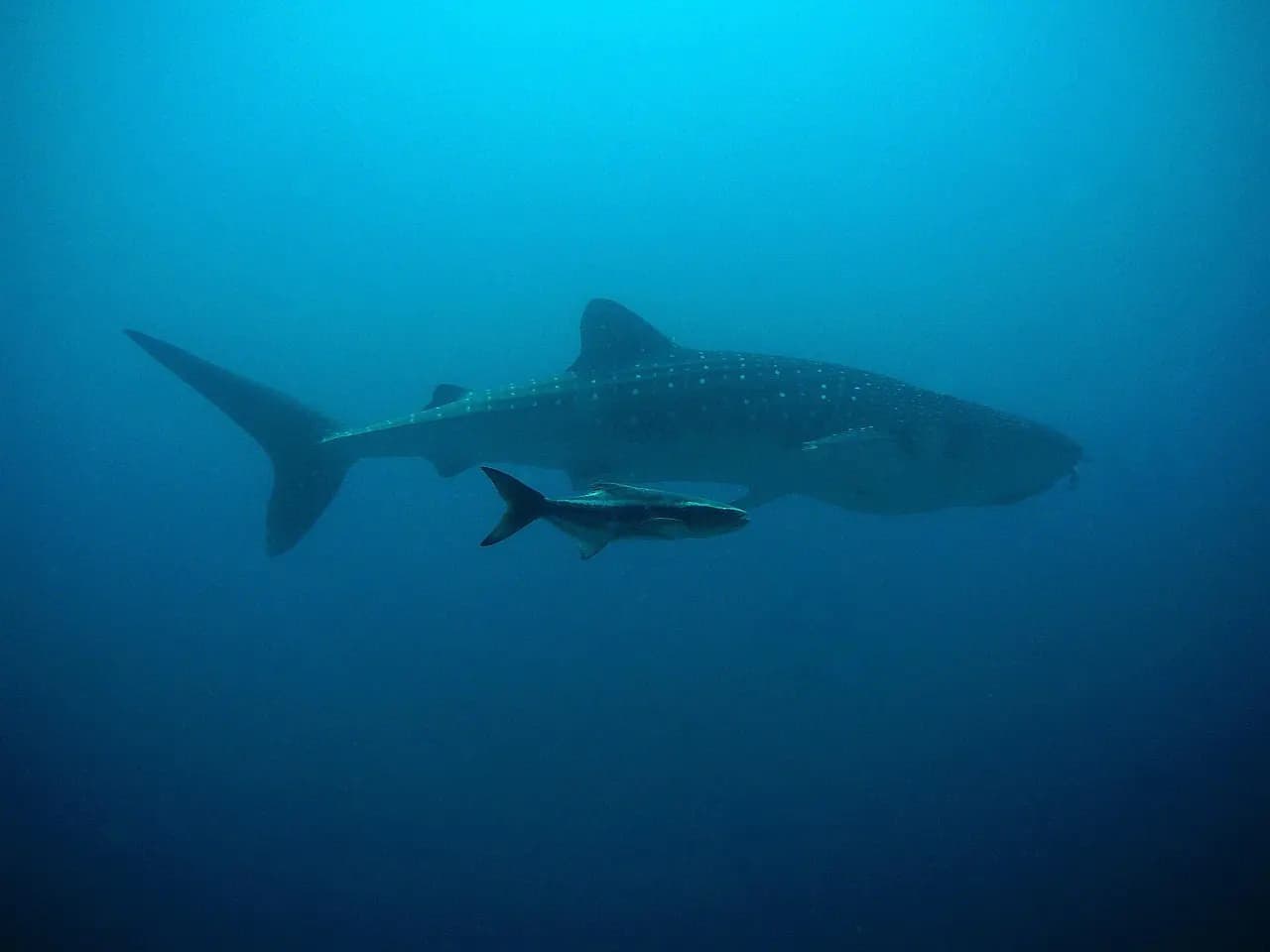
Koh Tao, a small island in the Gulf of Thailand, is a classic place to learn to dive: Open Water courses cost THB 11,000–12,500 (prices checked November 2026). Experienced divers come for granite pinnacles such as Chumphon and Sail Rock, and for whale sharks, recorded all year with peaks in April–May and October–November.
Key facts
- Best months
- February to October
- Water temperature
- 27.7–30.2 °C (82–86 °F)Monthly average, coolest to warmest month
- Level
- Beginner to advanced
- Two-tank boat dive
- THB 2,200Typical price, checked
- Open Water course
- THB 11,500Typical price, checked
- Discover Scuba (try dive)
- THB 2,500Typical price, checked
- Airports
- Samui International Airport (then ferry) (USM), Chumphon Airport (then ferry) (CJM), Surat Thani International Airport (then ferry) (URT)
- Nearest chamber
- SSS Recompression Chamber Koh Tao (Hyperbaric Services of Thailand), Koh Tao
Book a dive trip in Koh Tao
Trips run by local operators, booked on Viator or GetYourGuide.
 ViatorOpen Water Course - Become certified diver in 3 daysView on Viator (opens in a new tab)
 GetYourGuideKoh Tao: PADI 1-Day Try Diving ExperienceView on GetYourGuide (opens in a new tab)
 ViatorLa Bombona Diving Koh Tao Open Water CourseView on Viator (opens in a new tab)
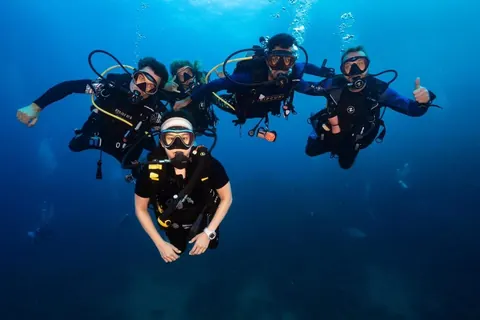 GetYourGuideKoh Tao: Try Scuba Diving with Hotel Pickup and 2 DivesView on GetYourGuide (opens in a new tab)
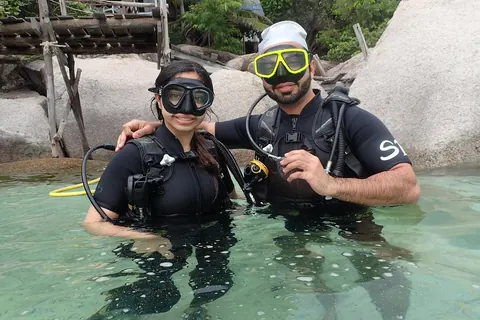 ViatorPADI Discover Scuba Diving in Koh Tao - half day and two divesView on Viator (opens in a new tab)
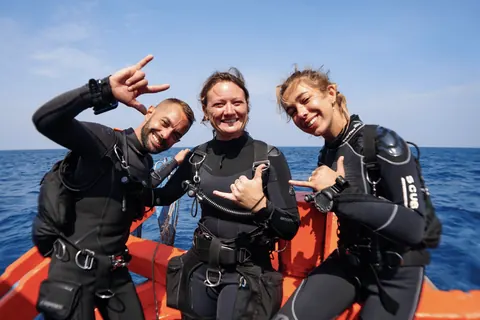 GetYourGuideKoh Tao: Fun Dive or Refresher Dive with 2 DivesView on GetYourGuide (opens in a new tab)
All Koh Tao trips on Viator (opens in a new tab)
Ratings from GetYourGuide travellers.
When is the best time to dive Koh Tao?
Koh Tao can be dived all year, but February to October avoids the north-east monsoon, which brings rain, bigger waves and lower visibility around November and December. Sea temperatures run from 27.7 °C (82 °F) in January to 30.2 °C (86 °F) in May.
Schools on the island disagree on the exact monsoon window: Simple Life Divers expects it in November and early December, Big Blue Diving from December to mid-January. During those weeks boats stick to sheltered sites, so diving carries on with a shorter menu, and ferry crossings can be rough.
The rest of the year is warm and settled. The water sits at about 30 °C (86 °F) from April to June and still at 28.9 °C (84 °F) in October; January and December are the coolest months at 27.7–27.9 °C (82 °F). The whale-shark peaks fall in the transition months either side of the monsoon, so April–May and October gather the most reasons to come.
| Month | Average water temperature | Season |
|---|---|---|
| January | 27.7 °C (82 °F) | Outside the best months |
| February | 28.2 °C (83 °F) | Best month to dive |
| March | 28.9 °C (84 °F) | Best month to dive |
| April | 29.9 °C (86 °F) | Best month to dive |
| May | 30.2 °C (86 °F) | Best month to dive |
| June | 29.8 °C (86 °F) | Best month to dive |
| July | 29.4 °C (85 °F) | Best month to dive |
| August | 29.1 °C (84 °F) | Best month to dive |
| September | 29 °C (84 °F) | Best month to dive |
| October | 28.9 °C (84 °F) | Best month to dive |
| November | 28.5 °C (83 °F) | Outside the best months |
| December | 27.9 °C (82 °F) | Outside the best months |
In season in: February · March · April · May · June · July · August · September · October
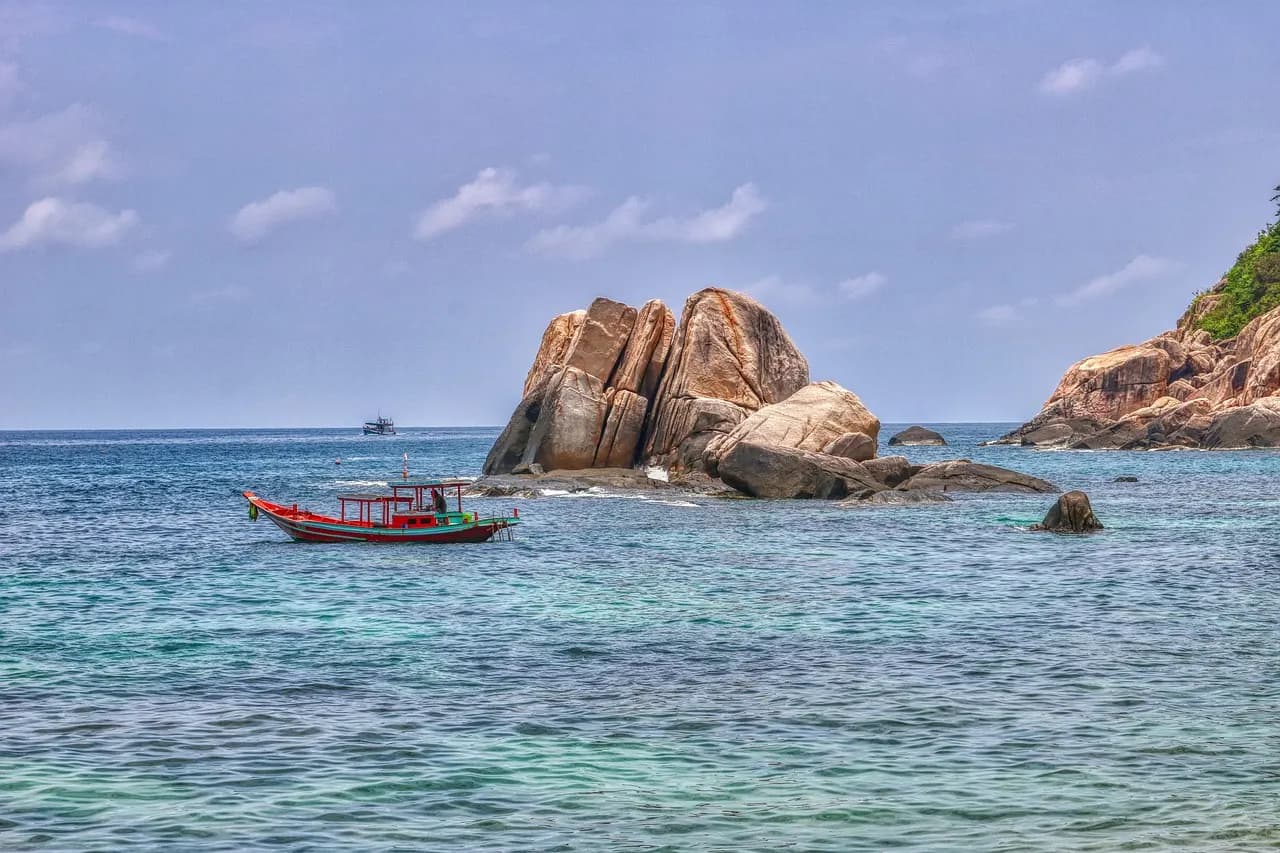
When can you see whale sharks at Koh Tao?
Whale sharks are recorded around Koh Tao in every season, with sighting peaks in April–May and October–November, and Chumphon Pinnacle (14–36 m, 46–118 ft) is one of the offshore sites where they pass.
Koh Tao is listed as an Important Shark and Ray Area by the IUCN Shark Specialist Group, and the peak months follow years of sightings logged by divers around the Gulf of Thailand. Local opinions on the best months differ, so treat an encounter as a bonus rather than something a trip can promise.
Pregnant blacktip reef sharks also gather in Shark Bay until late March or early April, after which their pups use the shallows. Watch from a distance and never chase or touch a shark, large or small.
Why do so many divers learn on Koh Tao?
Koh Tao packs an Open Water course into 2.5–3 days for THB 11,000–12,500 with equipment and materials included, and trains at shallow sites such as Japanese Gardens (2–15 m, 7–49 ft) and Twins (6–18 m, 20–59 ft).
Ban's Diving Resort and Simple Life Divers charge THB 11,000; Big Blue Diving asks THB 12,000 and Crystal Dive THB 12,500 for its SSI course. With so many schools quoting the same figure, compare class size, the instructor's language and what happens if weather delays a dive, not just the price. You can learn PADI or SSI here; pick the school and instructor first, the agency second.
Not ready for a full course? A one-day PADI Discover Scuba costs THB 2,500 at Ban's and Simple Life, and Big Blue's SSI Basic Scuba Diver, with a pool session and two sea dives, costs THB 3,800.
See how Koh Tao compares with other countries in our Open Water price index, and what a course should include in what it costs to learn to dive.
What are the best dive sites on Koh Tao?
Koh Tao's signature dives are granite pinnacles: Chumphon Pinnacle (14–36 m, 46–118 ft) and Hin Wong Pinnacle for advanced divers, Sail Rock with its vertical chimney (5–40 m, 16–131 ft), and Southwest Pinnacle and the swim-throughs of Green Rock for intermediate divers.
- Chumphon Pinnacle: offshore granite with barracuda schools, where whale sharks pass at times.
- Sail Rock: a pinnacle between Koh Tao and Koh Phangan with a vertical swim-through chimney; trips cost more than the standard two-dive boat.
- Southwest Pinnacle (6–28 m, 20–92 ft): a cluster of peaks with snapper, barracuda and anemone-covered tops.
- Green Rock (4–28 m, 13–92 ft): a boulder maze of swim-throughs and caverns off Koh Nang Yuan.
- Hin Wong Pinnacle (10–30 m, 33–98 ft): an east-coast pinnacle with stronger currents and schooling fish.
- Shark Island (3–24 m, 10–79 ft): slopes and boulders off the south-east tip, where currents bring fish schools and turtles.
- White Rock (6–22 m, 20–72 ft): a large boulder reef off the west coast, popular for night dives.
| Dive site | Depth | Level | Entry | Highlights |
|---|---|---|---|---|
| Chumphon Pinnacle | 14–36 m (46–118 ft) | Advanced | Boat | Offshore granite pinnacle with barracuda schools; whale sharks pass at times |
| Sail Rock | 5–40 m (16–131 ft) | Intermediate | Boat | Pinnacle between Koh Tao and Koh Phangan with a vertical swim-through chimney |
| Southwest Pinnacle | 6–28 m (20–92 ft) | Intermediate | Boat | Cluster of granite peaks with snapper, barracuda and anemone-covered tops |
| Green Rock | 4–28 m (13–92 ft) | Intermediate | Boat | Boulder maze of swim-throughs and caverns off Koh Nang Yuan |
| Hin Wong Pinnacle | 10–30 m (33–98 ft) | Advanced | Boat | East-coast pinnacle with stronger currents and schooling fish |
| Shark Island | 3–24 m (10–79 ft) | Intermediate | Boat | Slopes and boulders off the south-east tip; currents bring fish schools and turtles |
| White Rock | 6–22 m (20–72 ft) | Beginner | Boat | Large boulder reef off the west coast, popular for night dives |
| Twins | 6–18 m (20–59 ft) | Beginner | Boat | Two boulder clusters and sandy channels, widely used for training |
| Japanese Gardens | 2–15 m (7–49 ft) | Beginner | Boat | Shallow hard-coral garden on Koh Nang Yuan, good for first dives |
How much does diving on Koh Tao cost?
A half-day boat trip with two dives on Koh Tao costs THB 2,000–2,200 with equipment included, an Open Water course THB 11,000–12,500 and a one-day try dive THB 2,500–3,800 (prices checked 22 November 2026).
Fun-dive prices are close together: Big Blue charges THB 2,000 for two dives, Crystal Dive from THB 2,200 and Simple Life THB 2,200. Day trips to Sail Rock and Chumphon Pinnacle cost more. Ask for a multi-dive package if you are staying a week.
Koh Tao is not a national park, so there is no marine-park fee on top of the dive price. Some trips stop at Koh Nang Yuan, a privately run island that, local operators say, charges its own entry fee; ask your school for the current amount. For current prices, ask Koh Tao dive centers.
Prices checked
| Item | Typical price | Range |
|---|---|---|
| Two-tank boat dive | THB 2,200 | THB 2,000–THB 2,200 |
| Open Water course | THB 11,500 | THB 11,000–THB 12,500 |
| Discover Scuba (try dive) | THB 2,500 | THB 2,500–THB 3,800 |
Prices change; confirm with the center before you book.
Is there a recompression chamber on Koh Tao?
Yes: Koh Tao has its own recompression chamber, the SSS Recompression Chamber Koh Tao run by Hyperbaric Services of Thailand.
A chamber on the island shortens the time to treatment, but it does not replace insurance: chamber sessions and any transfer to a mainland hospital are expensive without cover. Check that your policy pays for recompression treatment and evacuation; our dive insurance guide explains what to look for.
Popular training sites such as Twins can be busy with several groups at once, so keep close to your instructor or buddy, ascend slowly and make your safety stop. Before flying home from Koh Samui, Chumphon or Surat Thani, leave the interval after your last dive that your training agency and DAN recommend.
Dive centers in Koh Tao
Loading dive centers…
Frequently asked questions
Is Koh Tao good for beginner divers?
Yes. Koh Tao is set up for new divers: courses run in 2.5–3 days, and the training sites are shallow, such as Japanese Gardens on Koh Nang Yuan at 2–15 m (7–49 ft) and Twins at 6–18 m (20–59 ft). A one-day try dive costs THB 2,500–3,800. Leave Chumphon Pinnacle and Hin Wong, both rated advanced, until you have more dives logged.
Is Koh Tao worth it for experienced divers?
It can be. Beyond the training reefs, Koh Tao offers deeper granite pinnacles: Chumphon Pinnacle at 14–36 m (46–118 ft) with barracuda schools and passing whale sharks, Sail Rock at 5–40 m (16–131 ft) with its chimney, and Southwest Pinnacle. Time a trip for April–May or October–November to improve your whale-shark odds, and book the offshore day trips, which cost more than a standard boat.
How do you get to Koh Tao?
Koh Tao has no airport. Divers fly to Koh Samui (USM), Chumphon (CJM) or Surat Thani (URT) and continue by ferry to the island. Check the ferry schedule when you book your flight, as crossings can be rough during the north-east monsoon around November and December, so leave slack in your plans on both the way in and the way out.
What is the water temperature on Koh Tao?
Koh Tao's sea surface averages 27.7 °C (82 °F) in January, the coolest month, and 30.2 °C (86 °F) in May, the warmest. Most of the year it sits between 28.5 °C (83 °F) and 30 °C (86 °F), so a thin wetsuit or shorty is enough for most divers, with a full suit for night dives or repeated days.
Can you dive Koh Tao in November and December?
Yes, diving continues, but the north-east monsoon brings rain, bigger waves and lower visibility around November and December, and boats keep to sheltered sites. Schools disagree on the exact timing, from November to mid-January. If whale sharks are your goal, early November still falls inside the October–November peak, but give yourself spare days in case the boats stay in.


