Diving region
Scuba Diving in the Mediterranean
Malta and Gozo are the Mediterranean destination in this guide, known for wrecks entered from shore, such as the Um El Faroud, and for caves at Dwejra on Gozo. Boats run mainly from May to October and shore diving continues all year, with the sea at 15.4 °C (60 °F) in February and 26.5 °C (80 °F) in August.
Dive trips in the Mediterranean
Trips run by local operators, booked on Viator or GetYourGuide.
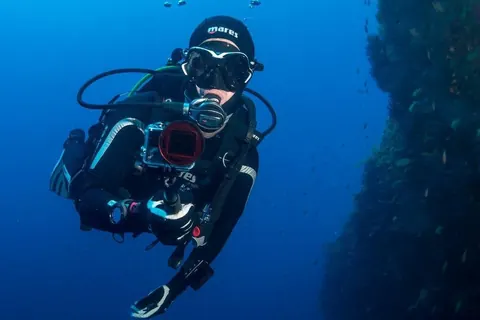 ViatorMalta & GozoTwo Morning Dives in Gozo for Certified DiverView on Viator (opens in a new tab)
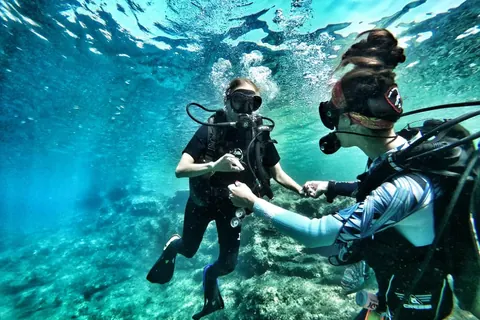 GetYourGuideMalta & GozoMalta: First Experience Scuba Diving LessonView on GetYourGuide (opens in a new tab)
Ratings from GetYourGuide travellers.
Where can you dive in the Mediterranean?
In the Mediterranean, this guide covers Malta, Gozo and Comino, three small islands where most dives start from shore: wrecks such as the Um El Faroud tanker and the P29 patrol boat, and caves, arches and a tunnel at Dwejra on Gozo.
Malta & Gozo is the one Mediterranean guide on this site, and the table shows its season, water and typical prices. Divers fly into Malta International Airport (MLA).
- Malta: the Um El Faroud tanker off Wied iz-Zurrieq (18–36 m, 59–118 ft) and the P29 patrol boat off Cirkewwa (18–40 m, 59–131 ft), both rated advanced, plus the shallow HMS Maori below Valletta (10–15 m, 33–49 ft) and the Ghar Lapsi reef for easier days.
- Gozo: the Blue Hole and the Inland Sea tunnel at Dwejra, Cathedral Cave on the north coast, and the ferry wrecks MV Karwela and MV Cominoland off Xatt l-Ahmar.
- Comino: the small island between the two, dived by boat, with the Santa Marija Caves and the P31 patrol-boat wreck.
| Place | Best months | Water | Two-tank boat dive | Open Water course |
|---|---|---|---|---|
| Malta & Gozo | May to October | 15.4–26.5 °C (60–80 °F) | €150 | €540 |
Water: average temperature of the coolest and the warmest month. Prices: typical prices; each guide says when they were checked.
When is the best time to dive in the Mediterranean around Malta?
Around Malta and Gozo, May to October is the Mediterranean dive season, when full boat programs run to Comino and offshore sites and the sea is 18.5–26.5 °C (65–80 °F); in winter, centers dive mostly from shore and the sea falls to 15.4 °C (60 °F) in February and March.
The Mediterranean runs on a different calendar from the tropical regions in this guide. The water warms from 16.2 °C (61 °F) in April to 22.1 °C (72 °F) in June and 25 °C (77 °F) in July, peaks in August and stays above 21 °C (70 °F) until November. Malta's warmest month, at 26.5 °C (80 °F), is about as warm as the coolest month at most of our Caribbean destinations.
In winter the gregale, a strong, cold north-easterly wind, can blow for one to several days and raise dangerous seas, so leave spare days in a December to February trip.
What is Mediterranean diving in Malta like compared with the tropics?
Diving in Malta centers on wrecks, caves and underwater rock formations rather than the big-animal encounters of the tropical regions, and many of the islands' best-known sites are shore dives that go well past 30 m (98 ft).
Because most dives start from shore, you can dive on your own schedule rather than a boat's. Divers in Malta dive through locally licensed diving schools and complete a medical statement before diving, and may dive without a guide only with a buddy and Advanced Open Water or an equivalent certification.
Malta's cultural heritage law protects remains on the seabed that are more than 50 years old: on protected wrecks you may not anchor, go inside, touch the wreck or tie lines to it. The site table in our Malta & Gozo guide gives depths and levels for each dive.
What does a Mediterranean dive trip to Malta cost?
In Malta and Gozo, two boat dives usually add up to about EUR 150 (EUR 139–155) once the boat supplement is included, a try dive costs EUR 55–110 and an Open Water course about EUR 540 (EUR 460–600) with eLearning, gear and shore dives (prices checked November 2026).
Where are the recompression chambers in Malta and Gozo?
Malta's main recompression facility is the Hyperbaric Unit at Mater Dei Hospital in Msida, and Gozo General Hospital opened a new six-person chamber in March 2026.
Neither hospital publishes round-the-clock staffing, so ask your center how it handles a diving emergency. The deep wrecks and the Dwejra sites go well past 30 m (98 ft) in places: plan your depth before you enter, carry dive insurance that covers chamber treatment, and put fitness-to-dive questions to a dive doctor or DAN.
Frequently asked questions
Can you dive in the Mediterranean in winter?
Yes, around Malta and Gozo. Centers keep diving through the winter, mostly from shore, while boat trips to Comino and offshore sites run mainly from May to October. Expect cold water, 15.4 °C (60 °F) in February and March, and days lost to the gregale, a strong north-easterly wind that can raise dangerous seas for one to several days between December and February.
Is Malta good for beginner divers?
Yes. Training dives start from shore, and an Open Water course costs about EUR 540 (EUR 460–600) with eLearning or digital learning, gear and shore dives. Easy sites include the HMS Maori wreck below Valletta at 10–15 m (33–49 ft), the Ghar Lapsi reef and, by boat, the Santa Marija Caves and the P31 wreck off Comino. Leave the deep wrecks for later.
What are the best wreck dives in Malta and Gozo?
The Um El Faroud, a large tanker off Wied iz-Zurrieq at 18–36 m (59–118 ft), and the P29 patrol boat off Cirkewwa at 18–40 m (59–131 ft) are the classic advanced wrecks, both entered from shore. Gozo adds the ferries MV Karwela and MV Cominoland off Xatt l-Ahmar at 20–45 m (66–148 ft), while the shallow HMS Maori and P31 suit newer divers.
How warm is the Mediterranean around Malta?
It depends on the month. The sea averages 15.4 °C (60 °F) in February and March, warms to 22.1 °C (72 °F) in June, peaks at 26.5 °C (80 °F) in August and cools to 21.2 °C (70 °F) in November. That is a far wider swing than at the tropical destinations in this guide, so choose your wetsuit for the month you travel.
