Dive guide · United States
Scuba Diving in Hawaii
Hawaii's diving differs by island: wrecks off Waikiki and the Waianae coast on Oahu, the manta ray night dive off Kona on the Big Island, and Molokini Crater off Maui. Boats run all year, and May to October is calmest, with water at 25.3–27 °C (78–81 °F). A two-tank boat dive costs about US$209.
Key facts
- Best months
- May to October
- Water temperature
- 24.4–27 °C (76–81 °F)Monthly average, coolest to warmest month
- Level
- Beginner to advanced
- Open Water course
- US$879Typical price, checked
- Two-tank boat dive
- US$209Typical price, checked
- Discover Scuba (try dive)
- US$329Typical price, checked
- Snorkel tour
- US$139Typical price, checked
- Airports
- Daniel K. Inouye International Airport (Honolulu) (HNL), Ellison Onizuka Kona International Airport (KOA), Kahului Airport (Maui) (OGG)
- Park fee
- Hanauma Bay Nature Preserve entry (Oahu), non-residents aged 13+ (plus 2.35% online fee): US$25
- Nearest chamber
- UH Hyperbaric Treatment Center (Kuakini Medical Center), Honolulu
Book a dive trip in Hawaii
Trips run by local operators, booked on Viator or GetYourGuide.
 ViatorBeginner Scuba No Certification/Swimming Needed + Free VideosView on Viator (opens in a new tab)
 GetYourGuideHonolulu: Beginner Scuba Diving Tour with VideosView on GetYourGuide (opens in a new tab)
 ViatorBeginner Scuba Diving Experience with Video Package in HonoluluView on Viator (opens in a new tab)
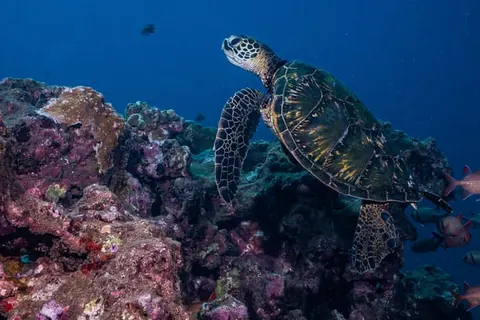 GetYourGuideMaui: Small Group Shark & Turtle Scuba Dive from ShoreView on GetYourGuide (opens in a new tab)
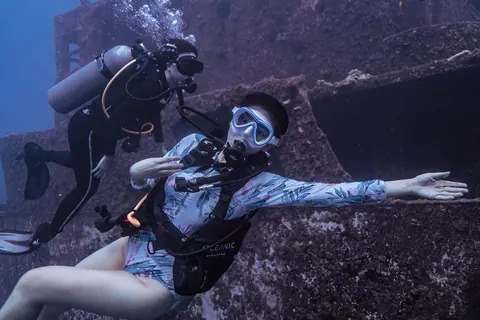 ViatorWaikiki 2 Tank World Class Wreck SCUBA Diving - Certified OnlyView on Viator (opens in a new tab)
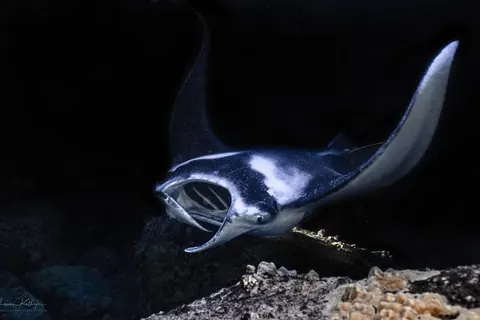 GetYourGuideKailua Kona: Manta Ray Night Snorkel Tour with GuideView on GetYourGuide (opens in a new tab)
All Hawaii trips on Viator (opens in a new tab)
Ratings from GetYourGuide travellers.
Which Hawaiian island is best for scuba diving?
For scuba diving in Hawaii, choose Kona on the Big Island for the manta night dive and year-round boat diving, Oahu for wrecks off Waikiki and summer shore dives on the North Shore, and Maui for Molokini Crater and easy shore sites.
If you have time for two islands, pair a few days of wreck and reef diving from Honolulu with the manta night dive in Kona. Maui has its own guide: see diving in Maui for Molokini, the Lanai Cathedrals and the West Maui shore dives.
For days out of the tanks, our snorkeling guides cover Kona, Oahu, Hanauma Bay and Maui.
| Island | Diving highlights | Airport | When |
|---|---|---|---|
| Oahu | Sea Tiger and Mahi wrecks, Skimmin's Ledge drift, Shark's Cove and Three Tables from shore | Honolulu (HNL) | South and west shores all year; North Shore about May to October |
| Hawaiʻi Island (Kona) | Manta night dive at Garden Eel Cove, Kaʻawaloa Cove in Kealakekua Bay | Kona (KOA) | All year; mantas have no fixed season |
| Maui | Molokini Crater, Lanai Cathedrals, Black Rock and Kapalua Bay from shore | Kahului (OGG) | Best May to September; Honolua Bay in summer only |
When is the best time to dive in Hawaii?
Hawaii is dived all year off Kona and Oahu's south and west shores, but May to October brings the calmest seas, warmer water at 25.3–27 °C (78–81 °F) and the diving season on Oahu's North Shore.
Summer: North Shore and calm Kona
At Pūpūkea on Oahu's North Shore (Shark's Cove and Three Tables) the sea is generally calm from about May to October. In winter, big surf and currents make the area dangerous, so treat North Shore diving as a summer activity. In Kona, one local operator calls June to October the warmest and calmest months.
Winter: whales
Humpback whales are in Hawaiian waters from about November to April, and on winter dives off Oahu and Kona you may see them or hear their song. The sea is coolest in February and March, at 24.4 °C (76 °F), only about 2.6 °C (5 °F) below its September–October peak.
Mantas
Kona's manta night dives and snorkels have no fixed season: sightings are frequent but not guaranteed and rise and fall with plankton and surf.
| Month | Average water temperature | Season |
|---|---|---|
| January | 24.7 °C (76 °F) | Outside the best months |
| February | 24.4 °C (76 °F) | Outside the best months |
| March | 24.4 °C (76 °F) | Outside the best months |
| April | 24.7 °C (76 °F) | Outside the best months |
| May | 25.3 °C (78 °F) | Best month to dive |
| June | 25.8 °C (78 °F) | Best month to dive |
| July | 26.3 °C (79 °F) | Best month to dive |
| August | 26.7 °C (80 °F) | Best month to dive |
| September | 27 °C (81 °F) | Best month to dive |
| October | 27 °C (81 °F) | Best month to dive |
| November | 26.3 °C (79 °F) | Outside the best months |
| December | 25.4 °C (78 °F) | Outside the best months |
In season in: May · June · July · August · September · October
What is scuba diving on Oahu like?
Scuba diving on Oahu is mostly boat diving on wrecks and ledges off Waikiki, the Waianae coast and east Oahu, plus summer shore dives at Shark's Cove and Three Tables on the North Shore.
- Sea Tiger (24–37 m, 79–121 ft): a ship sunk off Waikiki, usually dived at 24–30 m (79–98 ft), with schooling fish, morays and eagle rays. Plan it as a deep dive.
- Mahi (18–29 m, 59–95 ft): a wreck off the Waianae coast with its deck at 18–24 m (59–79 ft); eagle rays, whitetip reef sharks and octopus. Penetration is not allowed.
- YO-257 and San Pedro: two more wrecks that Oahu boats visit, resting at about 30 m (97 ft) and 27 m (90 ft).
- Skimmin's Ledge (11–21 m, 36–69 ft): a drift along a coral ledge off east Oahu with swim-through fingers and fish schools, run only in very good conditions.
- Shark's Cove and Three Tables (5–14 m, 16–46 ft): lava-rock and reef-table shore dives in the Pūpūkea Marine Life Conservation District, where taking marine life is banned. Summer only.
Hanauma Bay, Oahu's best-known snorkel site, charges non-residents aged 13 and over US$25 to enter, plus a 2.35% online booking fee; see our Hanauma Bay guide.
What is diving in Kona on the Big Island like?
Kona, on the west coast of Hawaiʻi Island (the Big Island), is dived by boat all year, and its best-known sites are Garden Eel Cove (6–24 m, 20–79 ft) for the manta night dive and calm Kaʻawaloa Cove in Kealakekua Bay (2–37 m, 7–121 ft).
Kaʻawaloa Cove lies in the Kealakekua Bay Marine Life Conservation District near the Cook Monument. It is reached only by boat, is almost always calm, and has tame reef fish and frequent dolphins. It is rated beginner in our table, but the bottom drops to 37 m (121 ft), so keep to your training depth.
Kona boats also dive the lava tubes along the coast and named sites such as Golden Arches and Turtle Pinnacle; ask your operator which ones it runs that week. By day, Garden Eel Cove shows its name: garden eels on the sand below the manta feeding area.
The mantas here belong to a small, resident population: researchers have photo-identified only 318 individual reef mantas around Hawaiʻi Island since 1979.
How does the Kona manta ray night dive work?
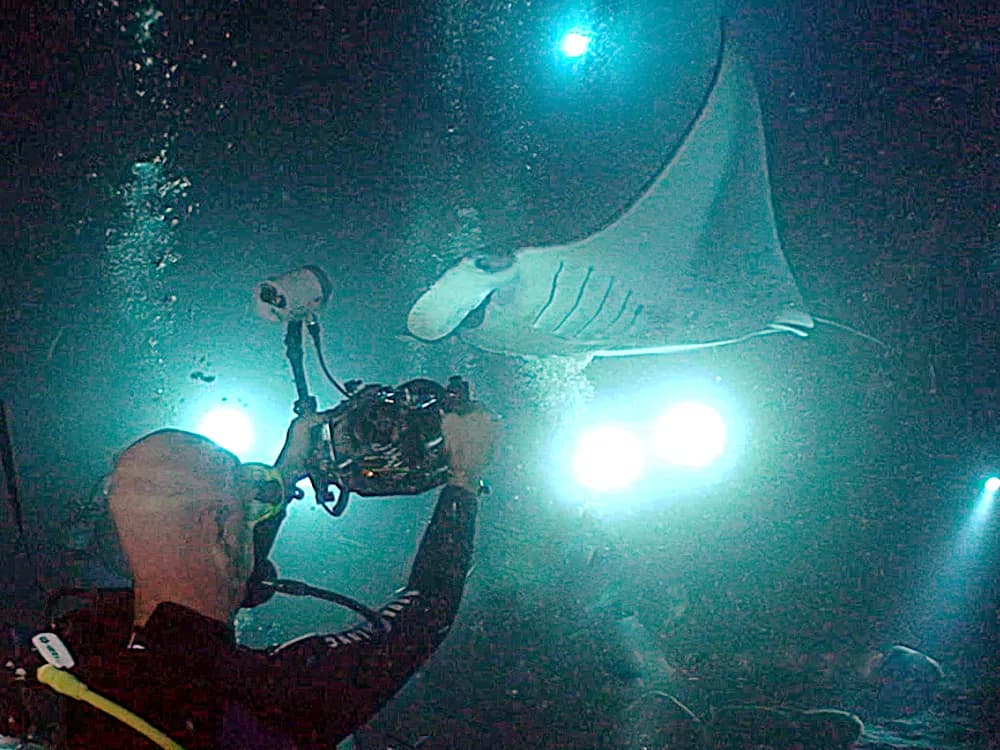
The Kona manta ray night dive takes place at Garden Eel Cove, also called Manta Heaven, where mantas feed in the beams of dive lights at about 10 m (33 ft); sightings are frequent but never guaranteed.
- Where: Garden Eel Cove (Manta Heaven) or Manta Village off Keauhou. One operator calls Keauhou busier, with up to 40–50 boats on a night, and sees fewer rays there on average.
- How often: one operator reports mantas on about 80% of trips; another says there is no pattern and offers a free standby trip or 50% off a return trip if none show up.
- Cost for divers: Big Island Divers sells a one-tank manta night dive for US$189 plus tax and gear; Kona Honu combines a two-tank afternoon dive with the manta dive for up to US$299.
- Cost for snorkelers: a manta night snorkel costs about US$139 (US$130–149) per adult.
Non-divers can watch from the surface on a night snorkel; see our Kona snorkeling guide. Never touch a manta, and follow the crew's briefing on where to stay and where to point your light.
Which Hawaii dive sites suit beginners?
Of the seven Oahu and Kona sites in our table, Kaʻawaloa Cove in Kealakekua Bay and Three Tables on Oahu's North Shore (5–14 m, 16–46 ft, summer only) are rated beginner, while the Sea Tiger and Mahi wrecks and Skimmin's Ledge are rated advanced.
Garden Eel Cove, the manta site, and Shark's Cove are rated intermediate. For Maui's easy shore dives at Black Rock and Kapalua Bay, see the Maui shore-dive section.
| Dive site | Depth | Level | Entry | Highlights |
|---|---|---|---|---|
| Garden Eel Cove / Manta Heaven (Kona) | 6–24 m (20–79 ft) | Intermediate | Boat | Site of the manta night dive: mantas feed over lights at about 10 m; garden eels on the sand deeper down |
| Kaʻawaloa Cove, Kealakekua Bay (Kona) | 2–37 m (7–121 ft) | Beginner | Boat | Protected bay (MLCD) near the Cook Monument, almost always calm, tame reef fish and frequent dolphins; boat access only |
| Sea Tiger wreck (Oahu) | 24–37 m (79–121 ft) | Advanced | Boat | Ship sunk off Waikiki, usually dived at 24-30 m with schooling fish, morays and eagle rays |
| Mahi wreck (Oahu, Waianae) | 18–29 m (59–95 ft) | Advanced | Boat | Deck at 18-24 m; eagle rays, whitetip reef sharks and octopus; penetration not allowed |
| Skimmin's Ledge (east Oahu) | 11–21 m (36–69 ft) | Advanced | Boat | Drift along a coral ledge with swim-through fingers and fish schools, only in very good conditions |
| Shark's Cove (Pūpūkea, Oahu) | 6–14 m (20–46 ft) | Intermediate | Shore | Lava-rock cove in a no-take MLCD; better diving outside the cove; summer only, dangerous in winter surf |
| Three Tables (Pūpūkea, Oahu) | 5–14 m (16–46 ft) | Beginner | Shore | Flat reef tables near shore, best diving farther out at 9-14 m; calm roughly May to October |
How much does diving in Hawaii cost?
A two-tank boat dive in Hawaii usually costs about US$209 (US$174–259), a Discover Scuba program about US$329 (US$285–449) and an Open Water course about US$879 (US$575–1,130) before eLearning, prices checked November 2026.
- Boat dives: on Oahu, Island Divers charges US$174 plus US$20 for rental gear and Hawaii Eco Divers' US$189 includes gear; in Kona, Big Island Divers charges US$229 plus tax, with gear at US$60, and Kona Honu lists up to US$259 with prices that move with demand, plus tax and fees.
- Try dives: Island Divers' US$285 covers a pool session and two boat dives on Oahu; Big Island Divers' US$329 covers lessons and the boat charter in Kona; Kona Honu's US$449 covers two dives with eLearning, gear and two students per instructor, plus tax and fees.
- Open Water: the course fees cover the in-water part only; the centers list PADI eLearning at about US$236–251 on top.
- Manta night snorkel: about US$139 (US$130–149) per adult in Kona.
Ask whether a quote includes Hawaii tax before you compare. For prices on your dates, ask Hawaii dive centers.
Prices checked
| Item | Typical price | Range |
|---|---|---|
| Open Water course | US$879 | US$575–US$1,130 |
| Two-tank boat dive | US$209 | US$174–US$259 |
| Discover Scuba (try dive) | US$329 | US$285–US$449 |
| Snorkel tour | US$139 | US$130–US$149 |
Prices change; confirm with the center before you book.
Where is the nearest recompression chamber in Hawaii?
Hawaii's recompression chamber is the University of Hawaiʻi Hyperbaric Treatment Center at Kuakini Medical Center on Kuakini Street in Honolulu, which lists 24/7 emergency dive medicine and treatment; divers hurt off Kona or Maui are flown to Oahu.
The center has closed before, in 2017–18 and temporarily in 2021 for renovations. Its own page shows no closure notice, but confirm that it is operating before your trip, and remember that a diver with symptoms in Kona needs an air transfer to Honolulu.
Carry dive insurance that covers air evacuation and chamber treatment, keep DAN's emergency number in your phone, and see a dive doctor or DAN for any medical question. For the manta night dive, carry a backup light.
Dive centers in Hawaii
Loading dive centers…
Frequently asked questions
Do you need to be certified for the Kona manta night dive?
Yes, the manta night dive is for certified divers: Garden Eel Cove is rated intermediate in our table, and the mantas feed at about 10 m (33 ft) in the dark. If you are not certified, or new to night diving, the manta night snorkel lets you watch from the surface for about US$139 (US$130–149) per adult. Ask the operator about its own experience requirements.
When can you see humpback whales while diving in Hawaii?
Humpback whales are in Hawaiian waters from about November to April. On winter boat dives off Oahu and Kona you may see them at the surface or hear their song underwater. Diving goes on through whale season, but the sea is cooler, about 24.4 °C (76 °F) in February and March, and Oahu's North Shore is too rough to dive.
How warm is the water in Hawaii?
Hawaiian waters average 24.4 °C (76 °F) in February and March, the coolest months, and 27 °C (81 °F) in September and October, the warmest. From May to October the sea stays at 25.3–27 °C (78–81 °F). With so small a change across the year, surf and whales matter more than temperature when you pick your dates.
Can you shore dive on Oahu?
Yes, in summer. Shark's Cove and Three Tables in the Pūpūkea Marine Life Conservation District on the North Shore are shore dives of 5–14 m (16–46 ft), generally calm from about May to October. In winter, big surf and currents make them dangerous. At Shark's Cove the better diving is outside the cove itself, and taking marine life is banned in the whole district.
Which airport should you fly into for diving in Hawaii?
Fly into Honolulu (HNL) for Oahu's wrecks and North Shore, Kona (KOA) on the Big Island for the manta night dive and Kealakekua Bay, and Kahului (OGG) for Maui and Molokini. Inter-island flights connect the three, so leave the no-fly interval your training recommends after your last dive, including before a short hop to the next island.
Should you dive Maui or the Big Island?
Pick Kona on the Big Island if the manta night dive is the highlight you want; mantas there have no fixed season. Pick Maui for Molokini Crater, reached only on permitted boats, and easy shore dives such as Black Rock and Kapalua Bay at 0–12 m (0–39 ft). Our Maui guide covers that island's sites, season and prices in detail.


