Diving region
Scuba Diving in the Indian Ocean
The Indian Ocean guides here cover three trips: the Maldives for manta cleaning stations, channel drifts and reef sharks, best from January to April on the western atolls; Zanzibar for easy reefs and dolphins, best in March, October and November; and Mauritius for a wreck and north-coast reefs, best in April–May and October–December.
Dive trips in the Indian Ocean
Trips run by local operators, booked on Viator or GetYourGuide.
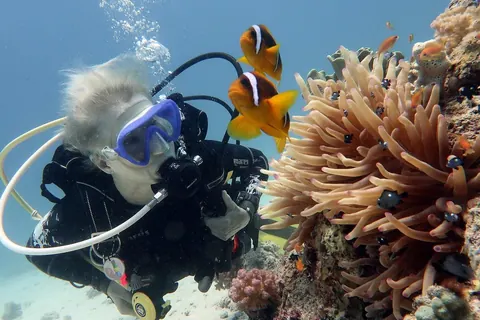 ViatorMaldivesMaafushi: Discover Scuba Diving in Maldives (for Beginners)View on Viator (opens in a new tab)
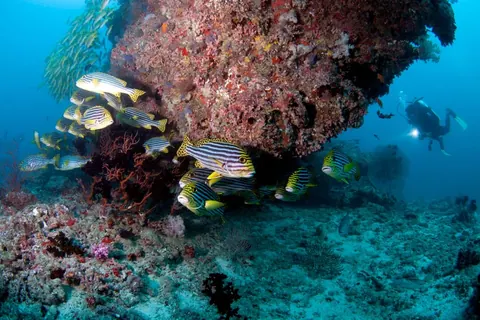 GetYourGuideMaldivesMaldives: Discover Scuba DivingView on GetYourGuide (opens in a new tab)
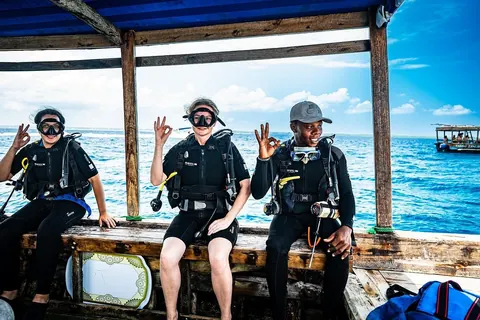 ViatorZanzibarZanzibar 1 Day Scuba Diving beginner course and LunchView on Viator (opens in a new tab)
 GetYourGuideZanzibarZanzibar: 1-Day Diving Safari Course for Beginners with LunchView on GetYourGuide (opens in a new tab)
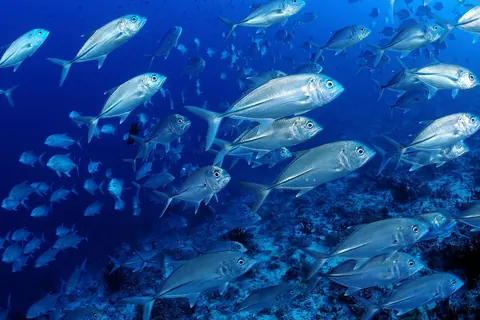 ViatorMauritiusDiving Exploration around the Pass of Belle Mare MauritiusView on Viator (opens in a new tab)
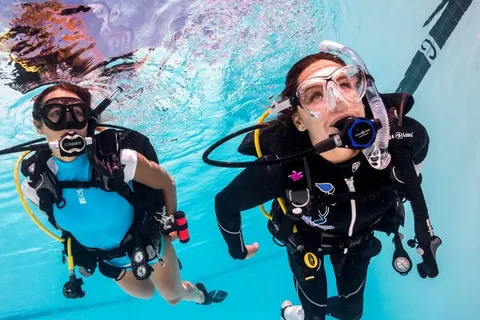 GetYourGuideMauritiusMauritius: East Belle Mare Scuba Diving TourView on GetYourGuide (opens in a new tab)
Ratings from GetYourGuide travellers.
Maldives, Zanzibar or Mauritius: where should you dive in the Indian Ocean?
In the Indian Ocean, choose the Maldives for big animals, with mantas, grey reef sharks and whale sharks on channel and reef dives, Zanzibar for an easy-going reef trip with turtles off Stone Town and dolphins in Menai Bay, and Mauritius for the Stella Maru wreck and calm north-coast reefs.
The table compares the three side by side.
- Maldives: coral atolls where tidal currents run through channels and over submerged reefs called thilas. The sites in our guide are in South Malé Atoll, from Dhigu Thila, where mantas feed on outgoing currents, to the grey reef shark cleaning station at Kandooma Thila. Divers fly into Velana International (MLE).
- Zanzibar: the island off Tanzania dives mostly at Mnemba Atoll in the north-east, with a gentle soft-coral slope at Kichwani (2–30 m, 7–98 ft) and the Small Wall drift (5–40 m, 16–131 ft). Off Stone Town lie Bawe Reef and the Great Northern, a cable ship that sank in 1902. The airport is Abeid Amani Karume International (ZNZ).
- Mauritius: an island east of Madagascar, dived from bases on the north, east and west coasts. Off the north lie Grand Baie Aquarium (8–14 m, 26–46 ft), Coin de Mire and the Stella Maru, a trawler sunk on purpose in 1987; Belle Mare in the east has coral gardens and a sloping wall. Divers fly into Sir Seewoosagur Ramgoolam International (MRU).
| Place | Best months | Water | Two-tank boat dive | Open Water course |
|---|---|---|---|---|
| Maldives | January to April | 28.1–29.7 °C (83–85 °F) | US$203.33 | US$785.07 |
| Zanzibar | March and October to November | 25.5–29.2 °C (78–85 °F) | US$110 | US$490 |
| Mauritius | April to May and October to December | 23.5–27.9 °C (74–82 °F) | MUR 5,087.50 | MUR 25,400 |
Water: average temperature of the coolest and the warmest month. Prices: typical prices; each guide says when they were checked.
When is the best time to dive in the Indian Ocean?
Indian Ocean dive seasons follow the monsoons: in the Maldives, reef mantas gather on the western side of the atolls from about January to April and move east from about June to October, while Zanzibar's best months are March, October and November, between the long rains of April and May and the Kusi winds of June to September, and Mauritius is best in April–May and October–December, outside its cooler winter.
Maldives
The north-east monsoon, roughly January to April, brings mantas to cleaning stations on the western side of the atolls. During the south-west monsoon, roughly June to October, they move to the eastern side, and in Baa Atoll this is the season of the big feeding gatherings at Hanifaru Bay. Whale sharks in South Ari show no seasonal change in numbers. The water hardly moves, from 28.1 °C (83 °F) in January to 29.7 °C (85 °F) in April.
Zanzibar
April and May are the main rainy season: centers keep running, but days can be very wet. From June to September the southerly Kusi monsoon brings stronger winds and choppier boat rides, with August among the windiest months, and the sea cools to 25.5 °C (78 °F) that month. March is the warmest, at 29.2 °C (85 °F).
Mauritius
Mauritius is dived all year. The official cyclone season runs from 1 November to 15 May, with February and March usually the wettest months, and the southern winter, June to September, cools the sea to 23.5 °C (74 °F) in August; February is the warmest, at 27.9 °C (82 °F). Humpback whales pass the island in winter.
Where can you see mantas, sharks and whale sharks in the Indian Ocean?
The Maldives is this guide's Indian Ocean destination for big animals: whale sharks are encountered in the South Ari Marine Protected Area all year, mantas feed at Dhigu Thila in South Malé Atoll, and grey reef sharks gather at Kandooma Thila and Miyaru Faru.
- Maldives: Cocoa Corner and Guraidhoo Kandu add eagle rays, tuna and barracuda to the grey reef sharks, and Miyaru Faru, a wall and channel dive known as shark reef, also has Napoleon wrasse and schools of snapper.
- Zanzibar: the appeal is smaller life and gentle encounters. Dolphins live in Menai Bay off Kizimkazi, green and hawksbill turtles feed on Bawe Reef off Stone Town, and the Small Wall at Mnemba has Napoleon wrasse and the occasional whitetip reef shark.
- Mauritius: reef sharks, and now and then a bull shark, on safari dives to the south coast and the northern islets when the sea allows, and humpback whales from about May to October.
If mantas or whale sharks are the goal, the Maldives is the better pick.
How much does diving in the Maldives, Zanzibar and Mauritius cost?
Two boat dives cost US$100–110 in Zanzibar, MUR 5,000–7,000 in Mauritius and US$100–259.98 in the Maldives, where the low end is a local-island center on Maafushi and the high end a resort, and an Open Water course costs US$490–550 in Zanzibar against US$475–913.77 in the Maldives (prices checked November 2026).
- Maldives: resort prices marked ++ exclude a 10% service charge and 17% T-GST, while the others include taxes. A local island such as Maafushi is the budget route, at US$100 for two boat dives and US$475 for an Open Water course. To cover several atolls in one trip, see our Maldives liveaboards page.
- Zanzibar: dive prices leave out the marine conservation fees. Mnemba costs foreign visitors aged 16 and over US$25 a day, and Zanzibar's other conservation areas, such as Menai Bay, are reported at US$10 a day since September 2025. Full rental gear is often extra too.
- Mauritius: centers quote in rupees, and an Open Water course costs MUR 14,000–26,000, the low end without PADI fees. Centers list no marine-park fee on top of their prices.
Fees change, so confirm them when you book.
Are the Maldives and Zanzibar good for beginner divers?
Zanzibar is the gentler of the two Indian Ocean destinations, with six of the nine sites in our table rated beginner, while the Maldives mixes easy dives such as the Kuda Giri wreck and Dhigu Thila with channel drifts such as Guraidhoo Kandu and Embudhoo Express that are meant for divers experienced in current.
In the Maldives, many of the best shark and ray dives are channel drifts, so a few logged drift dives make the trip more rewarding. Miyaru Faru, despite its sharks, is rated beginner. In Zanzibar, Mnemba's Kichwani slope and the shallow Great Northern wreck (4–12 m, 13–39 ft) off Stone Town are good first dives.
In Mauritius, the sheltered north-coast reefs such as Grand Baie Aquarium and Confetti Bay (5–18 m, 16–59 ft) suit first dives, while Whale Rock and Lost Anchor go to 30–38 m (98–125 ft).
A first try dive costs US$75–218.79 in the Maldives, from a local island to a resort, and US$150–200 for two sea dives in Zanzibar.
Where are the recompression chambers in the Maldives, Zanzibar and Mauritius?
In the Maldives, the Bandos resort clinic on Bandos Island in North Malé Atoll keeps a decompression chamber on standby, Mauritius has a decompression chamber at Victoria Hospital in Candos, and Zanzibar's chamber at Matemwe has operated in the past but its current status is not published.
Ask your Maldives dive center which chamber it uses, as other resorts may have one. In Zanzibar, confirm the Matemwe chamber is working before you dive. In Mauritius, treatment at the hospital is charged, and an injured diver is advised to arrive with their instructor or dive leader. In all three places, carry dive insurance that covers evacuation and chamber treatment, and put fitness-to-dive questions to a dive doctor or DAN.
Frequently asked questions
Which is better for diving, the Maldives or Zanzibar?
It depends on what you want to see. The Maldives is the choice for mantas, whale sharks and reef sharks on current-swept channel dives, best from January to April for the western manta stations. Zanzibar suits a relaxed trip with easy reefs, turtles and dolphins, best in March, October and November, and six of the nine sites in our Zanzibar table are rated beginner.
When can you see whale sharks in the Maldives?
Whale sharks are encountered in the South Ari Marine Protected Area throughout the year, and research there finds no seasonal change in how many individuals are present. Mantas do move with the monsoon: they use cleaning stations on the western side of the atolls from about January to April, and the eastern side, including Baa Atoll's Hanifaru Bay, from about June to October.
How warm is the water in the Maldives and Zanzibar?
The Maldives barely changes, from 28.1 °C (83 °F) in January to 29.7 °C (85 °F) in April. Zanzibar has a real cool season: the sea drops to 25.5 °C (78 °F) in August, during the windy Kusi months, and peaks at 29.2 °C (85 °F) in March. Pack a slightly thicker suit for Zanzibar between June and September.
Do you pay marine park fees to dive in Zanzibar and the Maldives?
In Zanzibar, yes: foreign visitors aged 16 and over pay US$25 a day for the Mnemba conservation area, and the other conservation areas, such as Menai Bay, are reported at US$10 a day since September 2025, on top of dive prices. The Maldives dive prices on this page carry no separate park fee, but resort prices marked ++ add a 10% service charge and 17% T-GST.
Do you need a liveaboard to dive the Maldives?
No. Local-island and resort dive centers reach the South Malé channels and thilas by day boat. A liveaboard lets you cover several atolls in a week: central routes through North and South Malé, Ari and Rasdhoo run all year, a northern route with Baa Atoll sails in the June to October manta season, and the deep south is visited from December to April.


