Learn to dive
How to Get Scuba Certified
Getting scuba certified means finishing an entry-level Open Water course with a training agency such as PADI, SSI, RAID or CMAS: theory, pool skills, then training dives in open water. SSI lists four open-water sessions and an 18 m (60 ft) training depth, from age 10. Holiday courses usually take 2.5–4 days.
Popular dive trips
Trips run by local operators, booked on Viator or GetYourGuide.
 ViatorVietnamDiscovery Scuba Diving on Hon Mun Island in Nha TrangView on Viator (opens in a new tab)
 GetYourGuideVietnamNha Trang: Scuba Diving Experience for Non-Certified DiversView on GetYourGuide (opens in a new tab)
 ViatorHurghadaRed Sea Diving Trip from Hurghada: Beginner to Advanced DiversView on Viator (opens in a new tab)
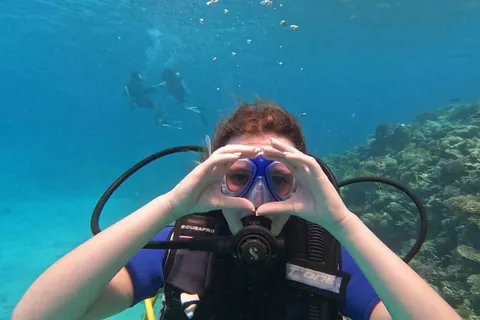 GetYourGuideHurghadaHurghada: 2 Dives for Beginners or Snorkeling Trip with LunchView on GetYourGuide (opens in a new tab)
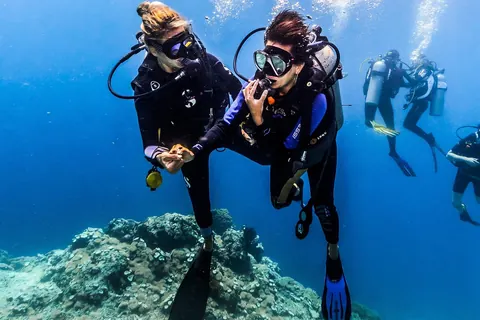 ViatorTulamben & AmedDiscover Scuba Diving in Tulamben, BaliView on Viator (opens in a new tab)
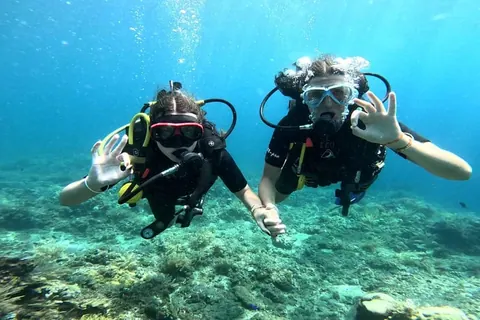 GetYourGuideTulamben & AmedBali: Discover Scuba Diving & WWII Liberty Wreck at TulambenView on GetYourGuide (opens in a new tab)
Ratings from GetYourGuide travellers.
What does it mean to be scuba certified?
Being scuba certified means a training agency has issued you a card after an entry-level course; RAID, for example, states that its Open Water card lets you dive with a certified buddy to 18 m (60 ft) in conditions similar to or better than those you trained in.
The card is what a dive center asks to see before it rents you a tank or takes you on a fun dive. Each agency gives its entry course its own name: Open Water Diver at PADI and SSI, Open Water at RAID, One Star Diver at CMAS. We treat the agencies equally and do not rank them. In our view the instructor, the size of the group and the water you train in shape a course more than the logo on the card.
Courses for children
RAID runs a Junior Open Water course for ages 10–14. Juniors keep the 18 m (60 ft) limit and dive with a certified adult buddy of equal or higher certification.
| Agency | Entry course | Youngest age | Depth | Theory format |
|---|---|---|---|---|
| SSI | Open Water Diver | 10 | 18 m (60 ft) maximum training depth | Digital kit with training materials, academic and video content |
| RAID | Open Water; Junior Open Water for ages 10–14 | 10 (junior course) | 18 m (60 ft) with a certified buddy | Manuals and quizzes on RAID's FREe-Learning platform |
What happens on an Open Water course?
An Open Water course runs in three parts, theory, confined-water skills and open-water training dives; SSI's Open Water Diver lists 6 academic sessions, 6 pool or confined-water sessions and 4 open-water sessions, with 16–32 hours suggested in total.
Theory
You can study through the agency's digital course or in a classroom. RAID students download the manuals and complete the quizzes online, then book the practical part with a RAID dive center, where the exams and skill sign-offs take place before an electronic card is issued.
Confined water
In a pool or calm shallows you practice the core skills with an instructor beside you before you go deeper.
Open-water dives
The training dives happen in the sea or a lake, and how they are run depends on the place. Dahab's courses are shore-based, so you walk in from the beach. In Cairns the four-day course adds two day trips to the outer reef. On Koh Tao, schools fit the course into 2.5–3 days with equipment and materials included.
What do you need before you start a dive course?
Before an Open Water course you need to meet the minimum age (10 at SSI and for RAID's junior course), be fit to swim and clear a diver medical screening; SSI lists no certification prerequisites.
The medical questionnaire
SSI asks students for a diver medical statement and questionnaire, or a physician's approval to dive where that is required. The Diver Medical Participant Questionnaire belongs to the Recreational Diving Medical Screening System, released in 2020 by the international Diver Medical Screening Committee and published by the Undersea & Hyperbaric Medical Society; the current version is dated 2026-01-01. A separate Physician's Evaluation Form is used when a doctor's approval is needed. If the questionnaire sends you to a doctor, see a physician who knows diving medicine, or contact DAN, before you book flights.
Swimming
SSI lists a water fitness evaluation ("fit to swim") among the prerequisites. Ask the center what it involves before you arrive.
Paperwork for minors
For minors, SSI requires a parent or guardian to review and sign the forms.
How long does it take to get scuba certified?
Getting scuba certified usually takes 2.5–4 days on a dive holiday, for example 2.5–3 days on Koh Tao, 3 days on the Gili Islands and 4 days in Cairns.
SSI suggests 16–32 hours for the whole course. Doing the theory online before you travel leaves more of the holiday for the pool and the sea. Courses in Komodo, Tulamben & Amed and Zanzibar run three to four days; Malaysian centers on Perhentian, Tioman and Semporna quote 2.5–4 days.
How much does it cost to learn to dive?
Learning to dive typically costs from about US$400 in Vietnam to US$879 in Hawaii (eLearning extra) where dive centers quote US dollars, and from EUR 365 in Hurghada to EUR 655 in Raja Ampat where they quote euros.
Prices were checked in November 2026 and stay in the currency each center quotes. The scuba certification cost guide breaks down what a course price covers and which extras come on top, and the Open Water price index lists course prices for 36 places in 22 countries.
Can you try scuba diving before you sign up for a course?
Yes, a one-day try dive such as PADI Discover Scuba Diving lets you breathe underwater with an instructor before you commit, without earning a card; a try dive typically costs about EUR 75 in Dahab, IDR 2,200,000 on Nusa Penida and US$222 on Maui.
Formats differ, so compare what you get. The Nusa Penida figure is for two ocean dives; in Dahab the three centers sell anything from a single dive to a one-day program; the Cozumel try dives (usually about US$100) start from shore with equipment included. CMAS runs its own Introductory SCUBA Experience to a maximum of 10 m (33 ft).
Do you need dive insurance while you learn?
Check that your insurance covers scuba diving as a student before the course starts: World Nomads, for example, lists Discover Scuba dives with qualified instructors as covered, while SafetyWing's Essential plan covers diving only with its Adventure Sports add-on.
Evacuation cover matters most where the nearest recompression chamber is a boat ride or a flight away. Our dive insurance guide compares the dive cover of DAN, DiveAssure, World Nomads and SafetyWing.
In this section
- Certification costWhat scuba certification really costs: typical Open Water course prices in 36 places, plus the eLearning, card and park fees that come on top of them.
- Open Water pricesOpen Water course prices in 36 places across 22 countries, in the currency dive centers quote: where it is cheapest, dearest, and what the price includes.
Frequently asked questions
What is the minimum age to get scuba certified?
SSI accepts Open Water students from age 10, and RAID's Junior Open Water course covers ages 10–14, with juniors limited to 18 m (60 ft) and diving alongside a certified adult buddy of equal or higher certification. For minors, SSI requires a parent or guardian to review and sign the forms. Other agencies set their own junior rules, so check with the center before you book.
How deep can you dive with an Open Water certification?
RAID states that its Open Water card allows dives with a certified buddy to 18 m (60 ft), and SSI lists 18 m (60 ft) as the maximum training depth of its Open Water Diver course. Going deeper is the job of the next course up. Insurers tie cover to your training too: World Nomads excludes any dive deeper than your current qualification limits.
Do you need your own scuba gear to get certified?
No. Many course prices include rental equipment: centers in Komodo, the Gili Islands, Koh Tao, Tulamben & Amed and Zanzibar all put it in the course price. Read the price line anyway: on Maui, Pro Diver's US$499 course is dive-only, with gear at US$49 per day on top. A mask that fits your face is the one item worth trying on before the trip.
Which scuba agency should you choose?
PADI, SSI, RAID and CMAS all issue entry-level certifications, and we do not rank them. The agency rarely explains the price: in Hurghada two PADI centers charge EUR 350 and EUR 365, and an SSI center EUR 418 with its certification pack. Choose the center for its instructors, group size and dive conditions, and ask which card it issues.
Can you learn to dive if you are not a strong swimmer?
You need to be comfortable in the water. SSI lists a water fitness evaluation, described as fit to swim, among the prerequisites of its Open Water Diver course, so ask the center what the evaluation involves and practice in a pool before the trip if you are unsure. A one-day try dive with an instructor is a gentler first step before you pay for a full course.


